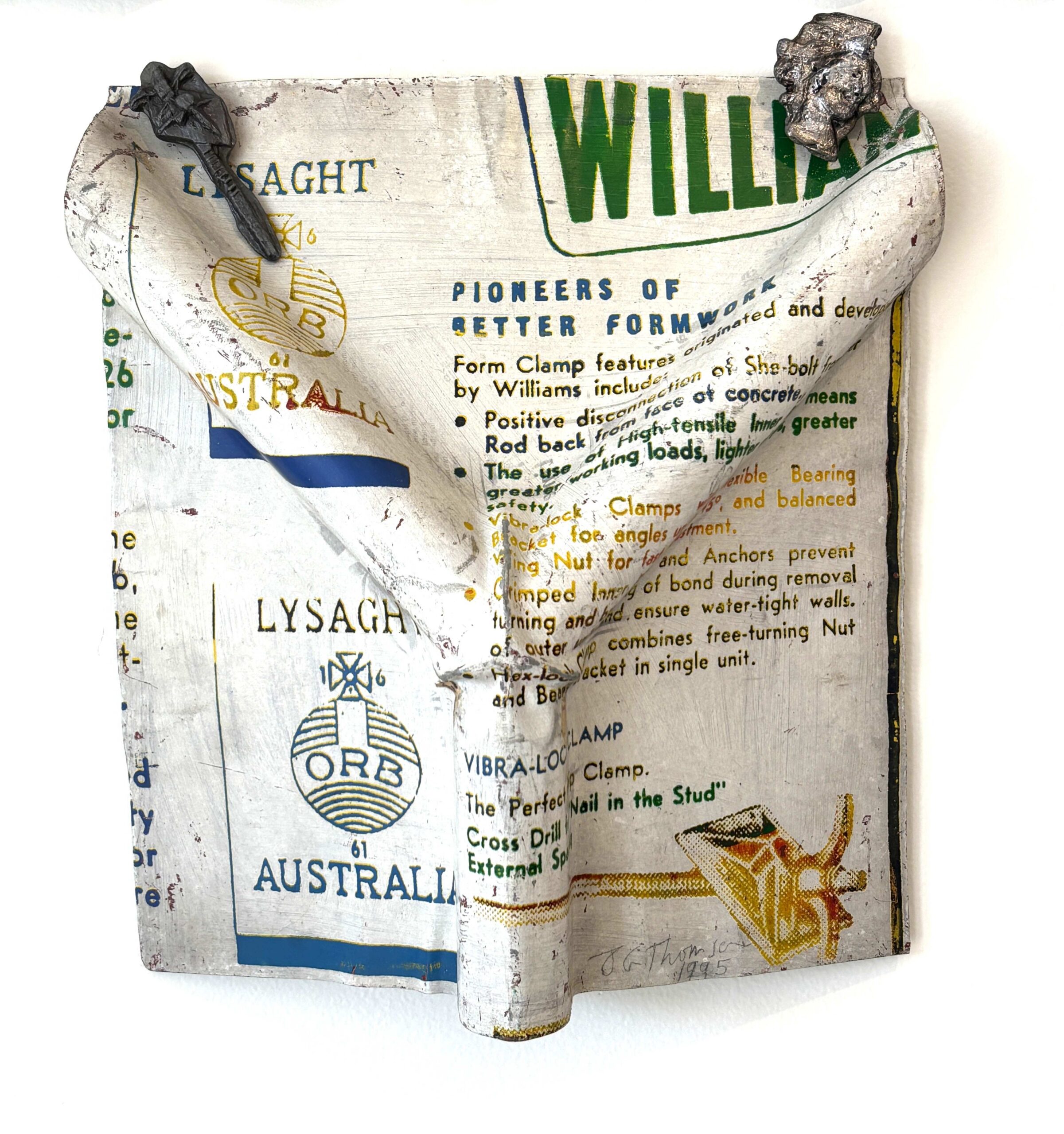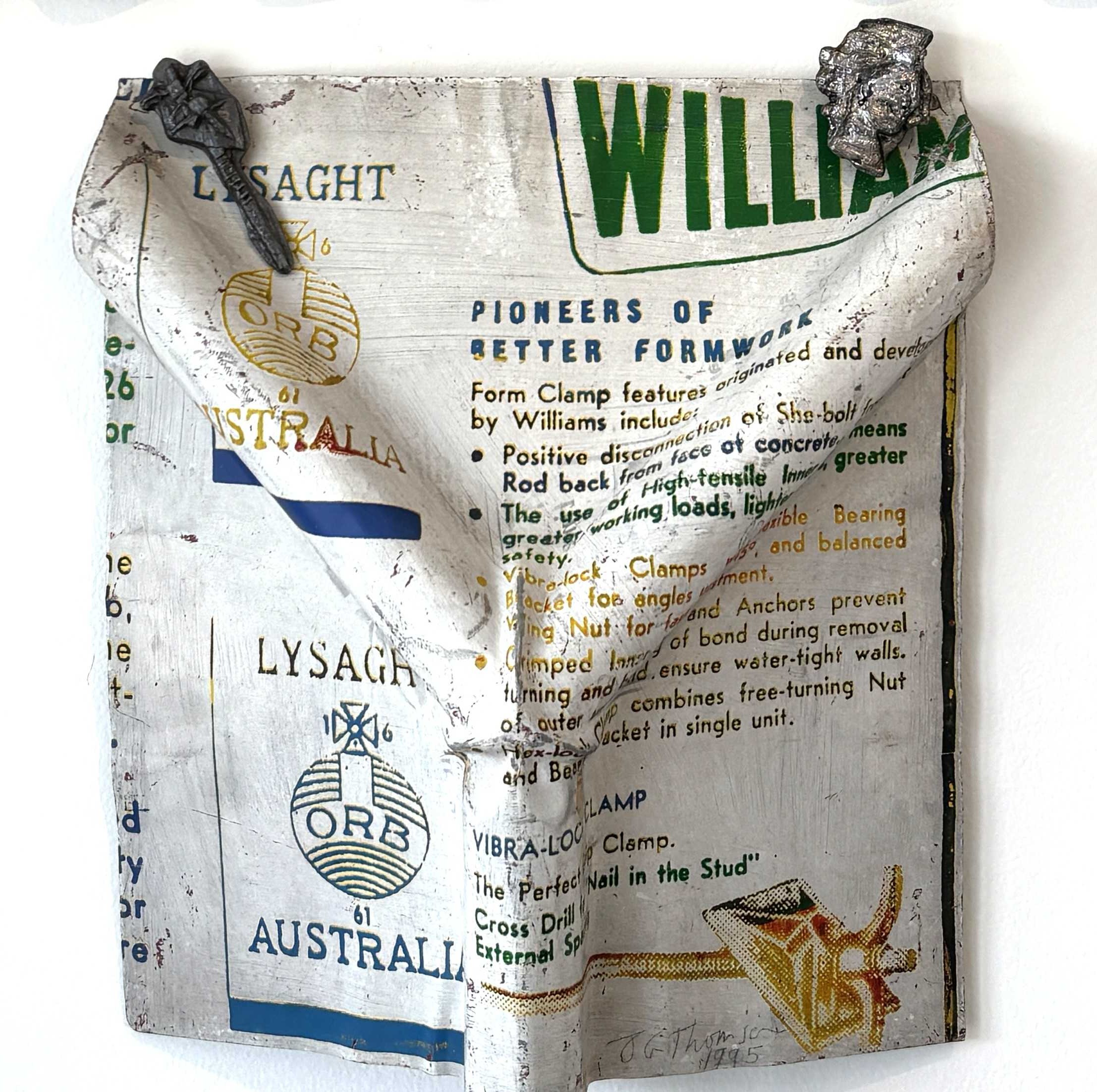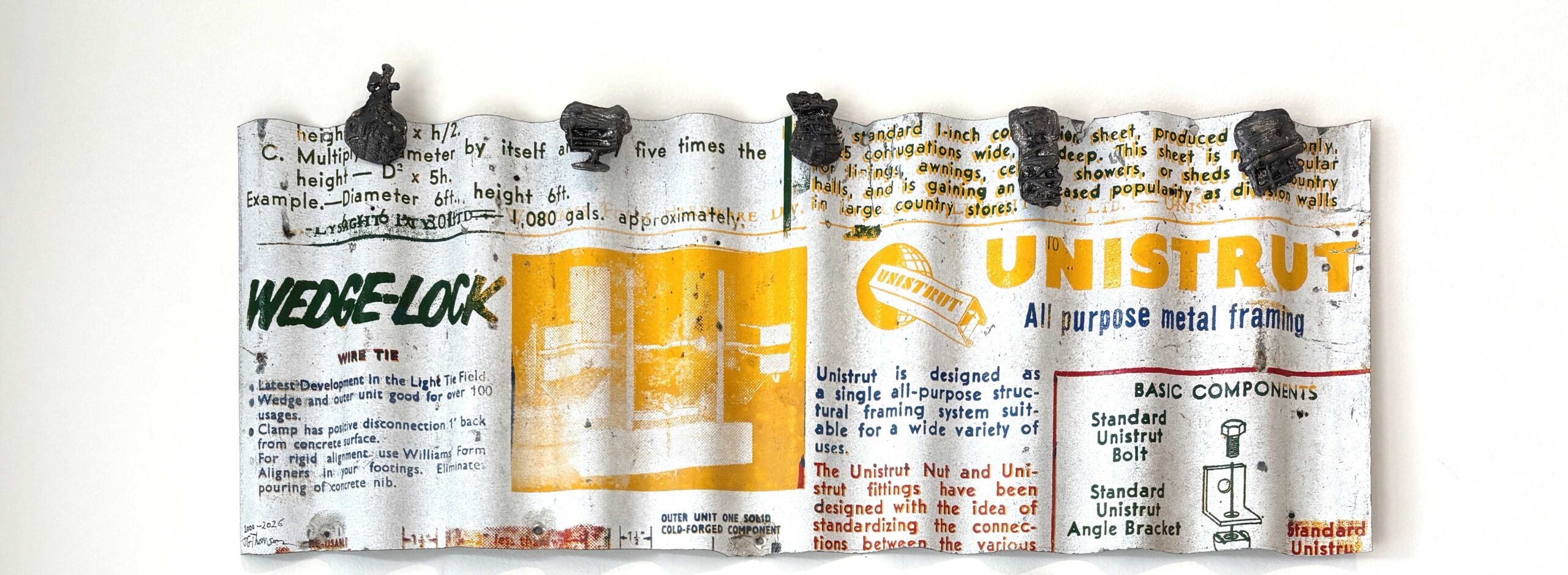
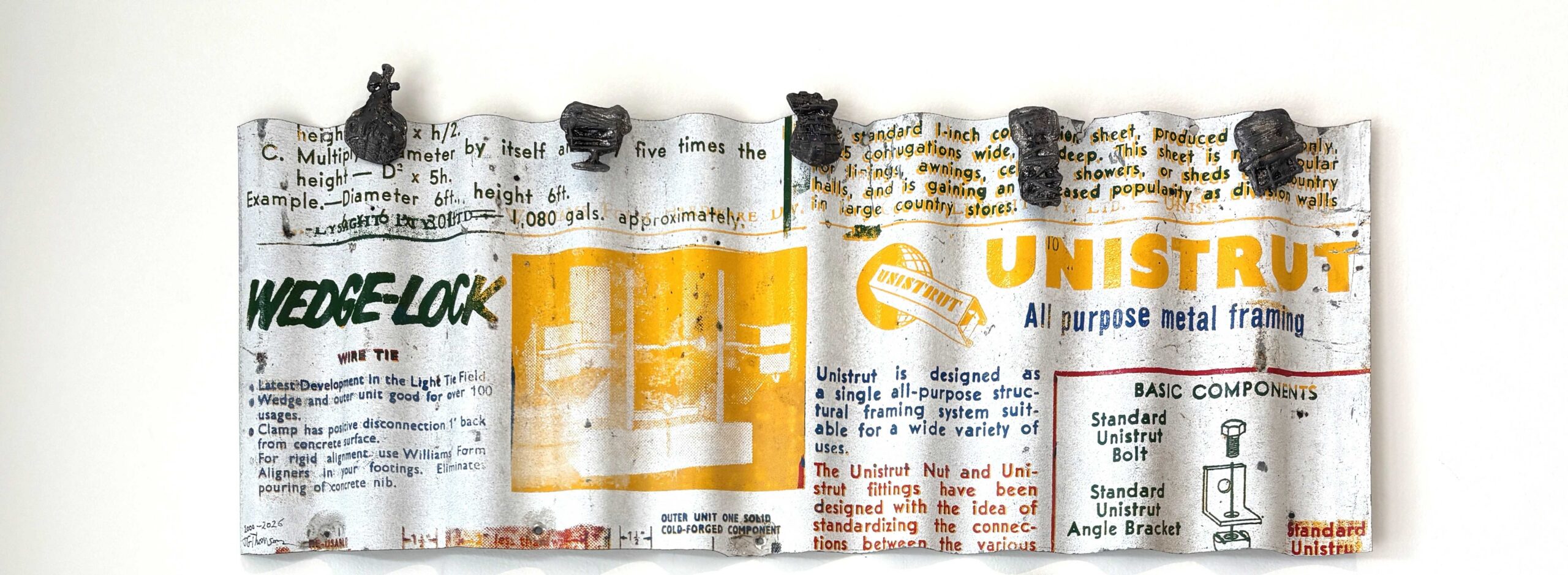
The Lysaght Referee is regarded as a ‘bible’ of roofing/construction; here, Jeff Thomson screenprints sections of the guide onto a roofing ridge cap, adorned with five of his individually cast lead head nails.
Media Type: Sculpture
-
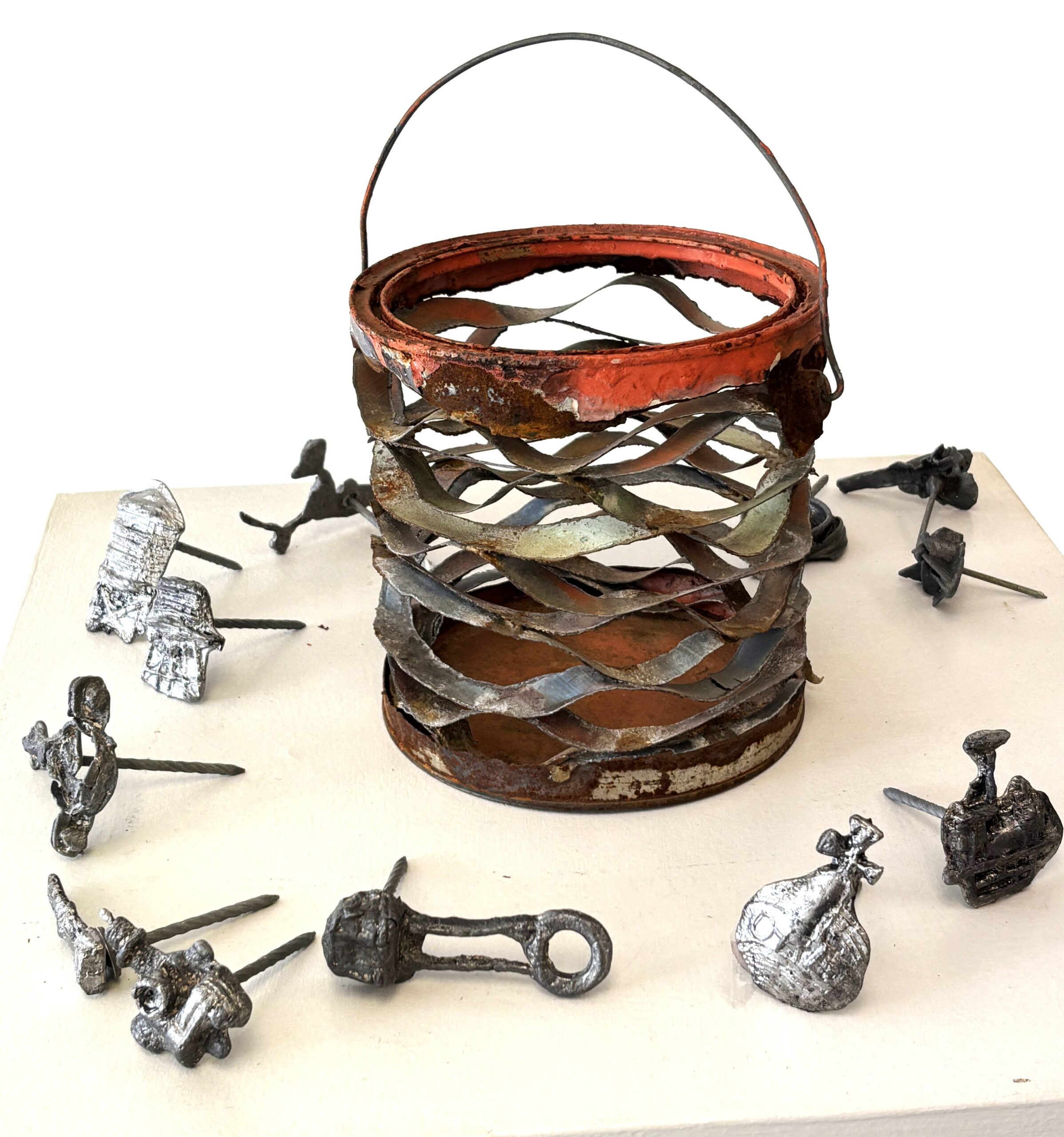
4L Paint Tin (and Nails)
The hand cast lead roofing nails can be combined with other still life works like the 4L Paint Tin, or wall mounted as a group.
-
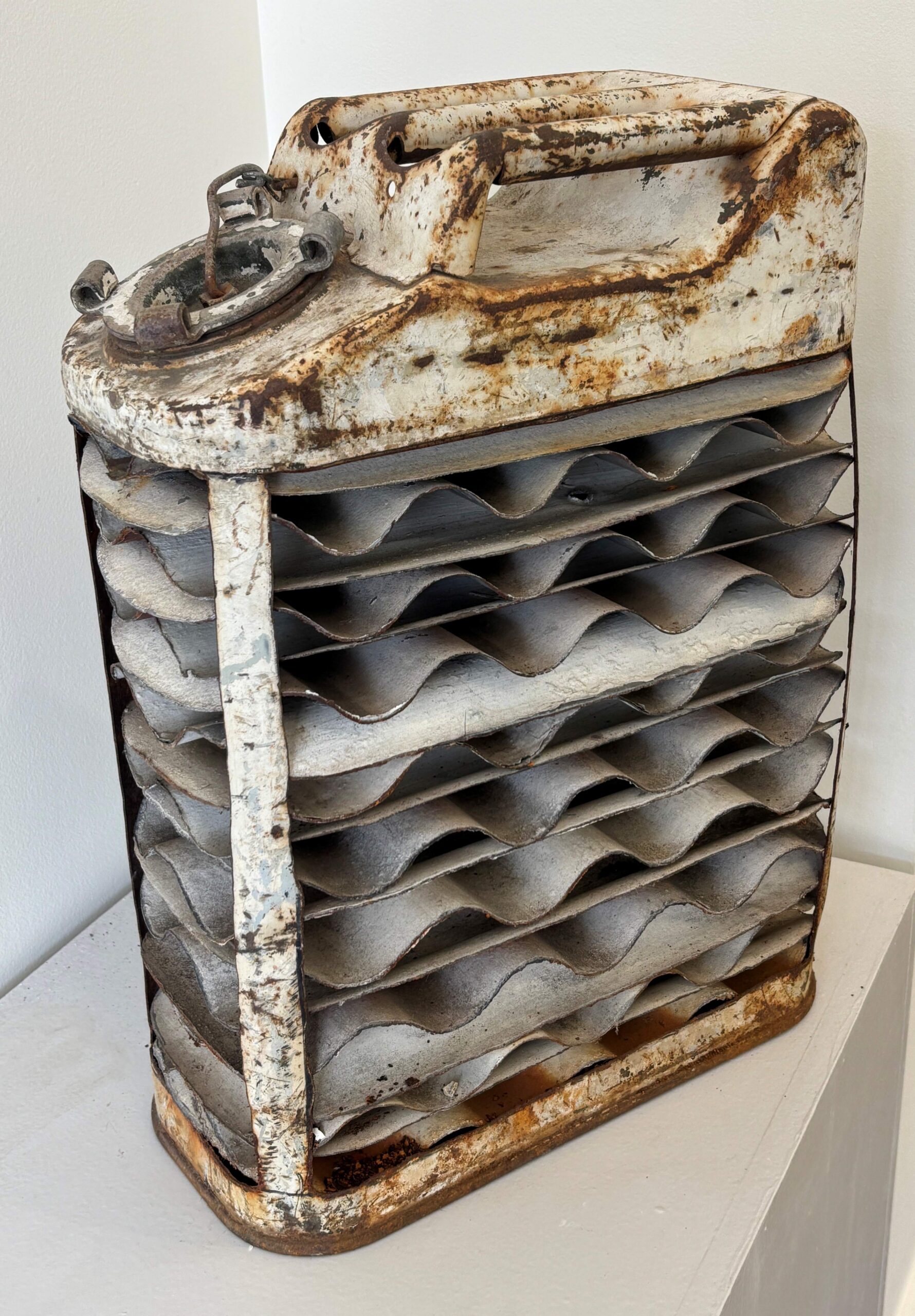
Jerry Can
Jeff Thomson reinvents industrial objects with typical humour – and corrugated iron – in a new twist on ‘still life’
-
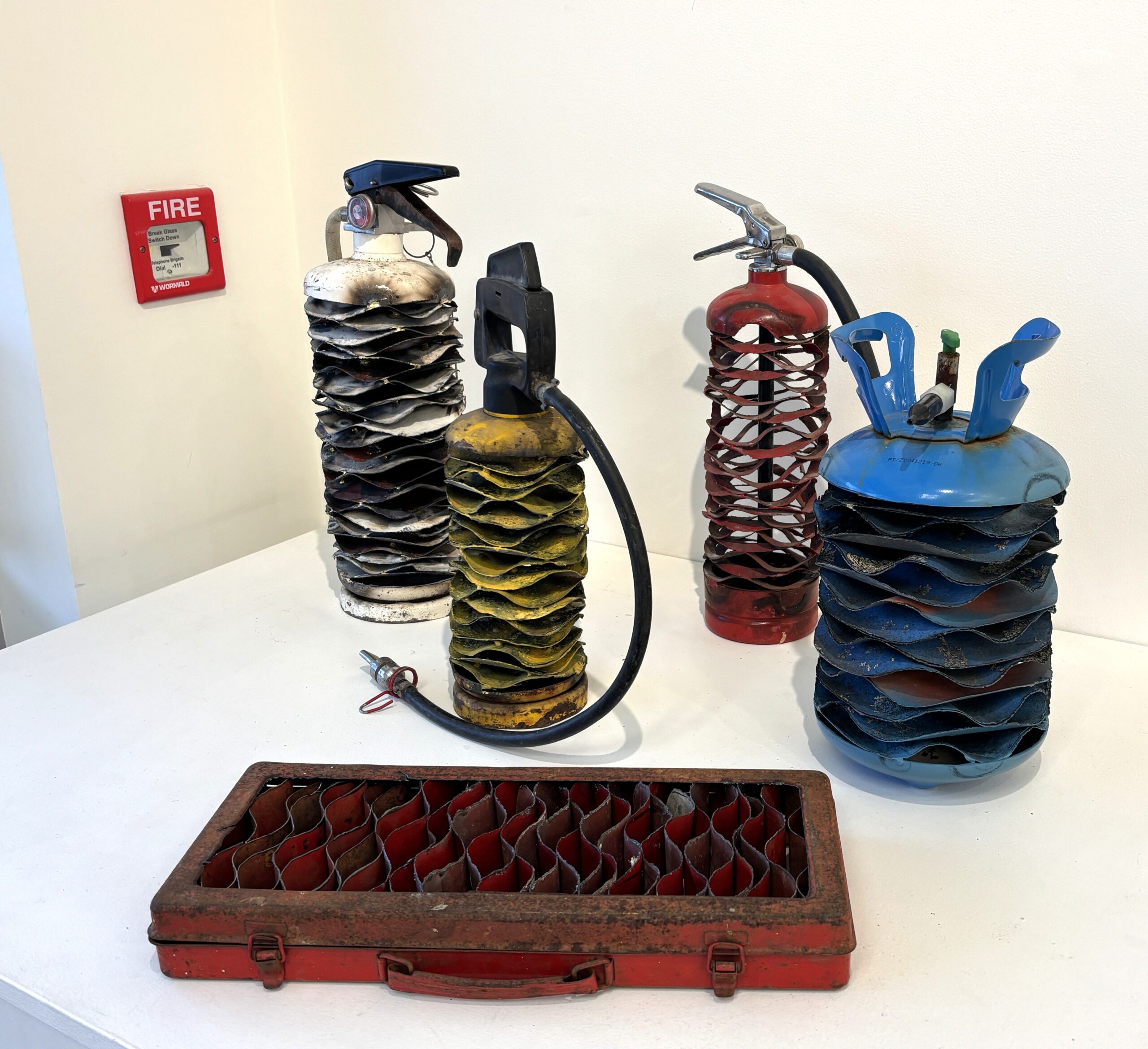
Still Life works
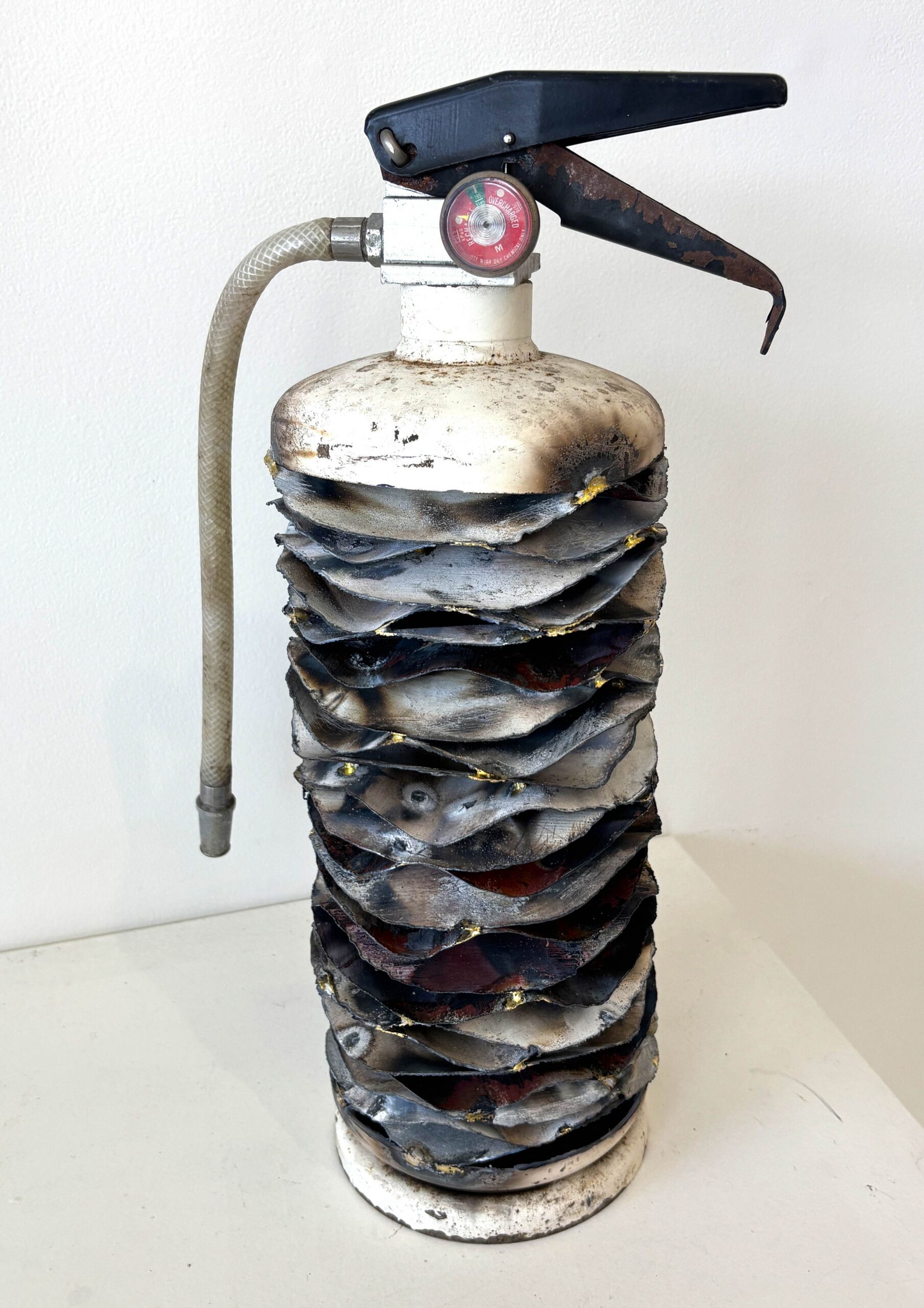
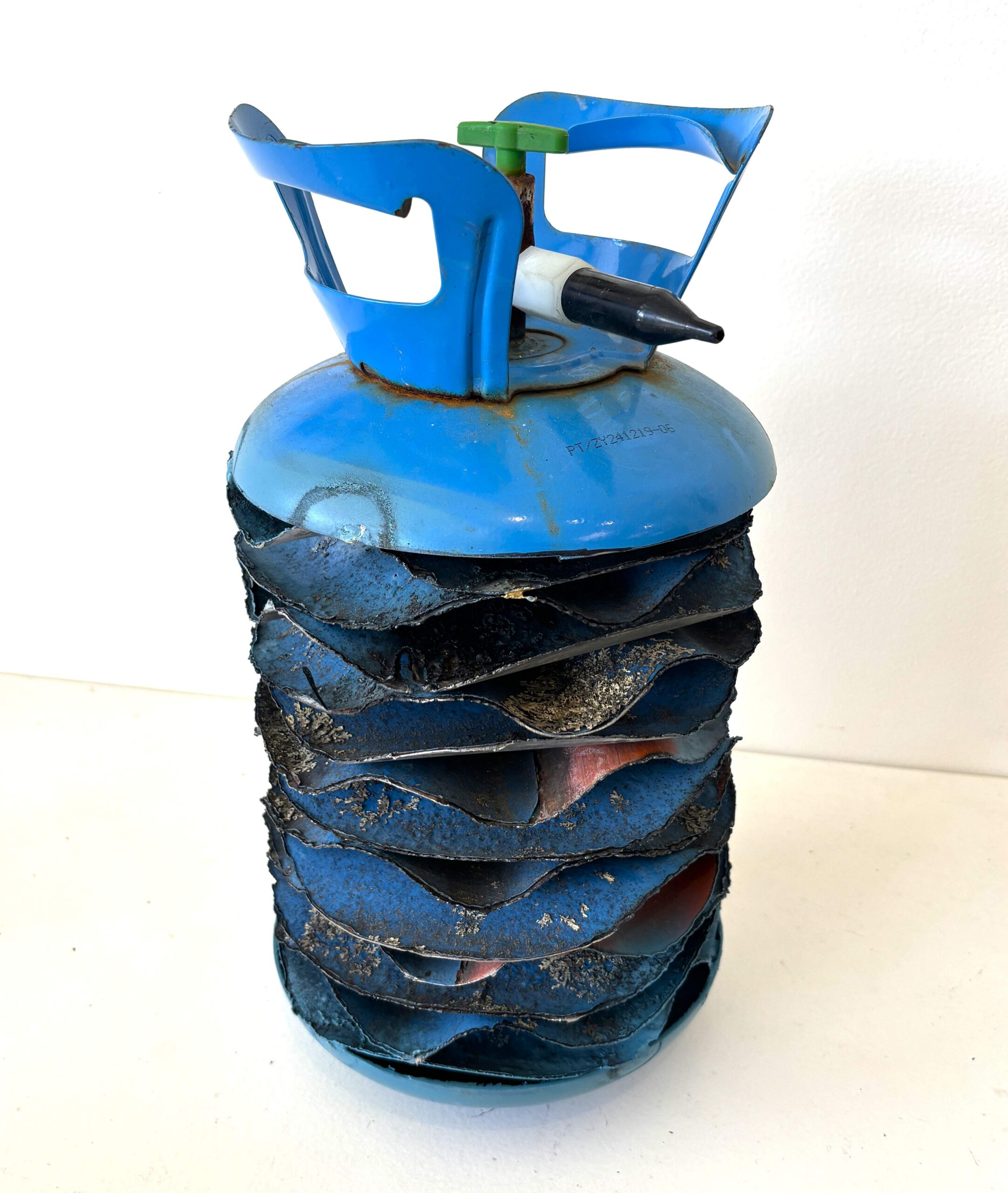
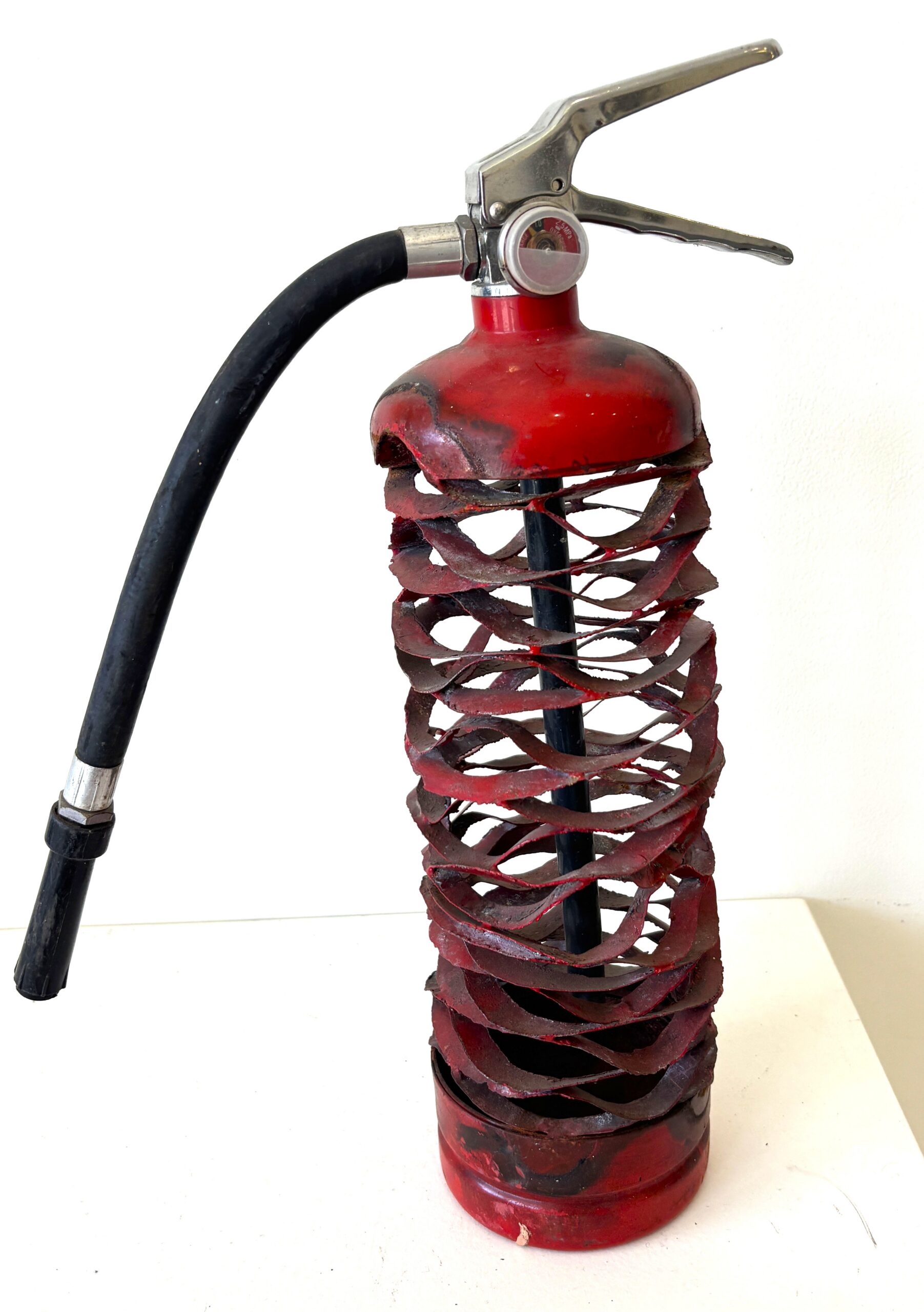
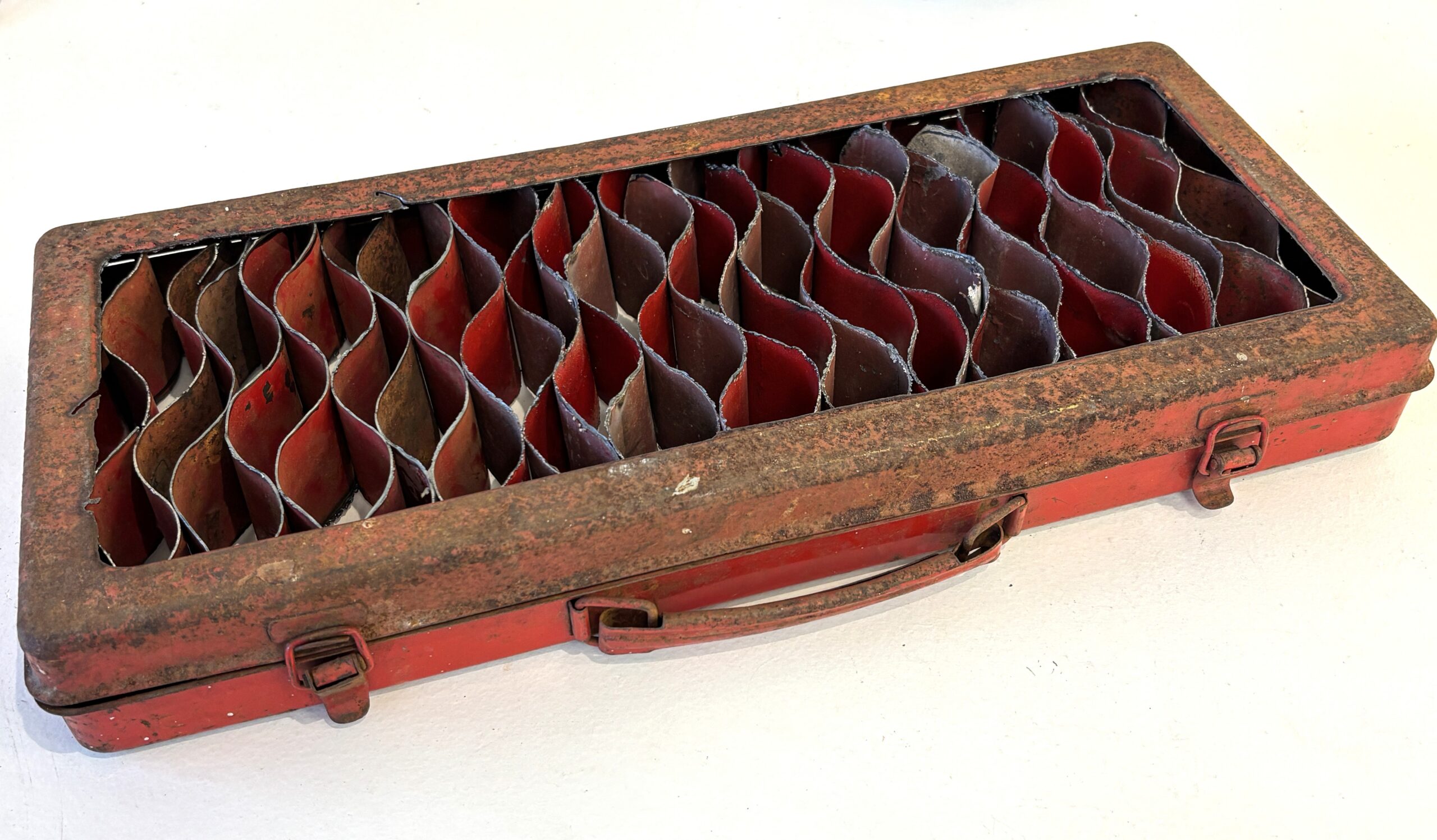
A selection of fire extinguishers, oil cans, gas bottles, tool boxes, transformed with corrugated iron – and classic Thomson humour. Priced from $1000-1500 ea
-
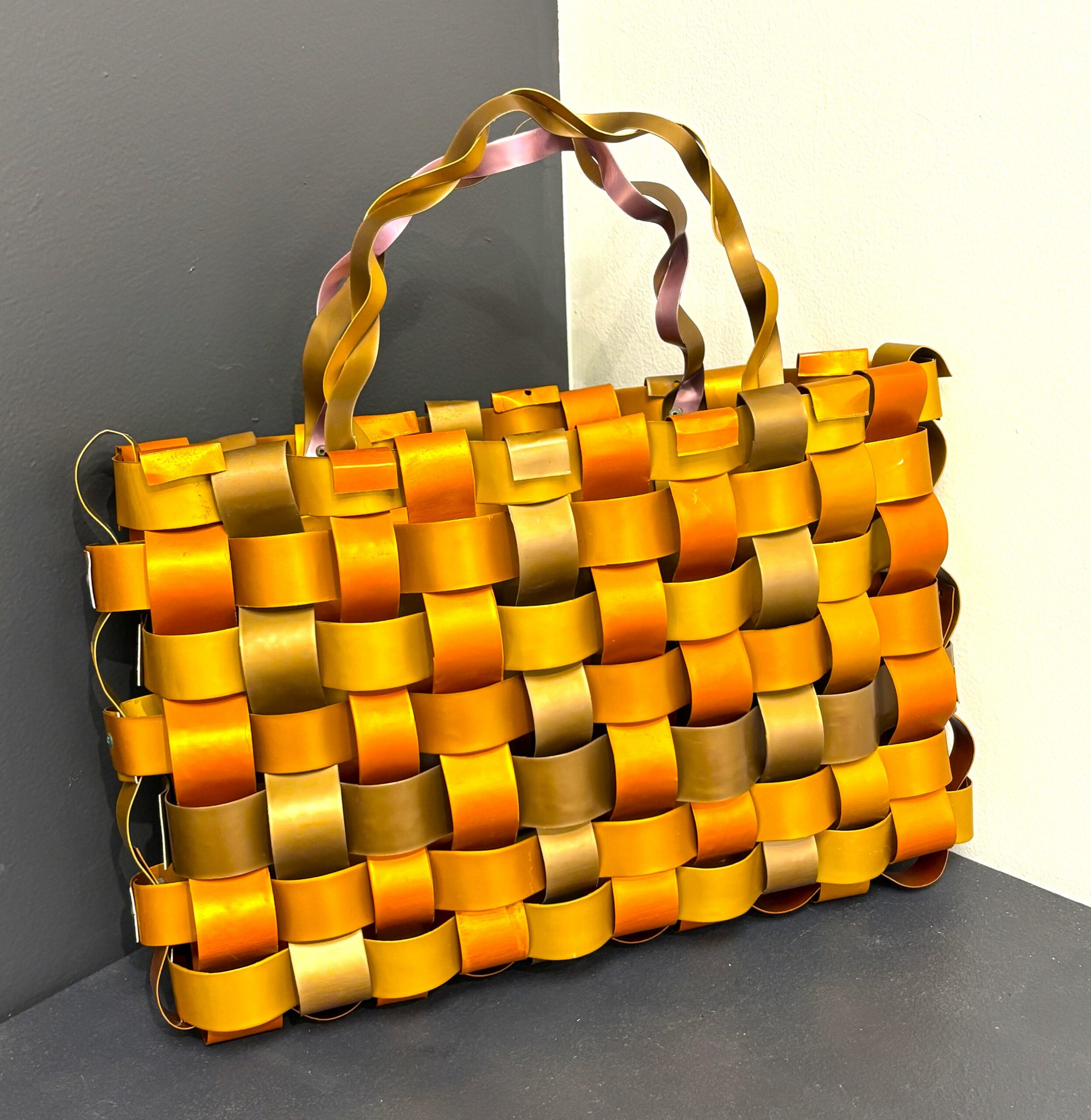
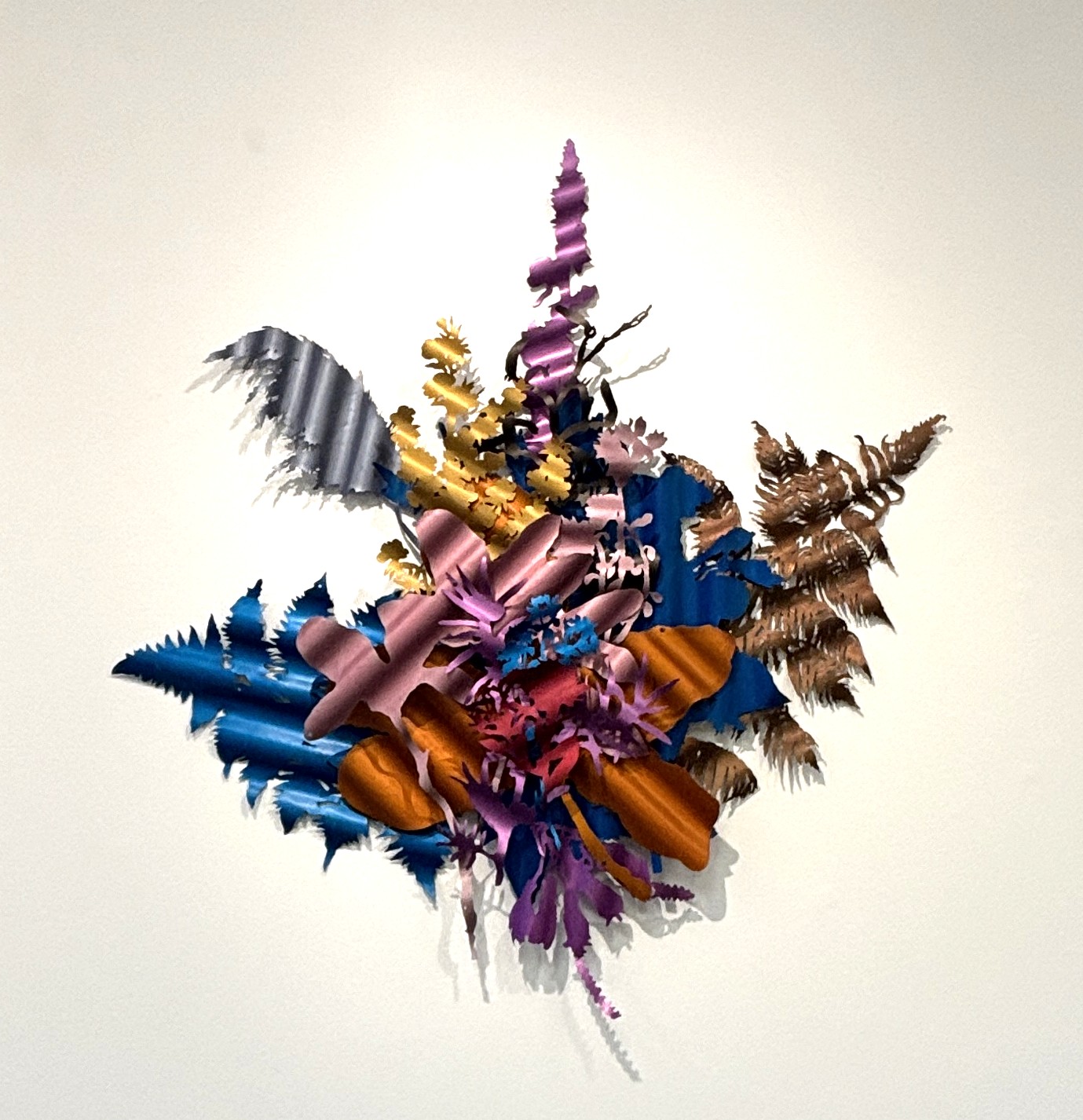
Kete III, 2026
Gloriously pure colour radiates from this new series in anodised aluminium handwoven kete.
-
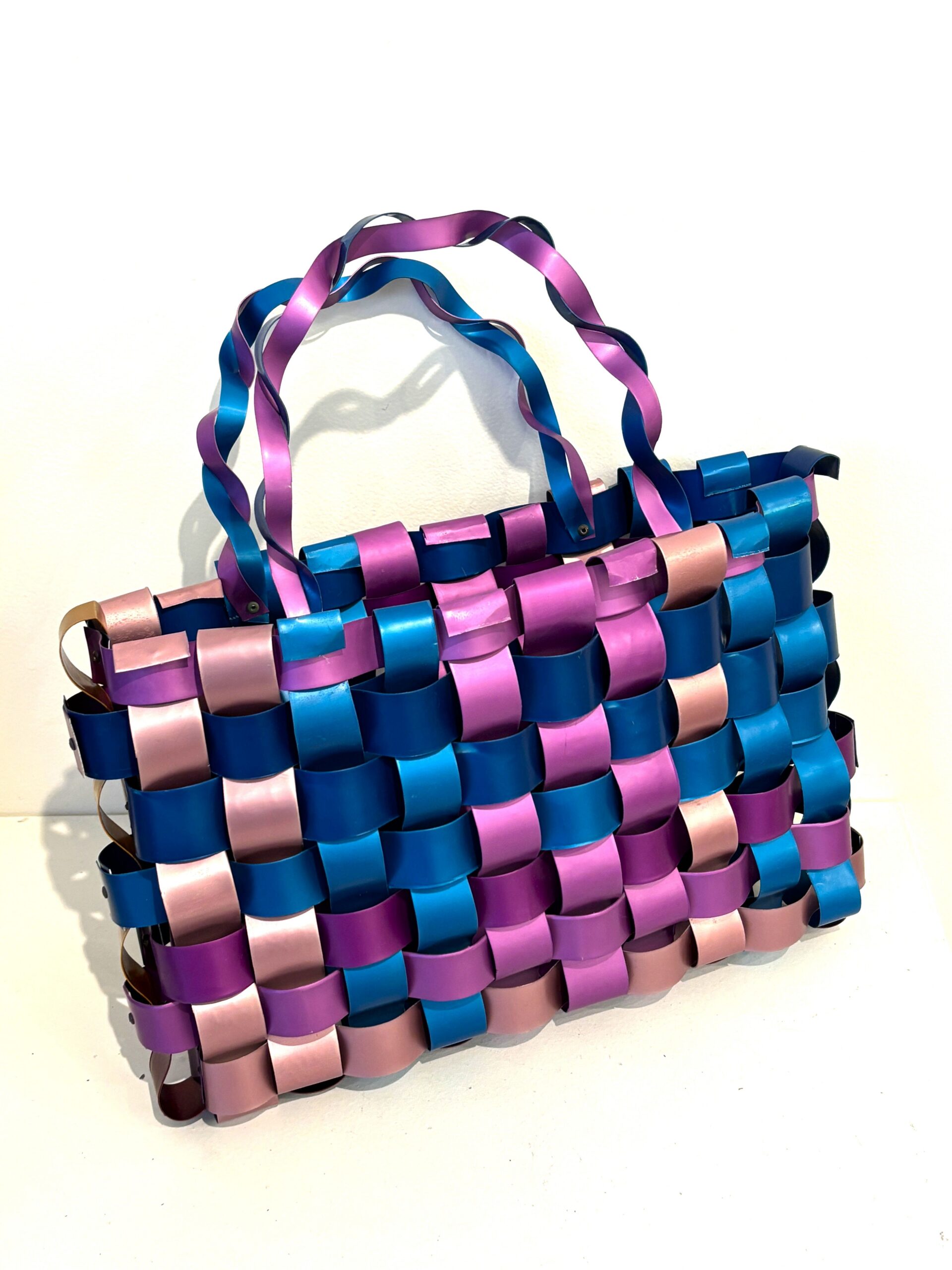
Kete II
Jeff Thomson shifts from used corrugated iron to the pure dreamy colour of corrugated, anodised aluminium for his classic handwoven kete.
-
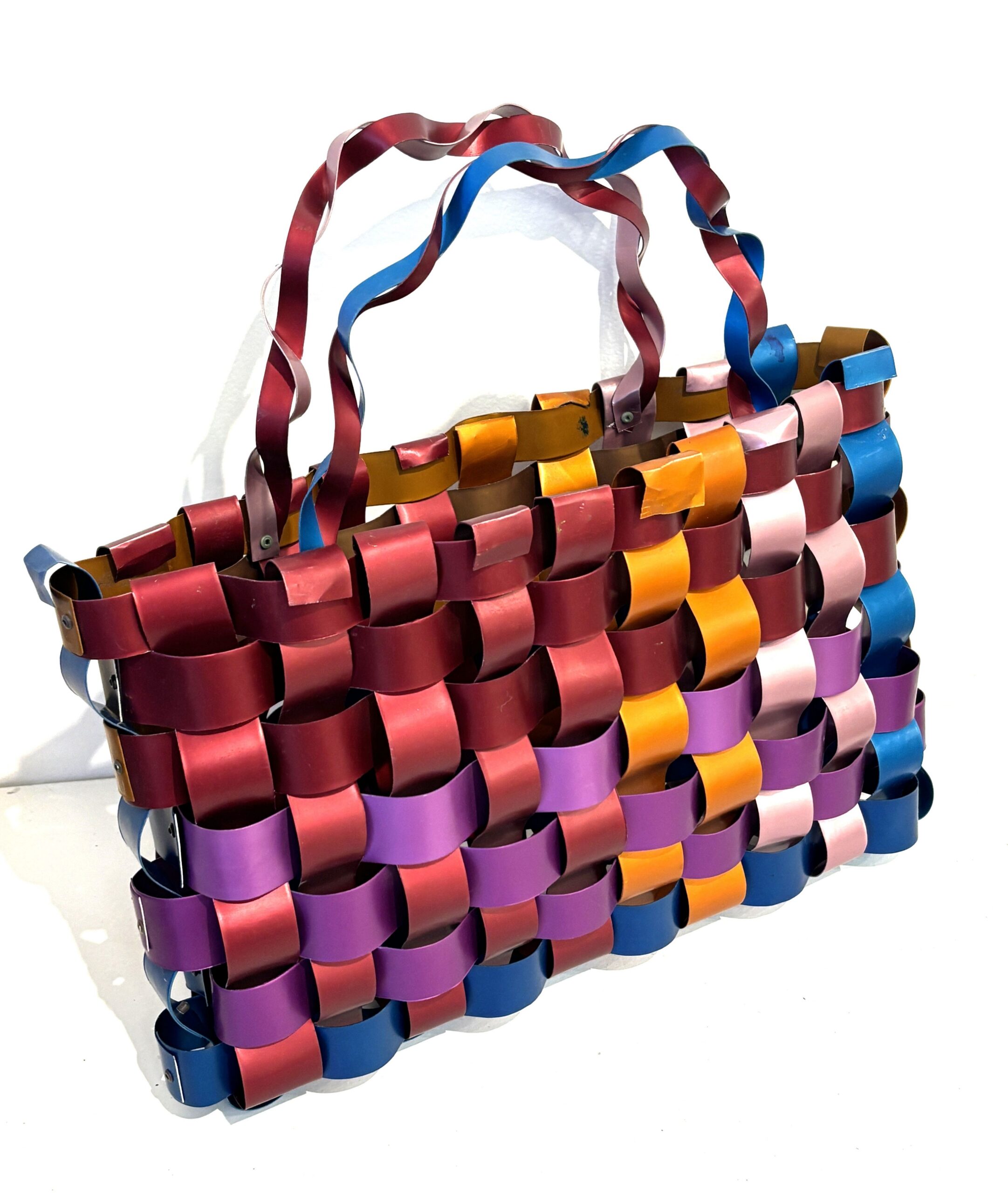
Kete I, 2026
Jeff Thomson’s kete take a new direction with the pure colour energy of anodised aluminium…
-
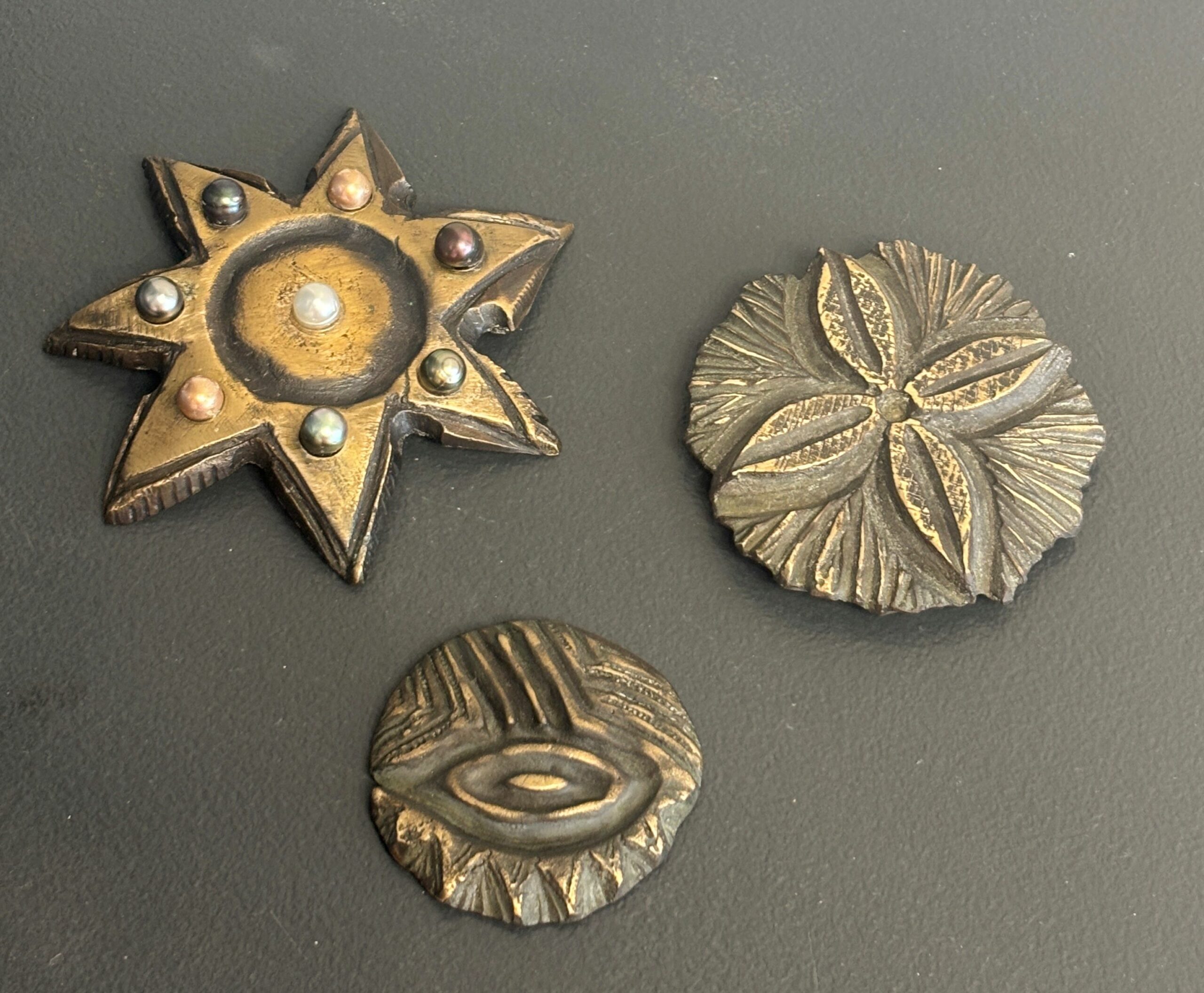
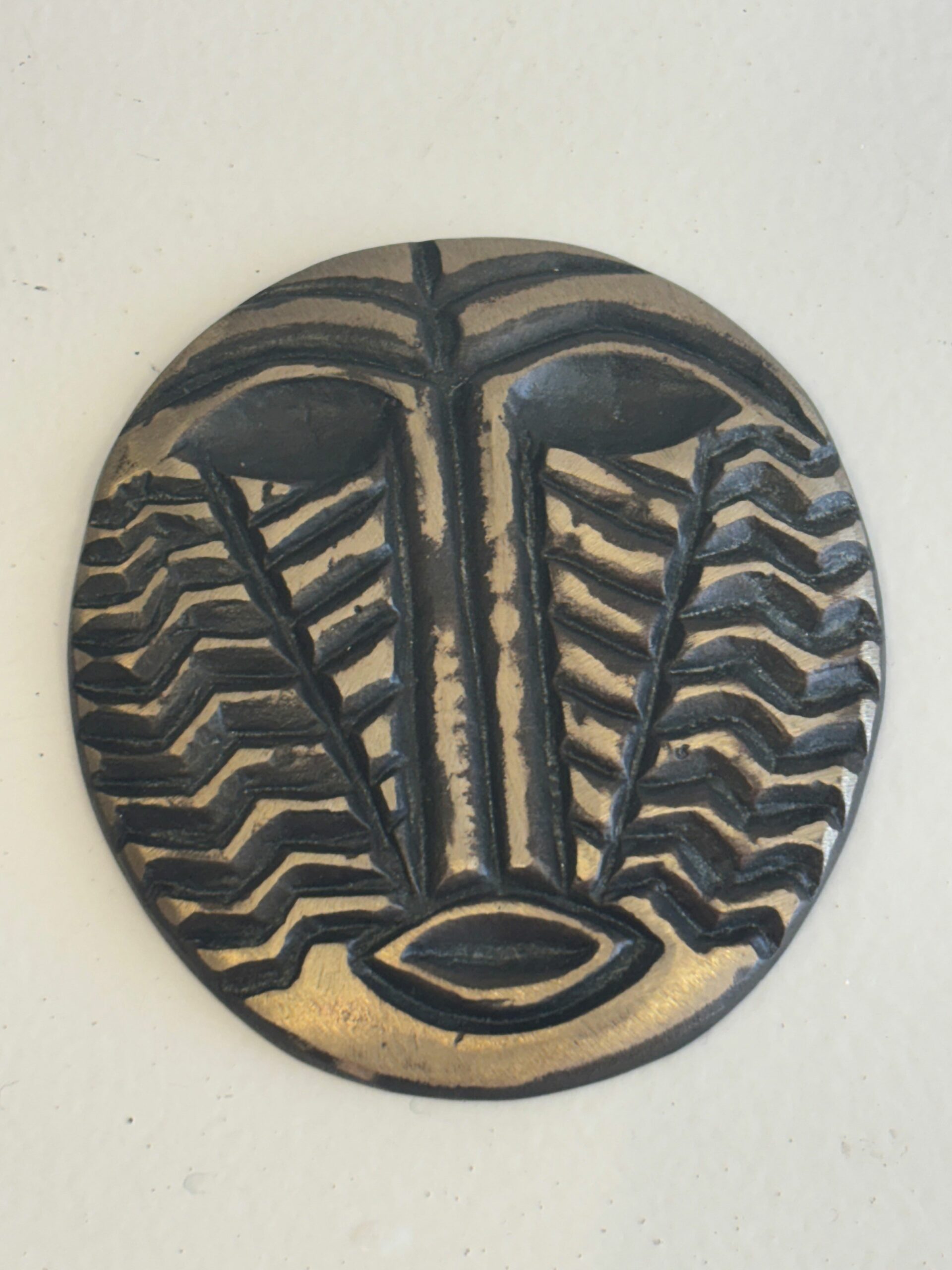
Bronze medallions
Price: Star Pearls – sold; Paopao $900, Frangipani $1500. The latter two have a different motif cast into the reverse side.
-
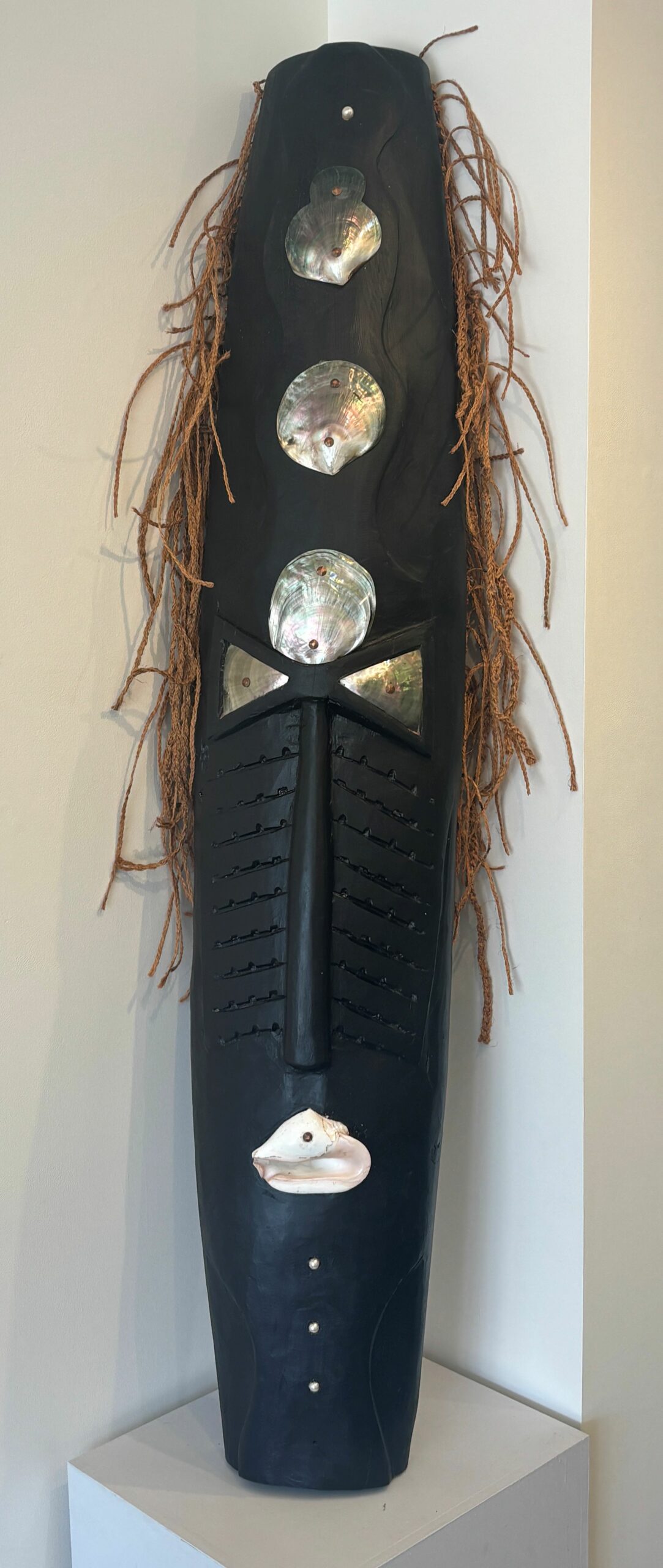
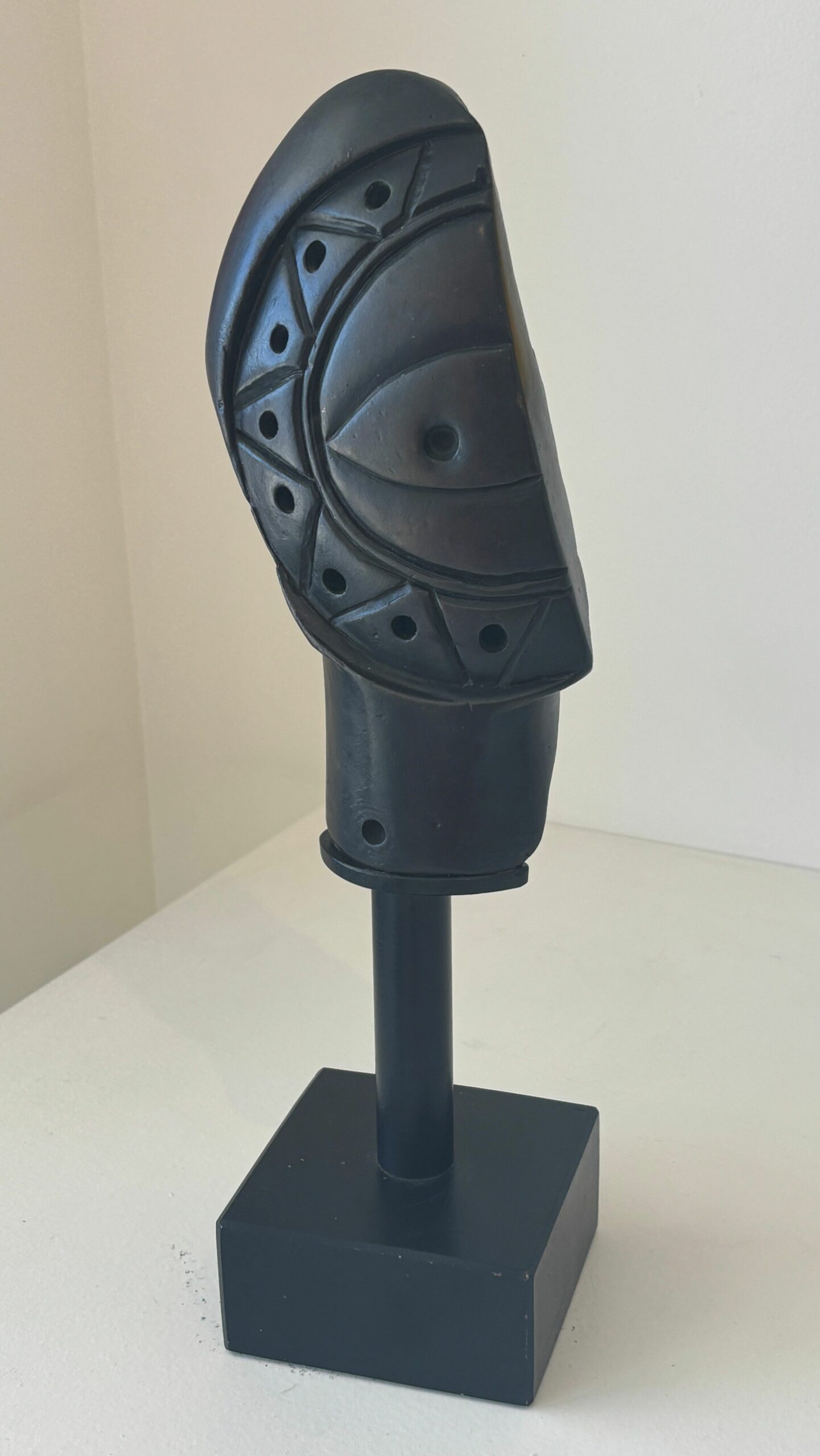
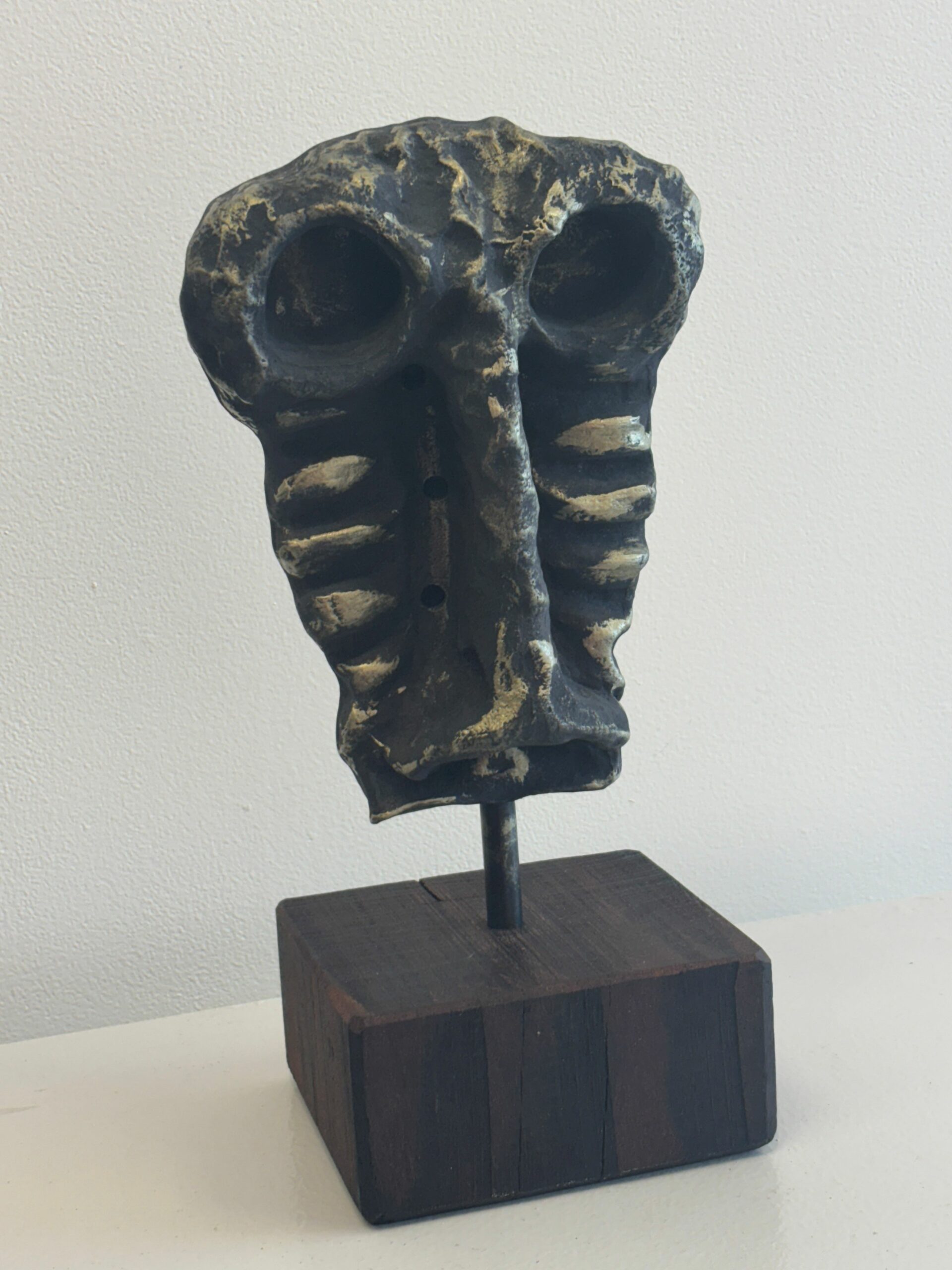
Tupaia
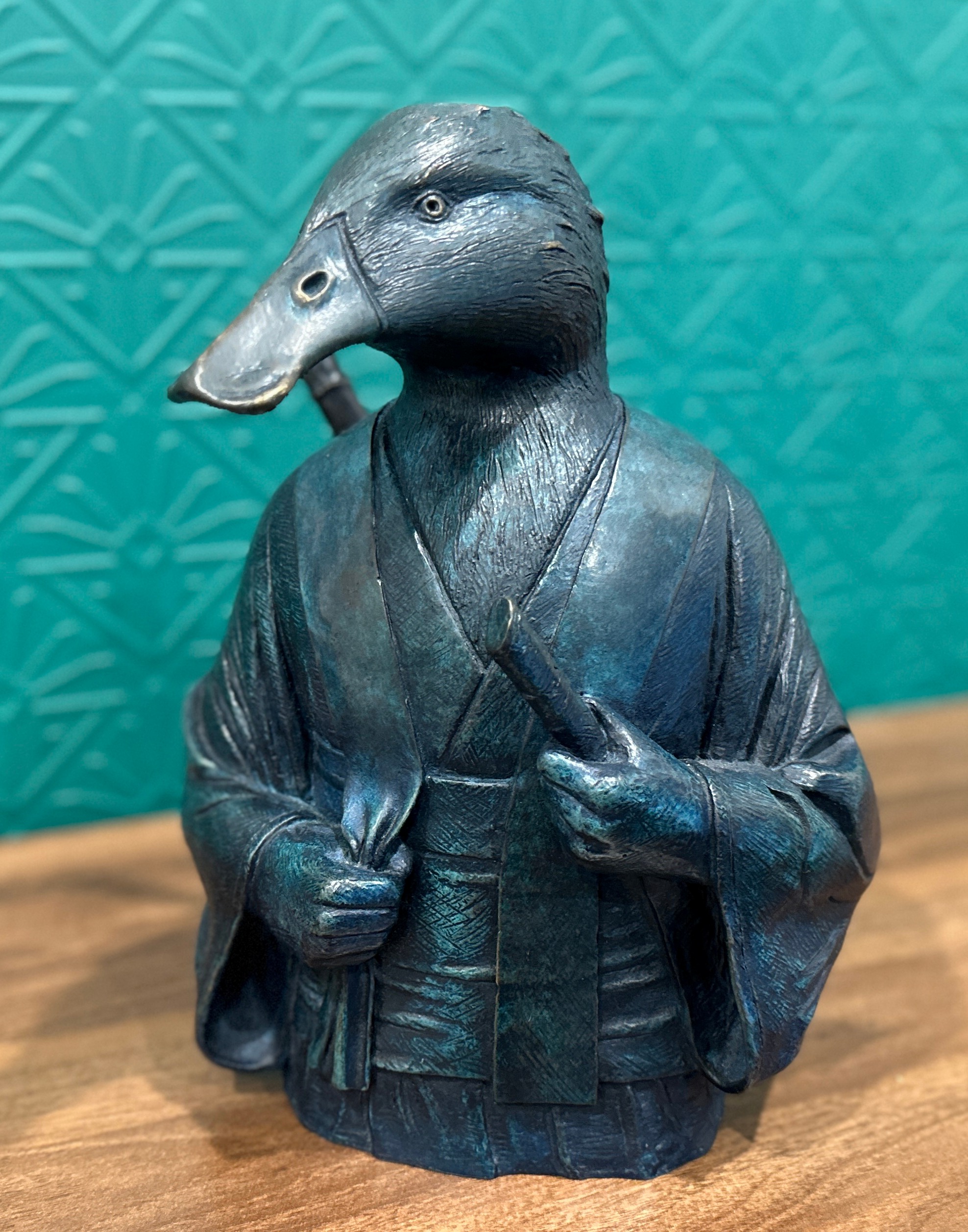
Based on the great Pacific navigator, Tupaia, using the form of the long-nosed god Tagaloa. The work can be mounted on a small plinth or could be wall hung.
-
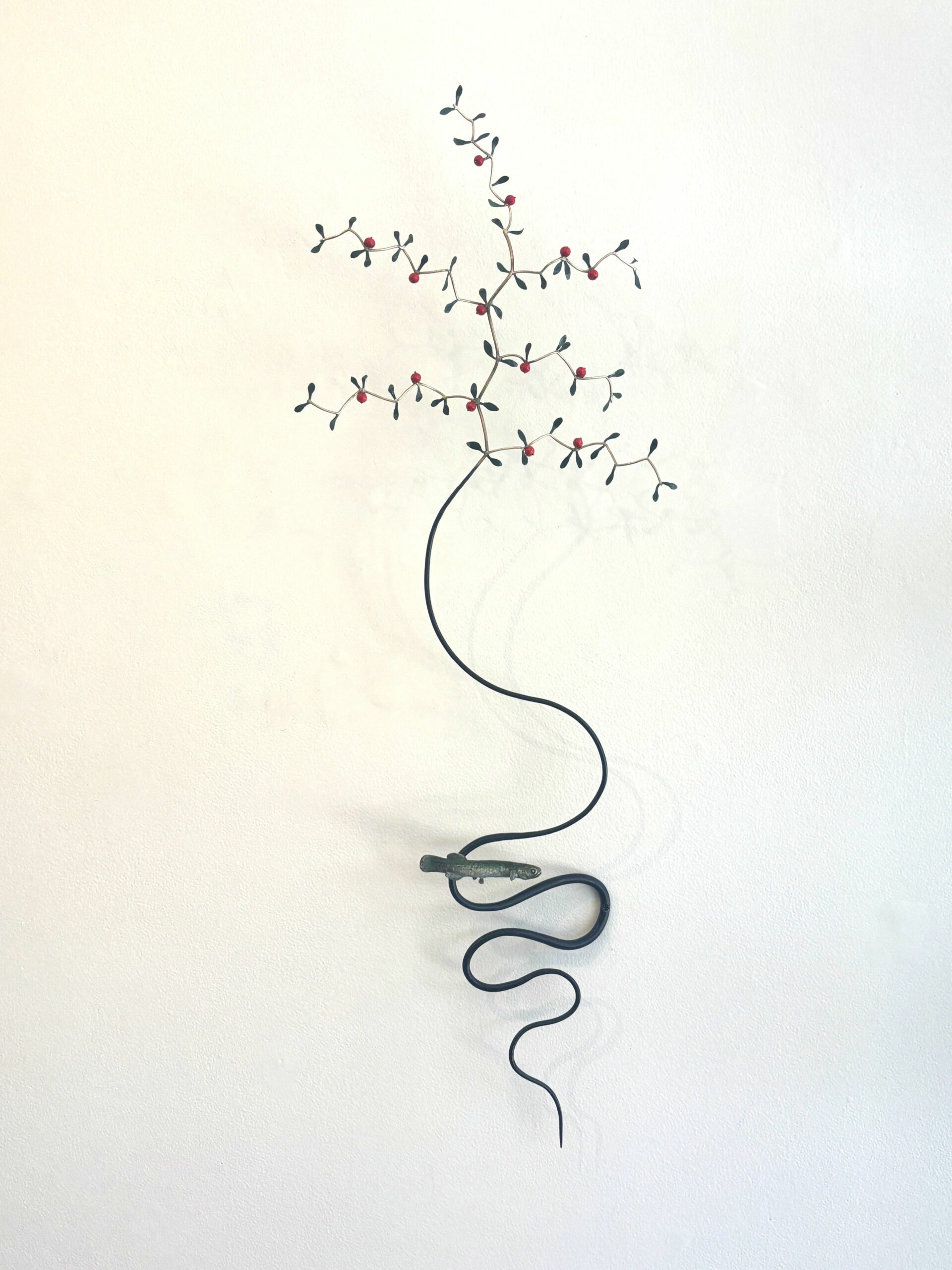
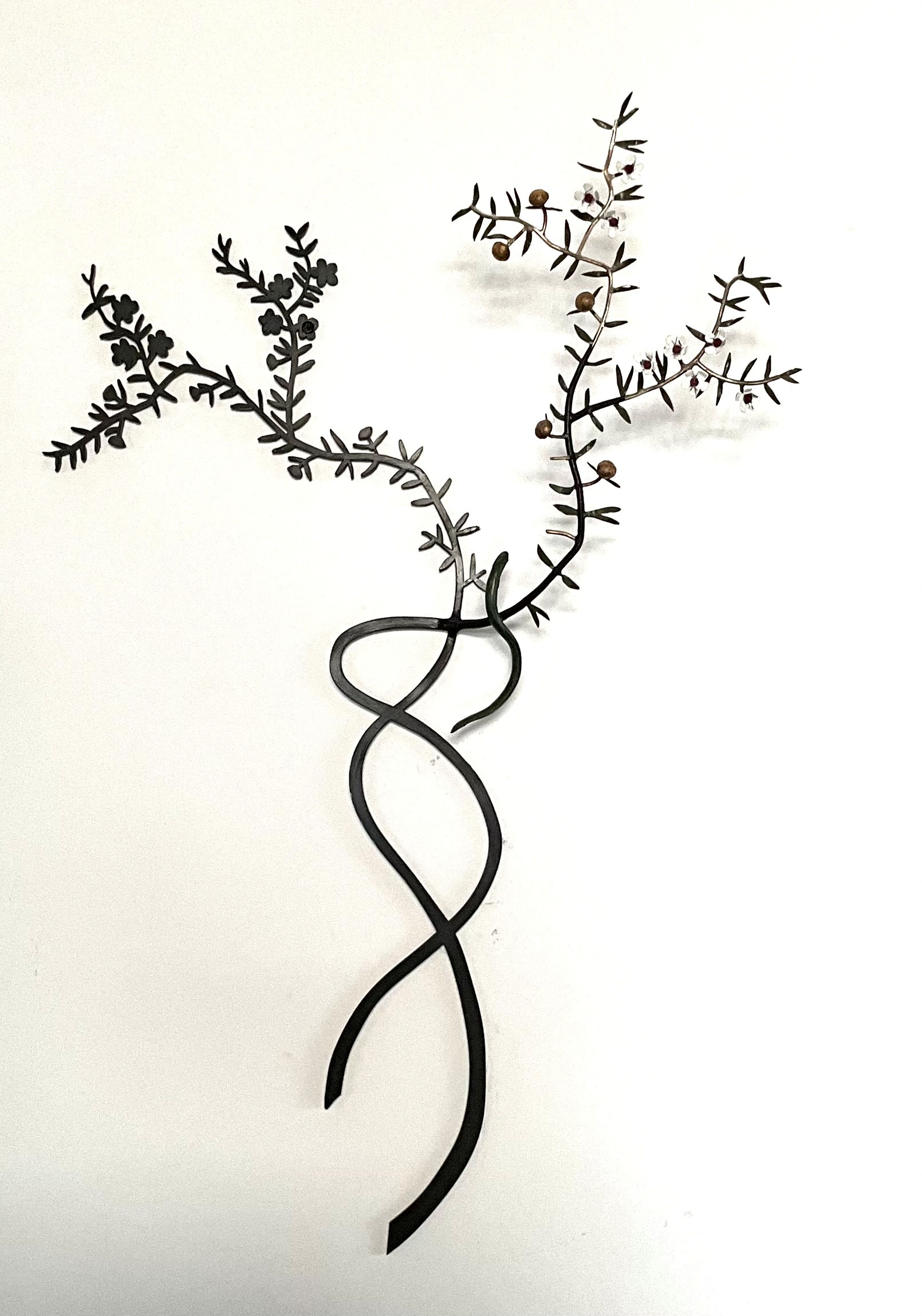
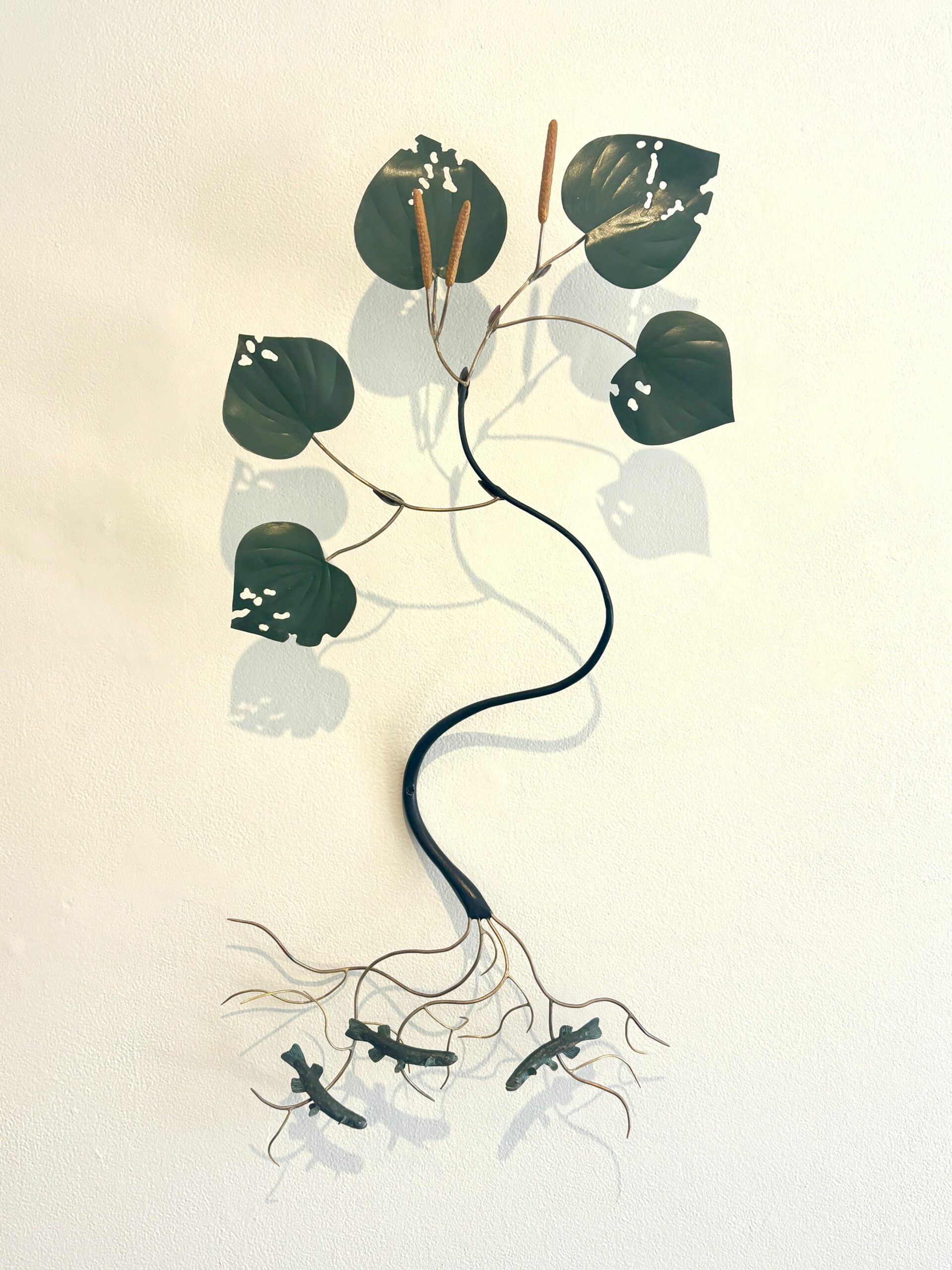
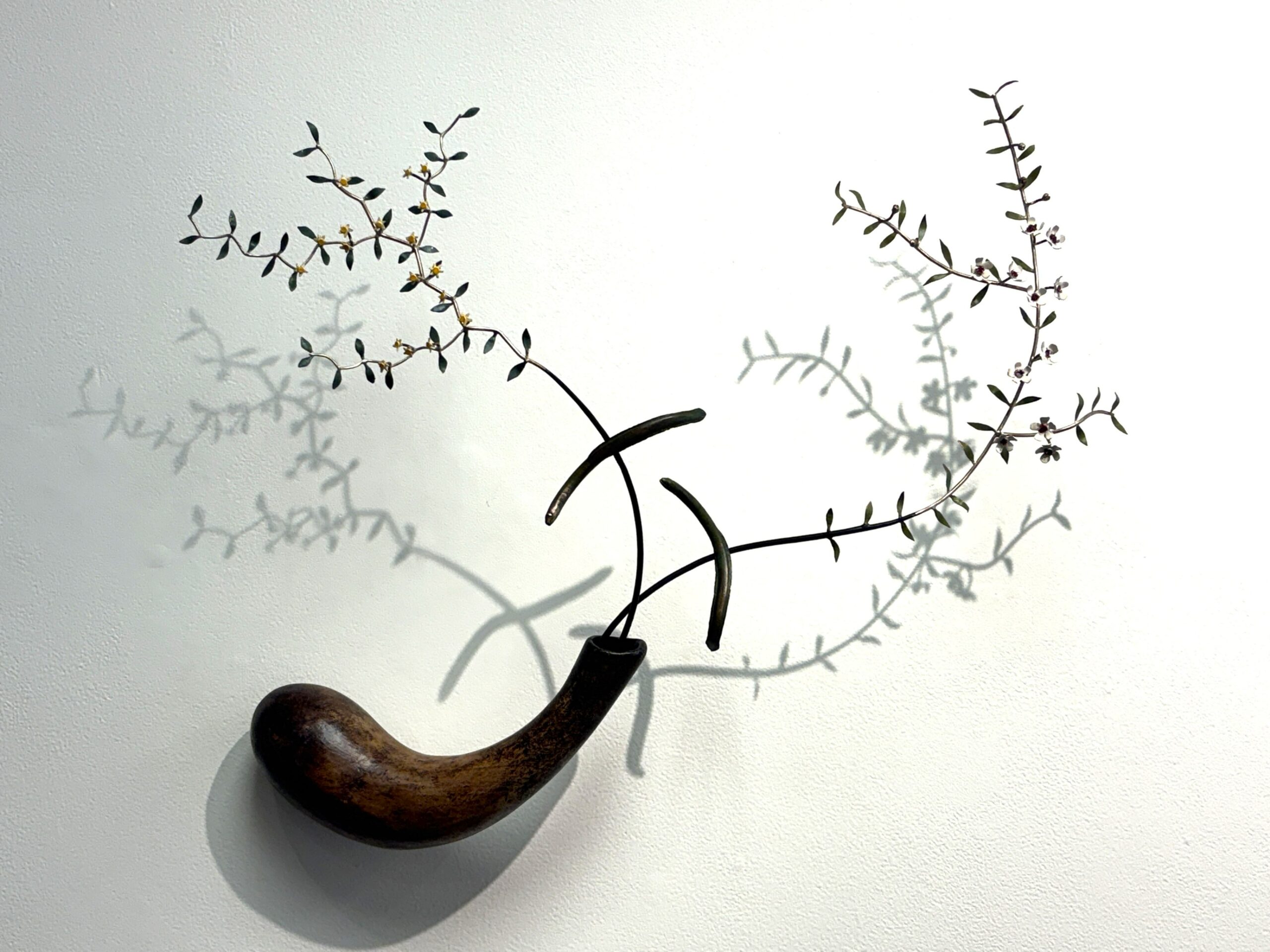
Sharing the Dry – Corokia with Mudfish
Superb unique work (variation no 3 in the Sharing the Dry series). Fixed with pin and single screw to wall.
-
Justin Galligan
About the Artist
‘I enjoy the challenge of taking an everyday industrial product to create a sculpture that has a breath of life and movement…’
Chrsitchurch based sculptor Justin Galligan finds inspiration in the shapes and curves of avian flight, the feminine form, and images from an analogue drawing machine he built in 2021. He explores forms with balance without symmetry, and has embraced the Japanese concept of Wabi Sabi – essentially, finding beauty in imperfection.
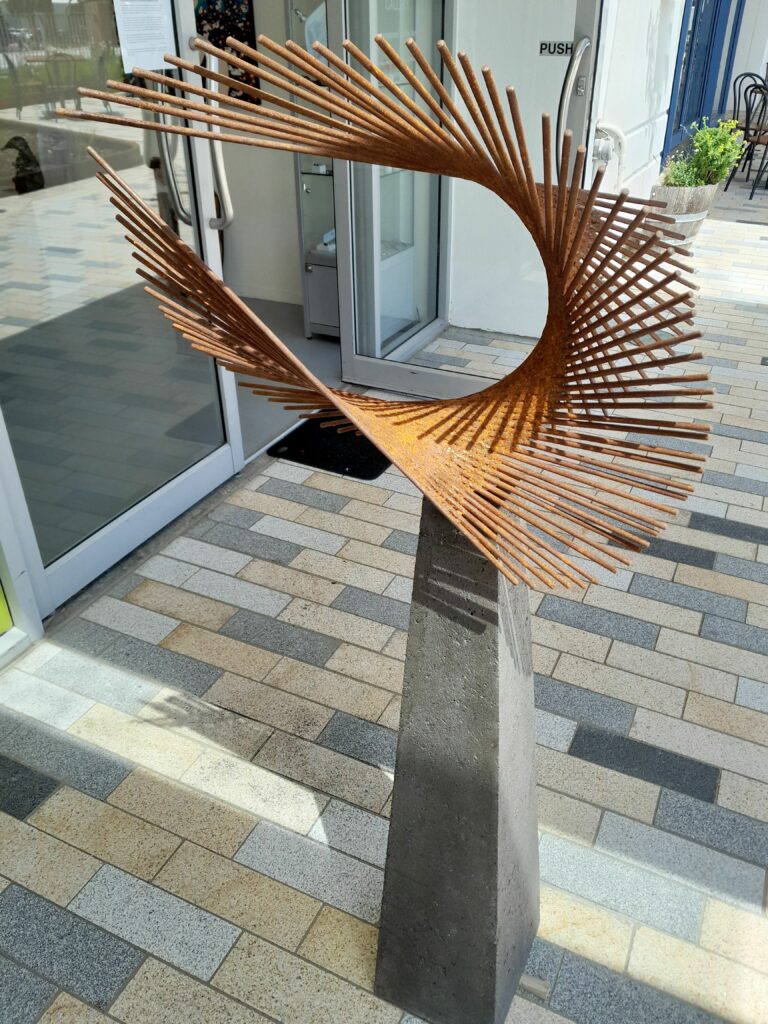
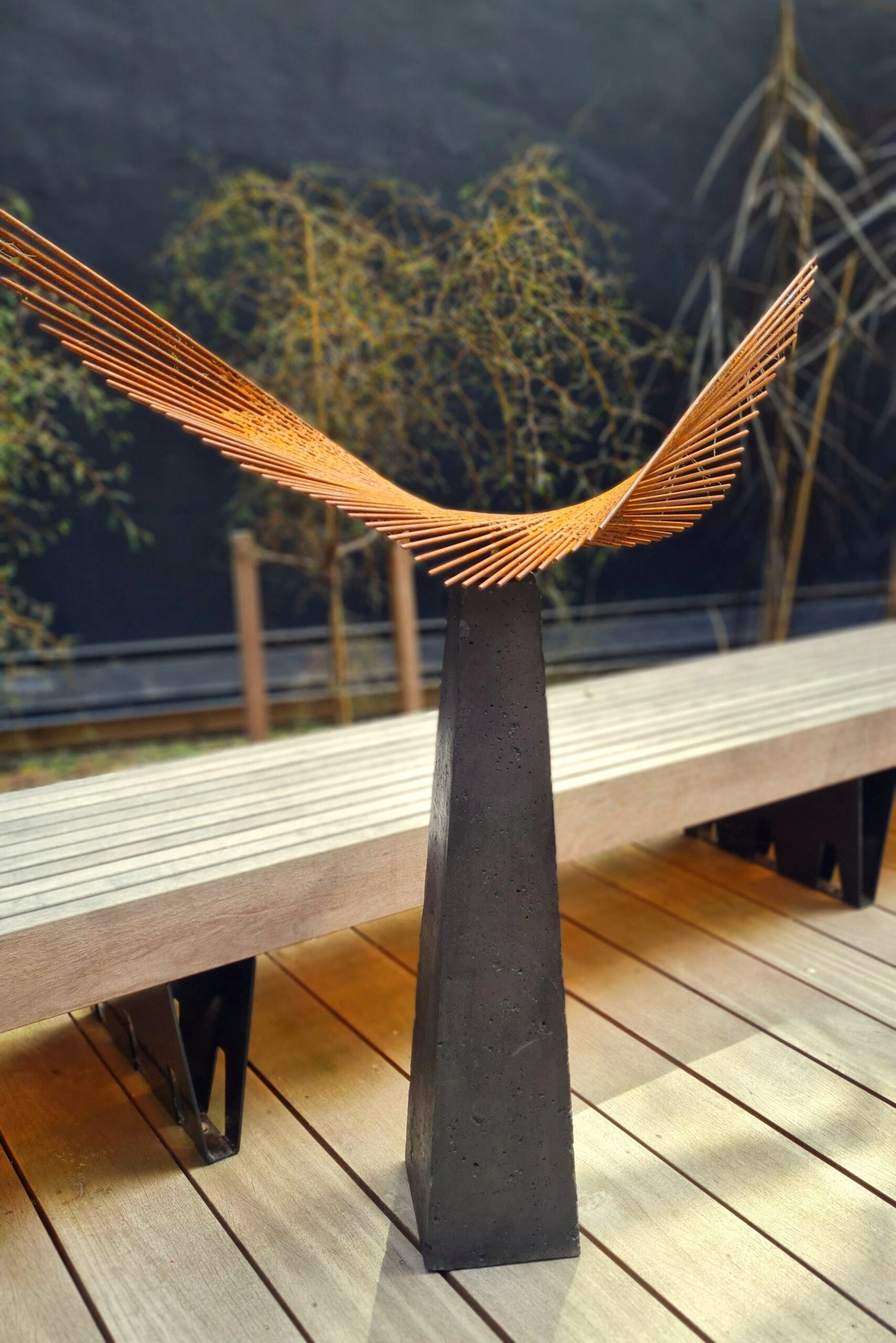
His mesmerising wave and wing works are created from 60cm steel rods, hand welded into a form mounted on a dark concrete plinth, turning in the breeze.
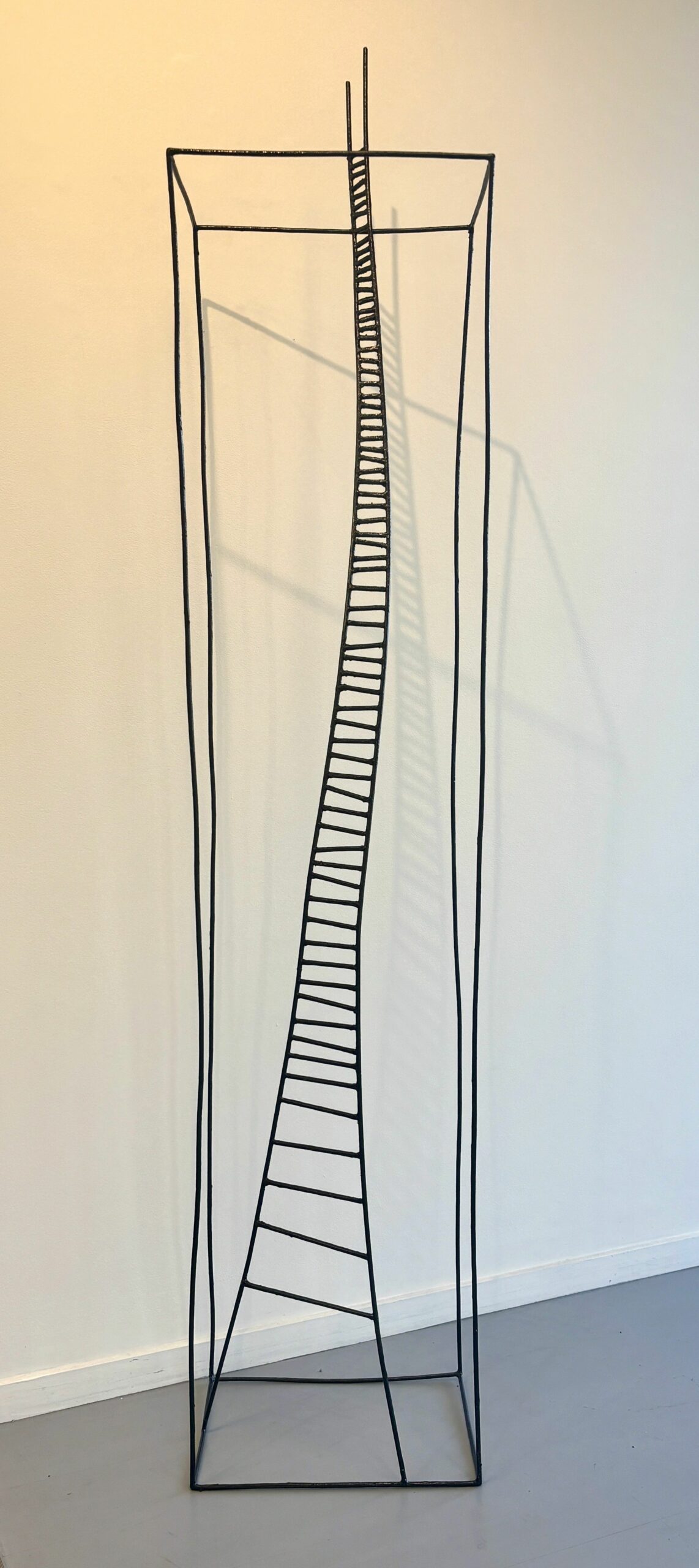
His recent works also include elongated structures using wire or steel rods, with a rising chair or ladder carrying their own philosophy – such as The Absentee, a surrealist homage to someone who has passed on, no longer here but their memory still present.
More About the Artist
When Galligan was young, his mechanic father would bring home old starter motors to extract the copper wire which would be used to tie up the grapevine and hold the chicken coop together. From early experimentation with the material, Galligan realised a wire is a line in space that could be used to sketch in three dimensions and delineate space.
Over four decades later, he has extended this use of wire to embrace the classic kiwi No 8 wire, chicken mesh and steel rod.
-
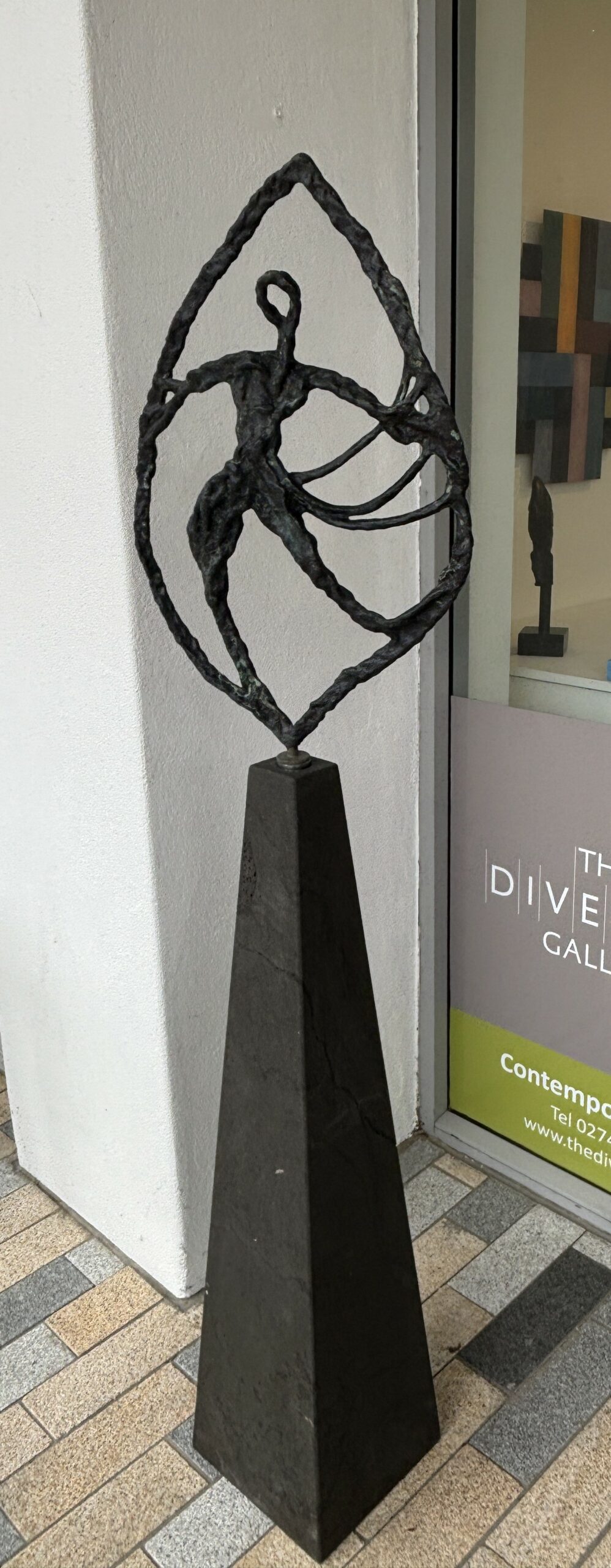
She Belongs iii
A large variation of this edition, now mounted on a tall Bluestone plinth, turning in the breeze.
-
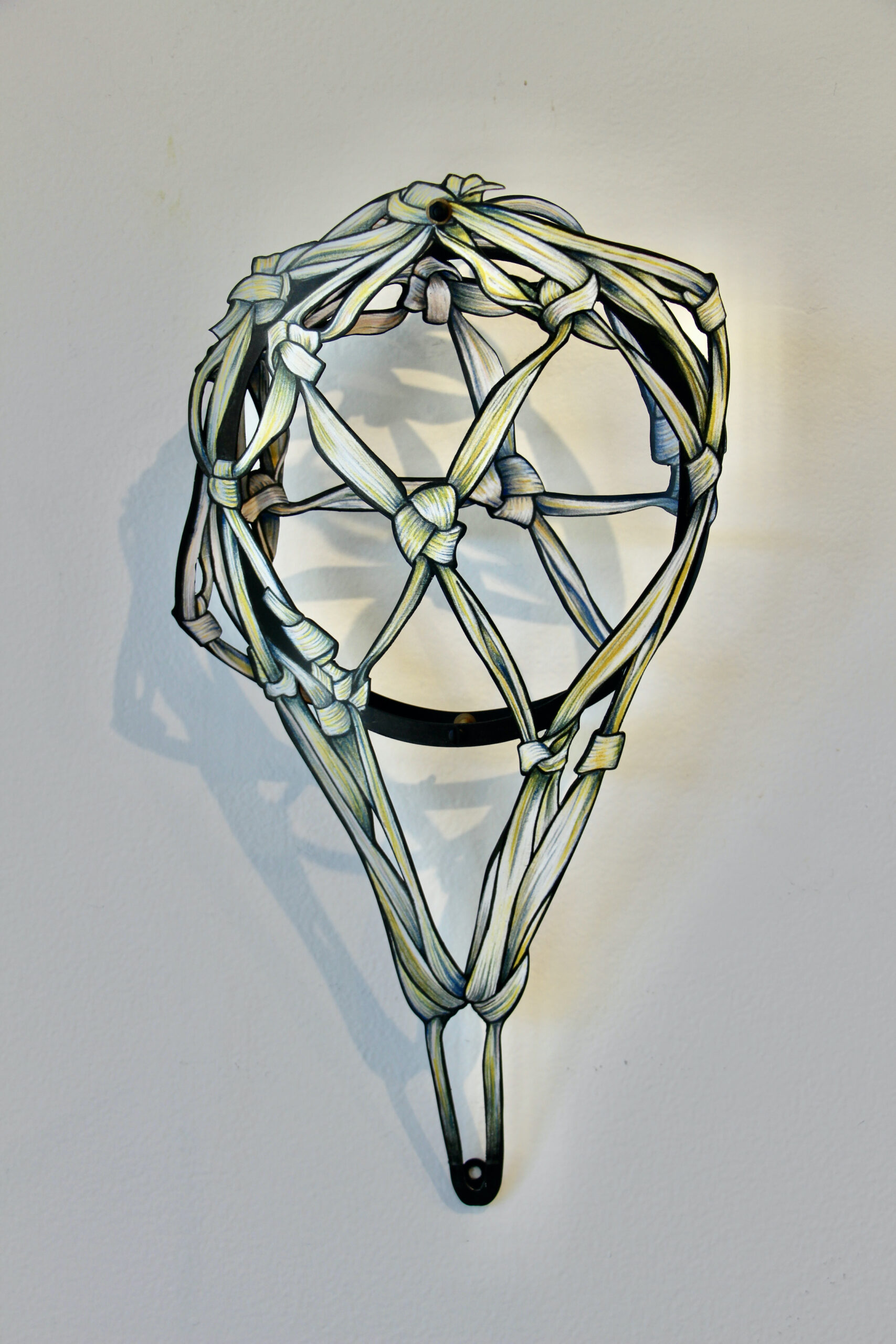
Connect
Well known for his large-scale sculptures, Graham Bennett has created this signed limited edition wall sculpture Connect to celebrate Brain Tree endeavours (the establishment of a facilty to support Cantabrians with neurological conditions). Inspired by the harakeke binding and linkages supporting the floats/anchors (karihi) on a Māori fishing net in the Canterbury museum, Connect hints at cerebral cicuitry such as the Willis Circle of Brain Connections.
Other interpretations suggest the knots draw together four ties referencing the four dimensions of Te Whare Tapa Whā and/or the interweaving of people with support communities or neurological organisations. -
Jim Wheeler
About the Artist
‘With my sculptural practice I intuitively select botanical subjects from the New Zealand bush. Having studied forest ecology alongside sculpture at university my choices are guided by both disciplines. The focus is the growing, guiding behaviour of plants within their environment and the regenerative power of nature during the Anthropocene. We live our lives governed by aspects of creation, preservation and destruction as do plants. My goal is to find parallels between the human condition and Nature in the largest sense while drawing attention to discovered beauty.’ – Jim Wheeler, 2019
More About the Artist
Jim Wheeler grew up in a small North Carolina town, U.S.A. He studied Art and Biology at the University of North Carolina, Greensboro, graduating with a B.A. in Studio Art (cum laude). A two year renaissance style apprenticeship (Johnson Atelier, Princeton, N.J.) in the techniques of sculpture provided Jim with the skills to immigrate to New Zealand in 1981 where he helped set up Art Works Studio. Leaving in 1989 to become a full time exhibiting sculptor; undertaking public and private commissions, an M.I.T. lecturer 1995-6, and Lord of the Rings department head, 1999. He has been exhibiting since 1979, with eight solo and numerous group shows. His works are held in the British Museum, the Fitzwilliam Museum (UK), the University of North Carolina in the Greensboro Vice Chancellor’s Purchase Award Collection (USA), the Auckland Museum, the Auckland Botanic Gardens, and the James Wallace Arts Trust.
Wheeler has shown at Sculpture in the Gardens (Auckland Botanic Gardens), Brick Bay Sculpture Trail (Matakana), Sculpture on the Gulf, Sculpture On The Shore, James Wallace Arts Centre, Tauranga Art Gallery, Canterbury Museum, Sculpture in the Woolshed (Tawharanui), and at Shapeshifter (the New Douse Museum).
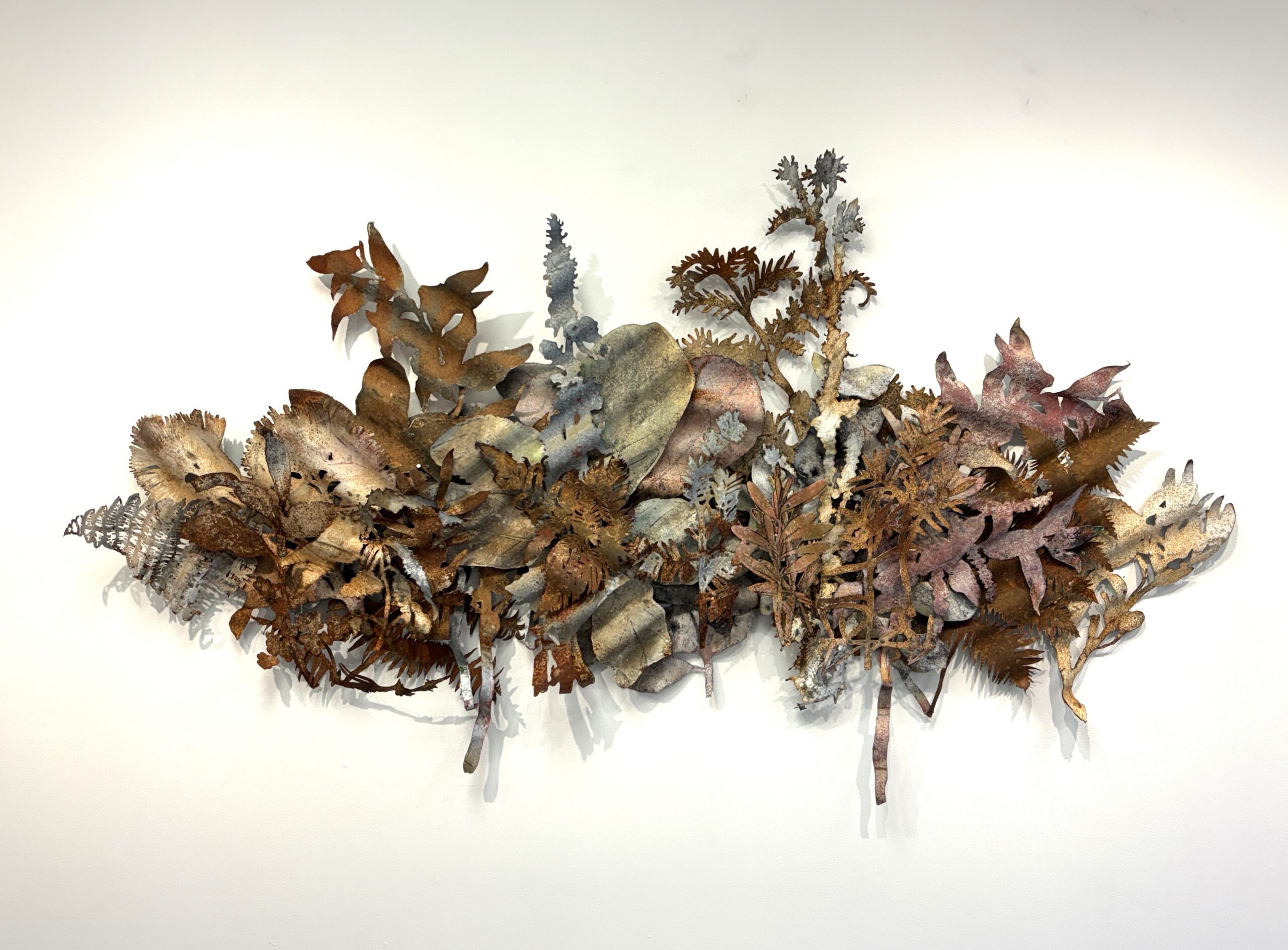
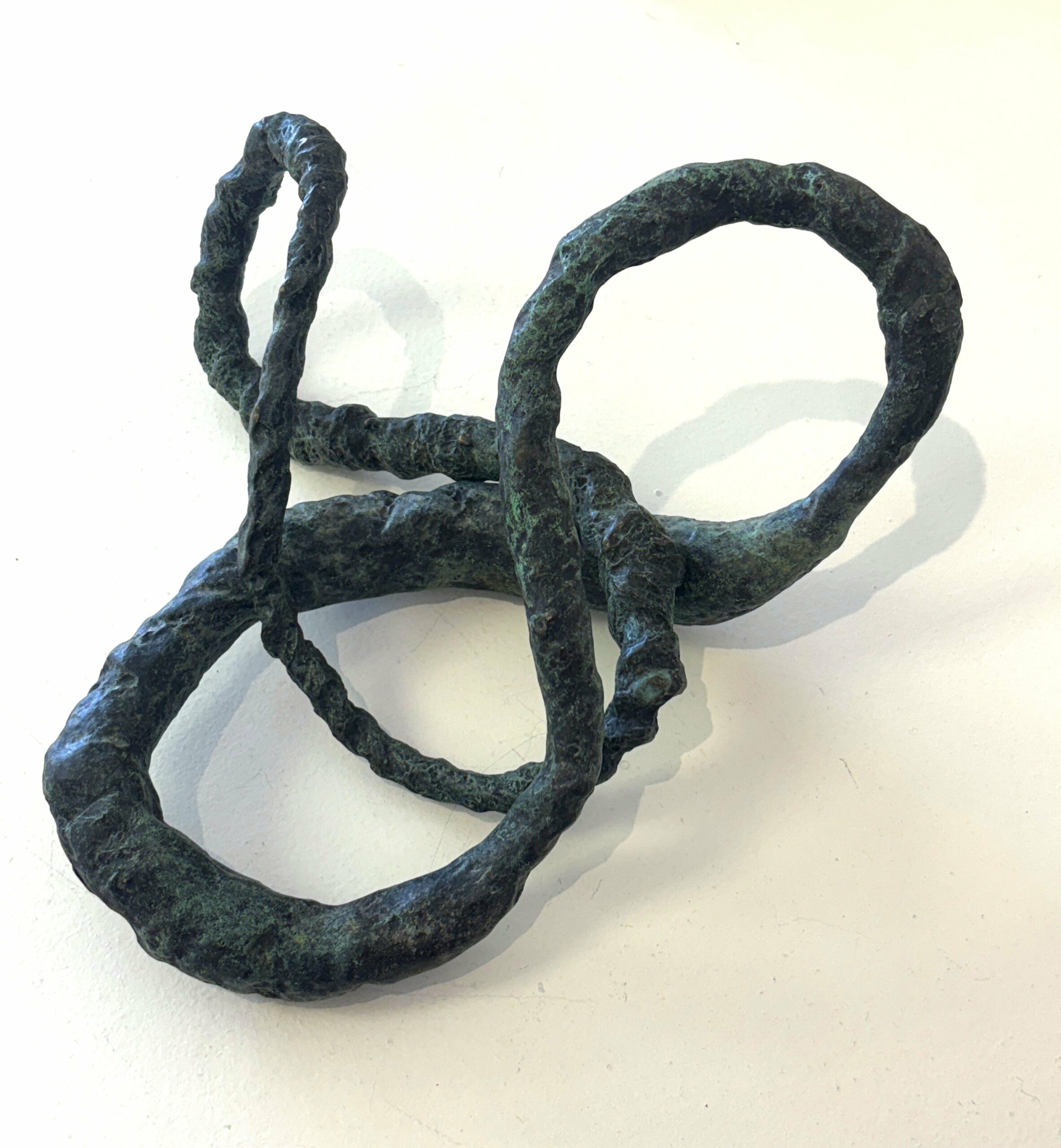
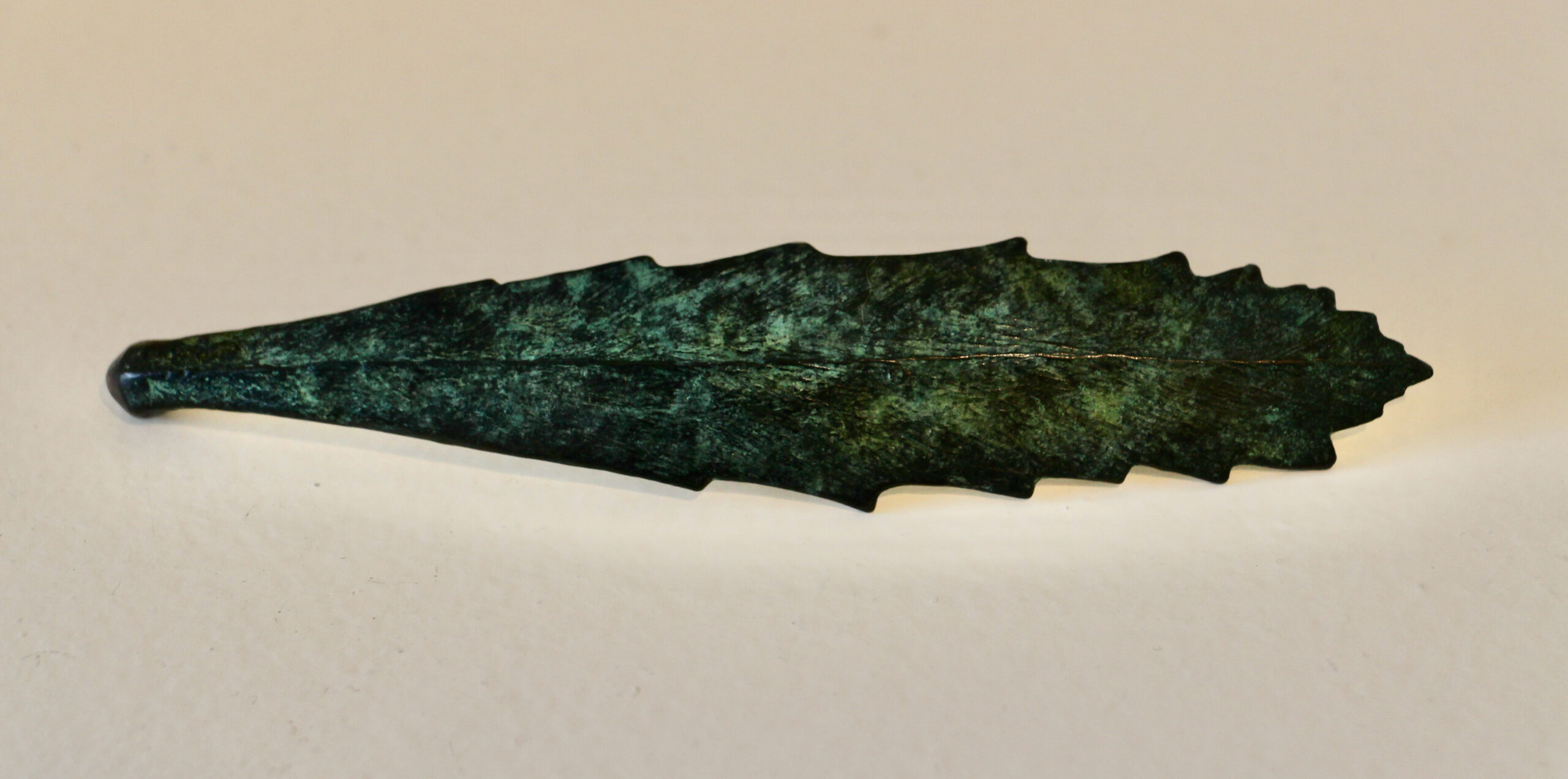
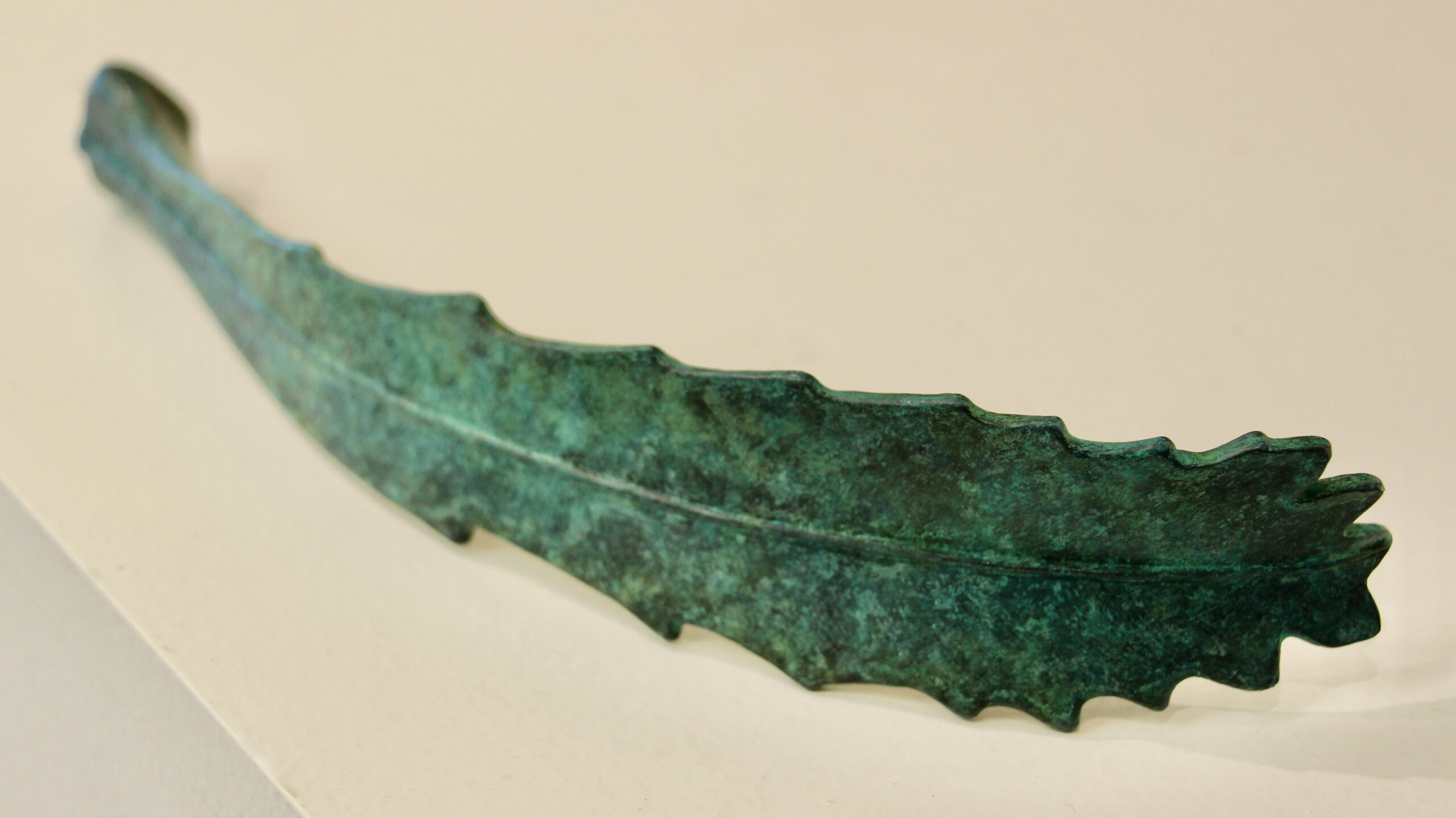
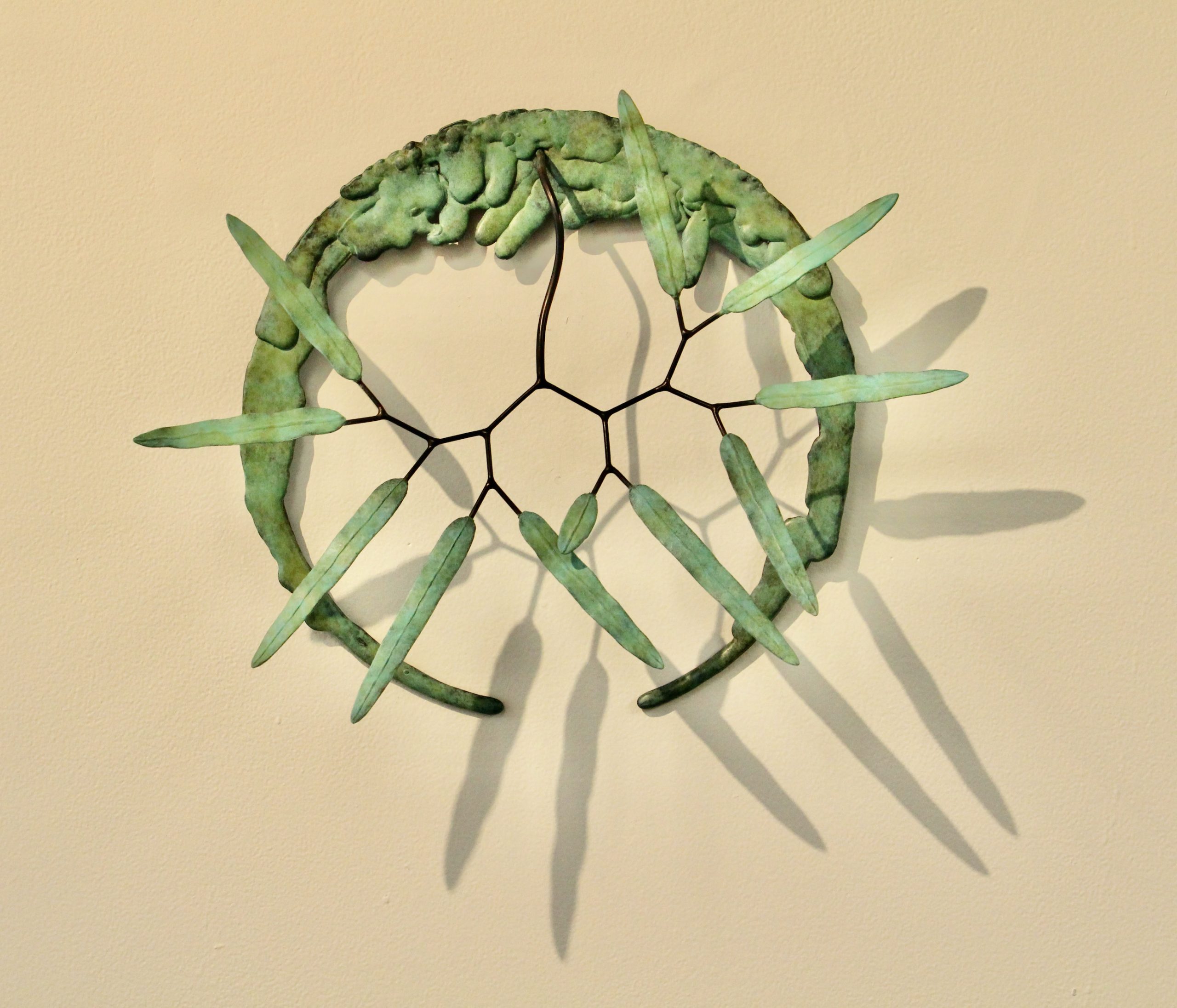
His Mangemange Genesis bronze is a unique variation, a wall mounted work casting significant yet delicate shadow. The smaller lancewood bronzes are objects satisfying to the touch, a link to the native forests surrounding us.
-
Robyn Webster
About the Artist
Robyn Webster (Christchurch) is primarily a sculptor and printmaker, although she has worked since her first exhibition, in other disciplines including painting and performance. Formerly a teacher of painting at secondary level, she now focuses on her own art practice. She brings the tradition of handmade artefacts and natural materials into contemporary fine art, most notably with her use of industrialised Harakeke (flax) fibre both in the creation of her unique sculptures and for her semi-abstracted monoprints.
Her sculptures have now evolved into extraordinary bronzes, cast from the harekeke (flax) woven sculptures, still employing motifs about human connection with the land.
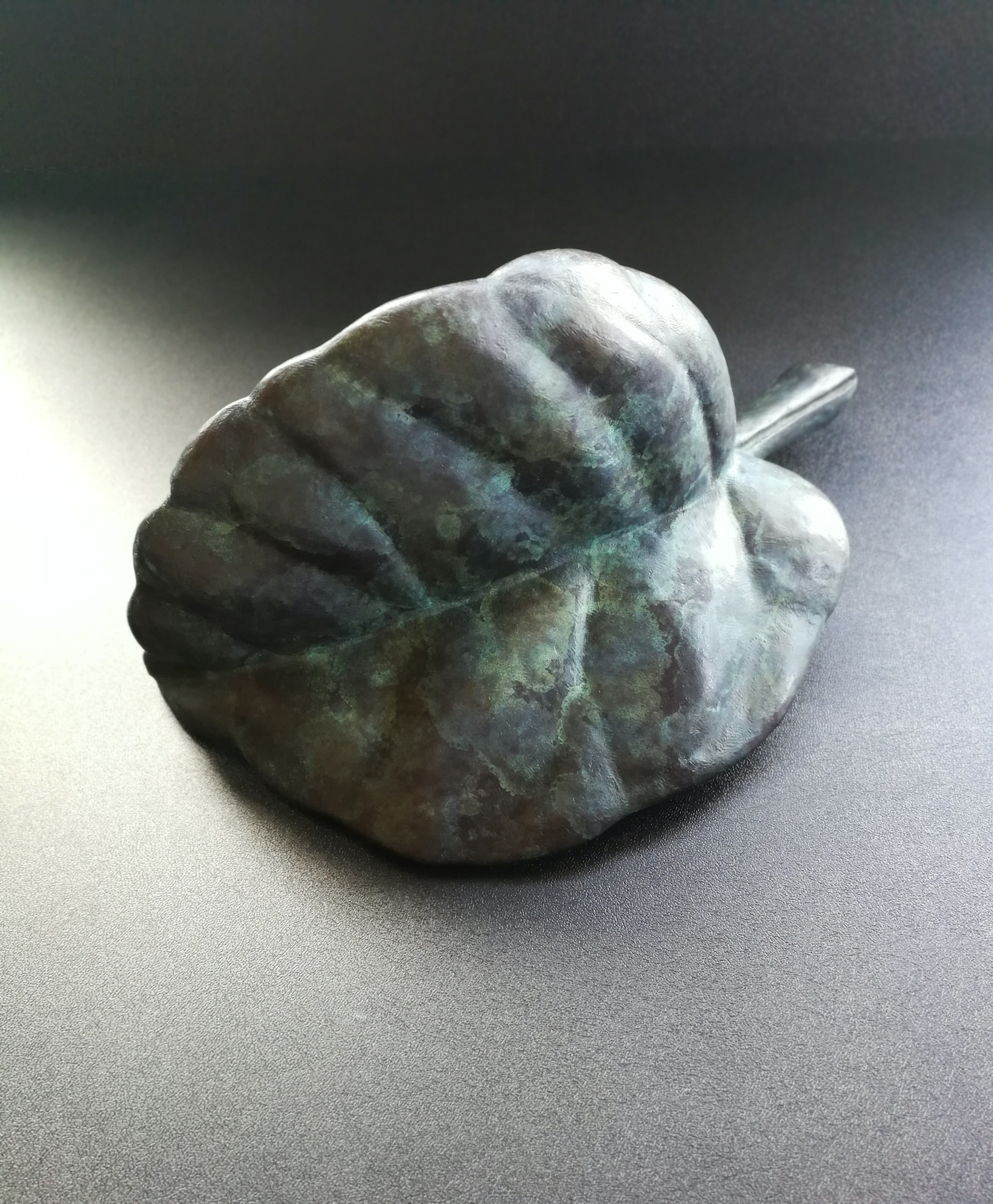
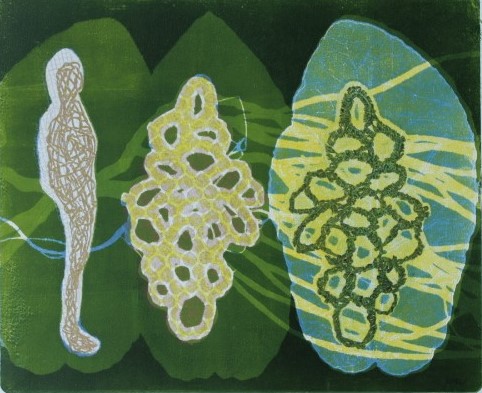
Her monotypes also employ other natural materials for imprinting shapes – such as the giant puka leaf. Suggestions of cell structures, protective woman figures, house shapes and perhaps bloodlines, flow through her work. The concept of womanhood underpins it – from being a woman, making art as a woman, to concepts of woman as home, world as home, and of protecting the natural world.
Recent Works
The figure is a recurring motif, and her river works focus on the relationship with the natural environment and commitment to its protection. She entwines the concepts and expression by using natural locally sourced materials like harakeke (flax) fibre and leaf forms to imprint vessel forms and figures. Those natural materials suggest looking to indigenous tradition for a more natural connection to the environment.
Recent works also emphasise the idea of pausing, taking breath, absorbing what is around us, stepping into a new phase.
-
Jeff Thomson
About the Artist
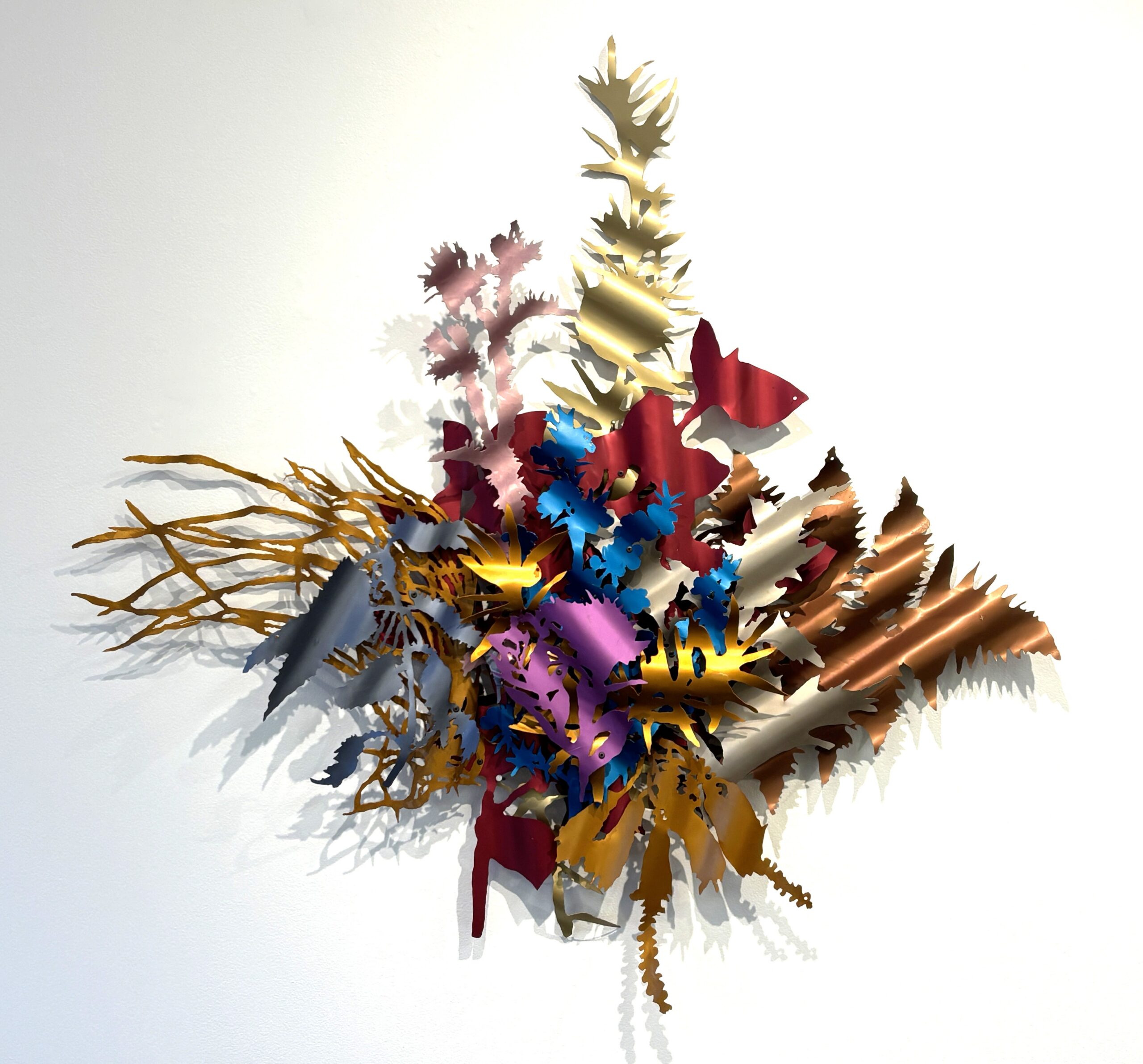
Unconventional, humorous, challenging, iconic and ironic, the sculpture of Jeff Thomson has given a whole new perspective of corrugated iron in the New Zealand landscape and in art. His corrugated iron cows, elephants and animals appeared in the early 1980s, transforming one of the most ubiquitous materials in the Kiwi landscape and making us think twice about art at the same time.
Despite fame, Thomson remains real and grounded, just like his corrugated iron Holden, in the collection of Te Papa Tongarewa, the National Museum. Thomson’s work is keenly sought after by collectors in New Zealand and overseas, and he has had major exhibitions in Australia and Germany as well as New Zealand. His work never stands still, and he continues to be recognised as one of our leading and most original contemporary artists today. A major retrospective exhibition began touring NZ galleries in late 2013, coinciding with a new book on Jeff Thomson’s art.
Recent Works
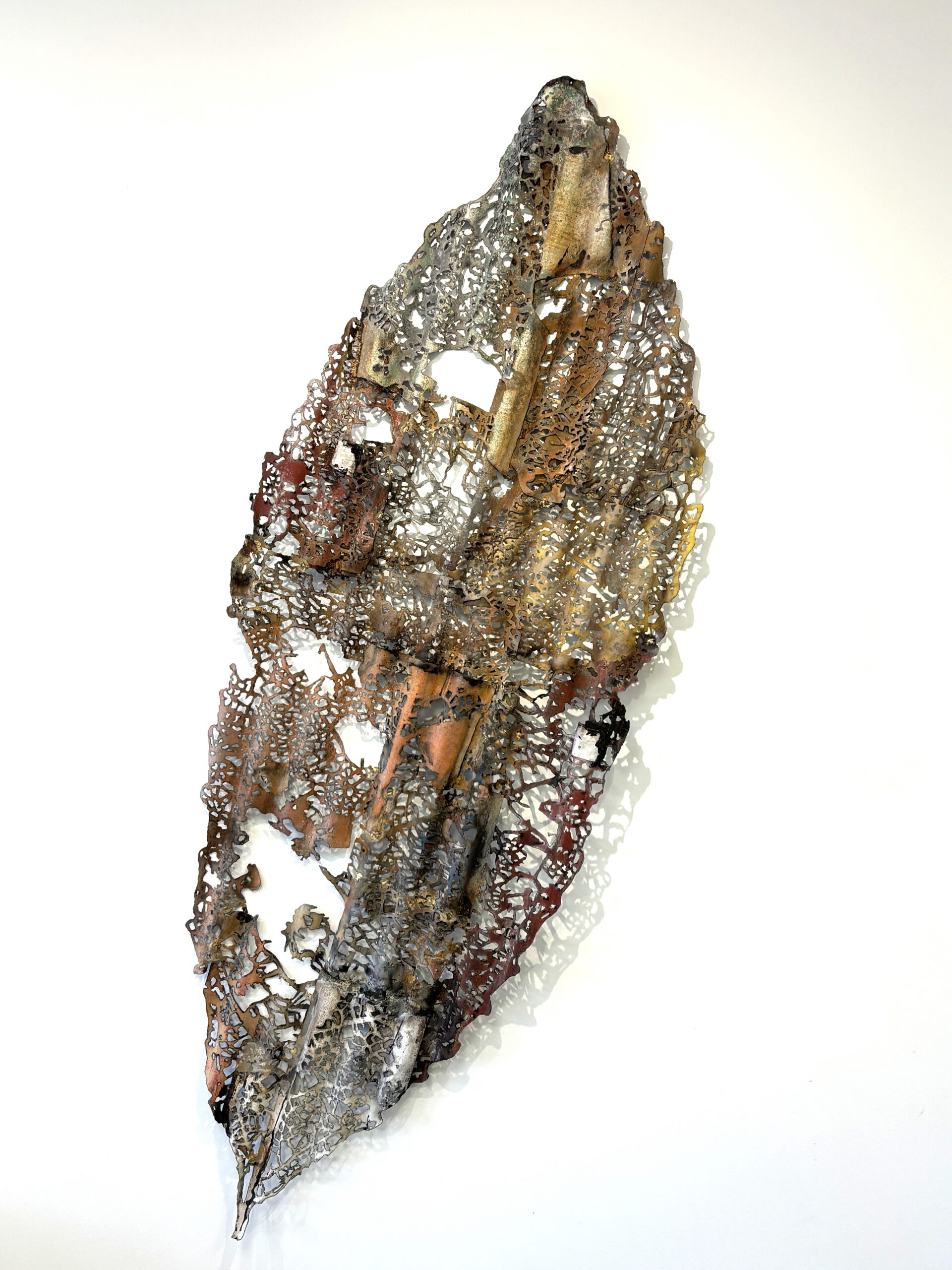
New Threads of Old and New Iron
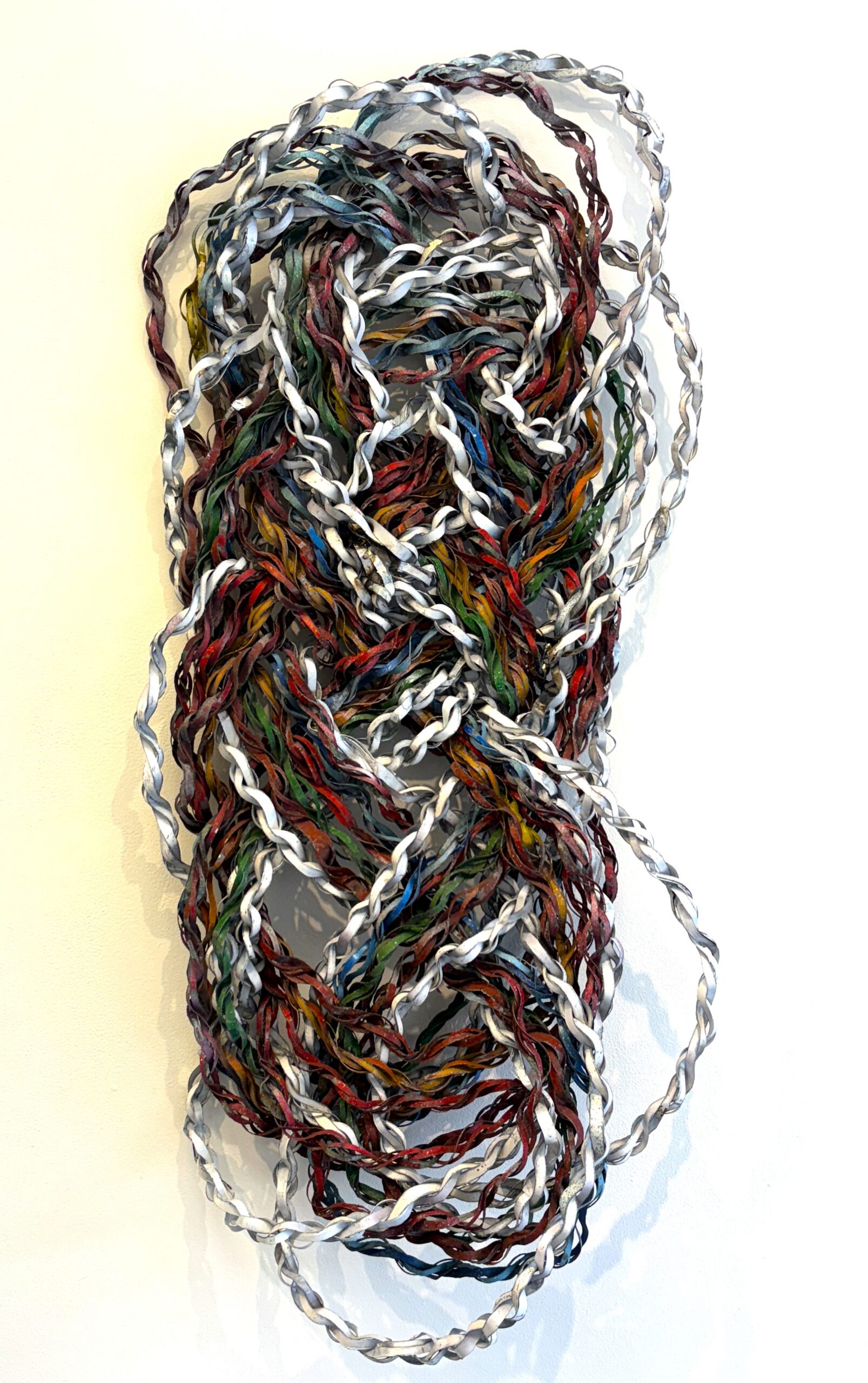
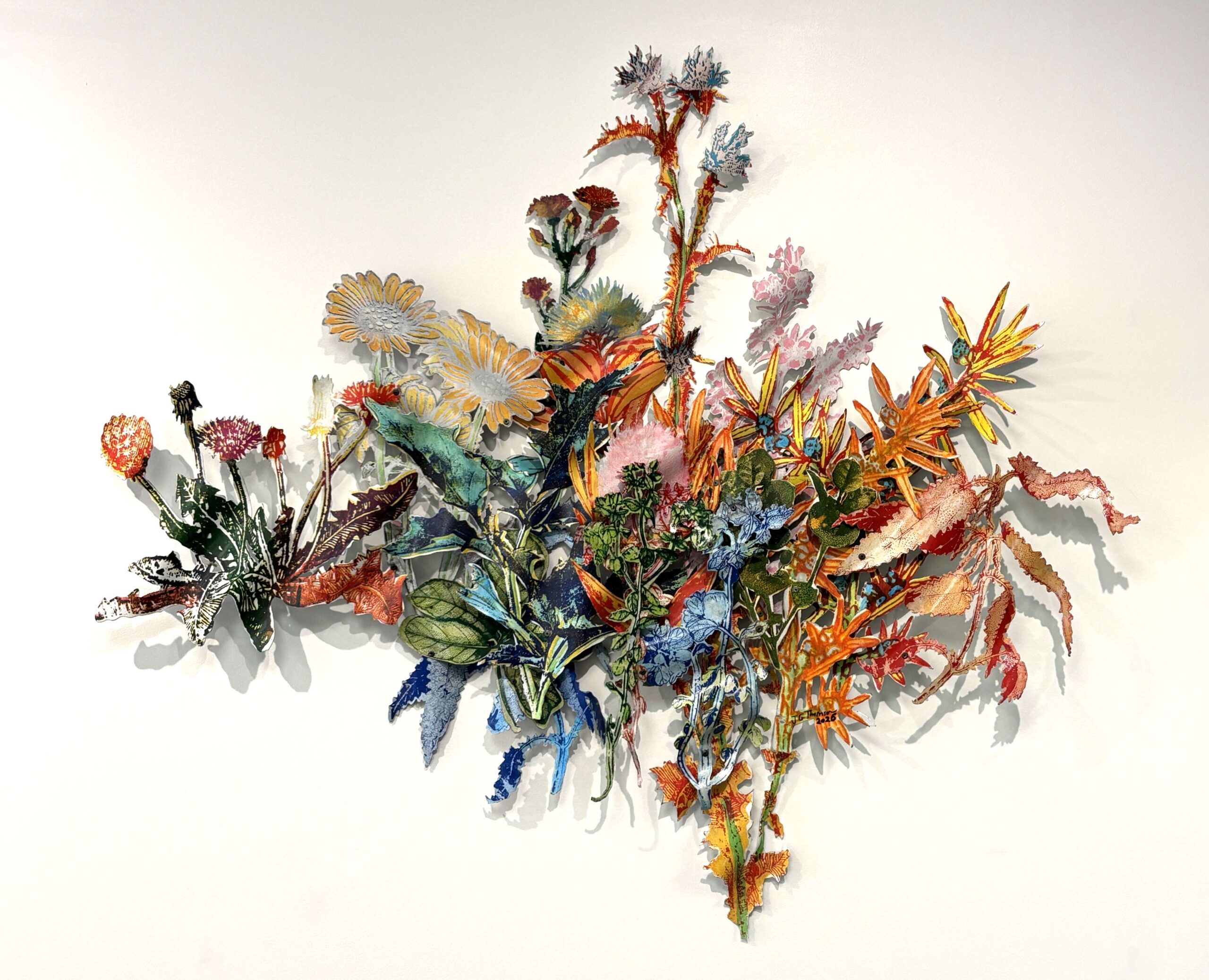
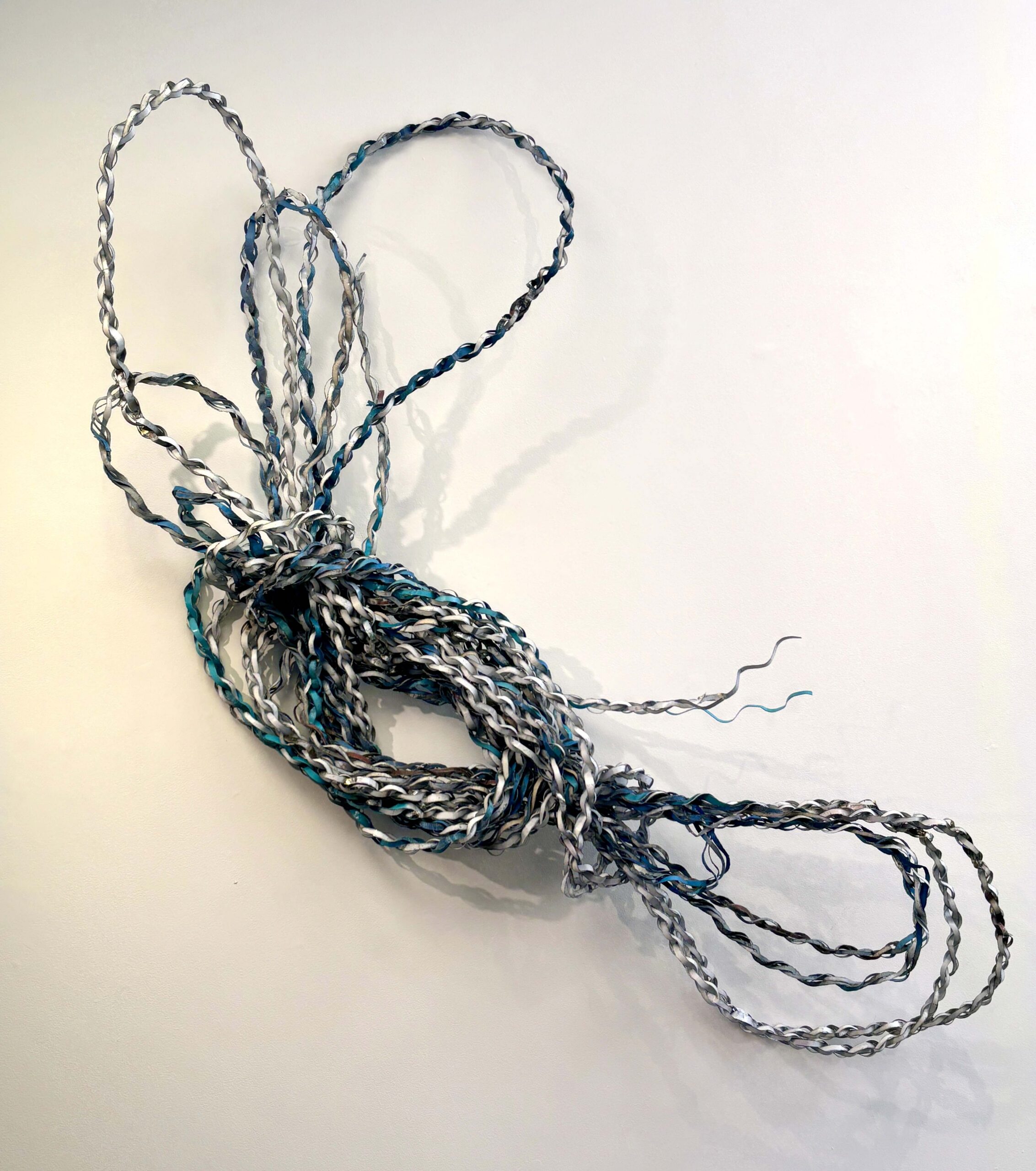
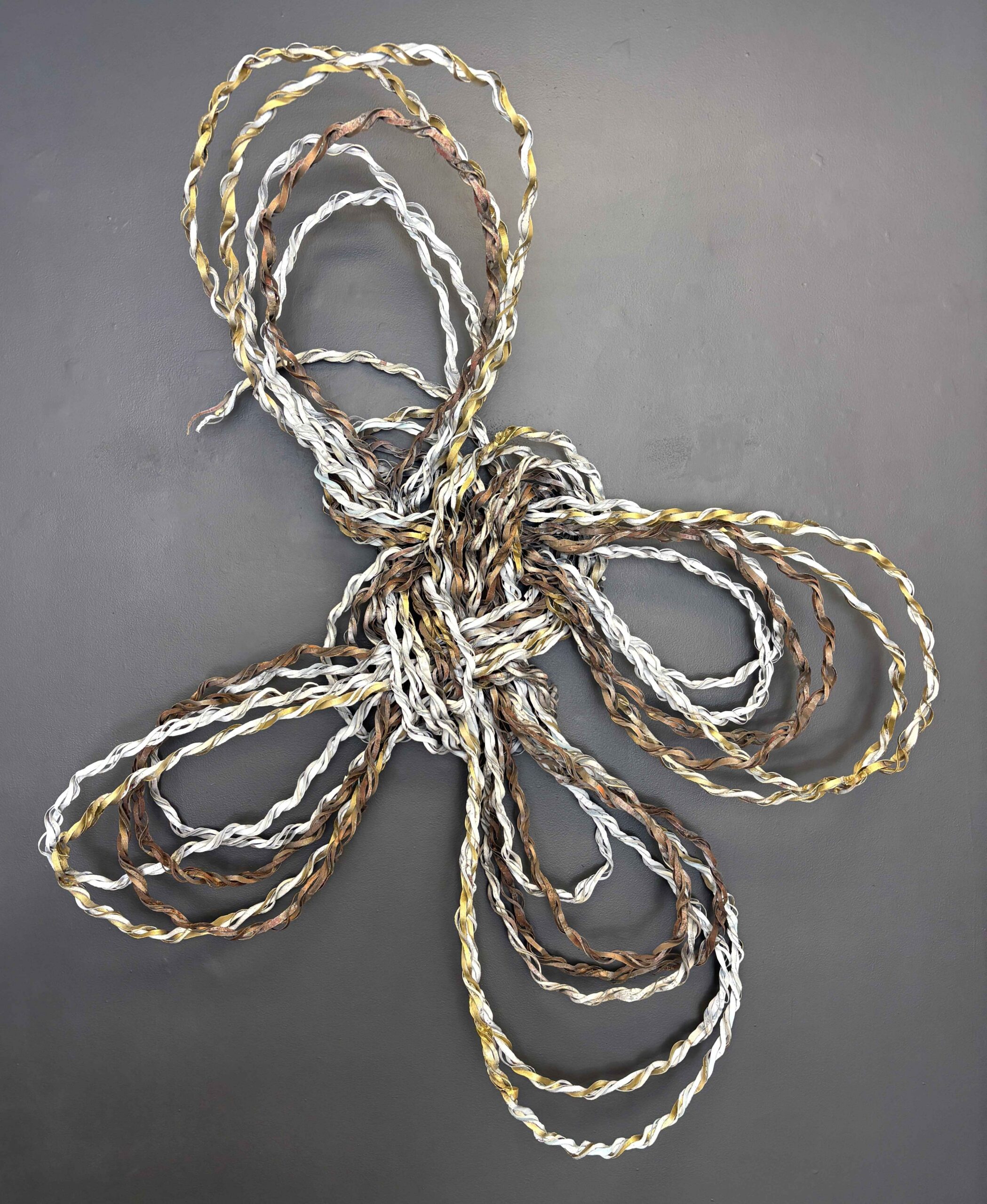
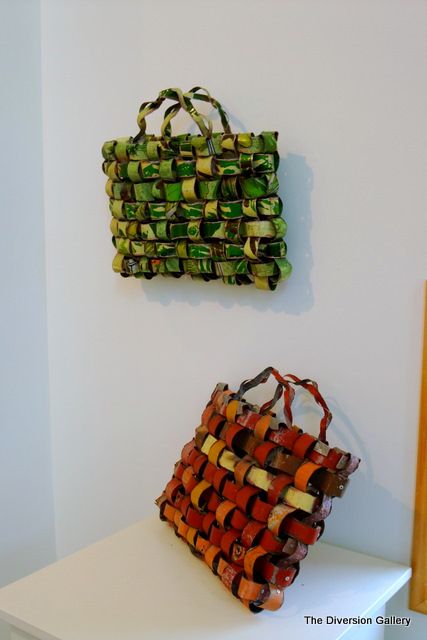
Various animals (including chickens, fantails, wetas, sheep etc) and objects such as woven kete, native plants, and feathers are available on commission using both screenprinted or ‘found’ corrugated iron. Please enquire for images and prices.
The Feather series has an enduring following, each one individually crafted from used iron, with its own unique personality. Larger than human scale, these are usually 2-3 metres from tip to quill, made of layered corrugated iron, and range from beachy to fiercely coloured works, some transformed through fire.
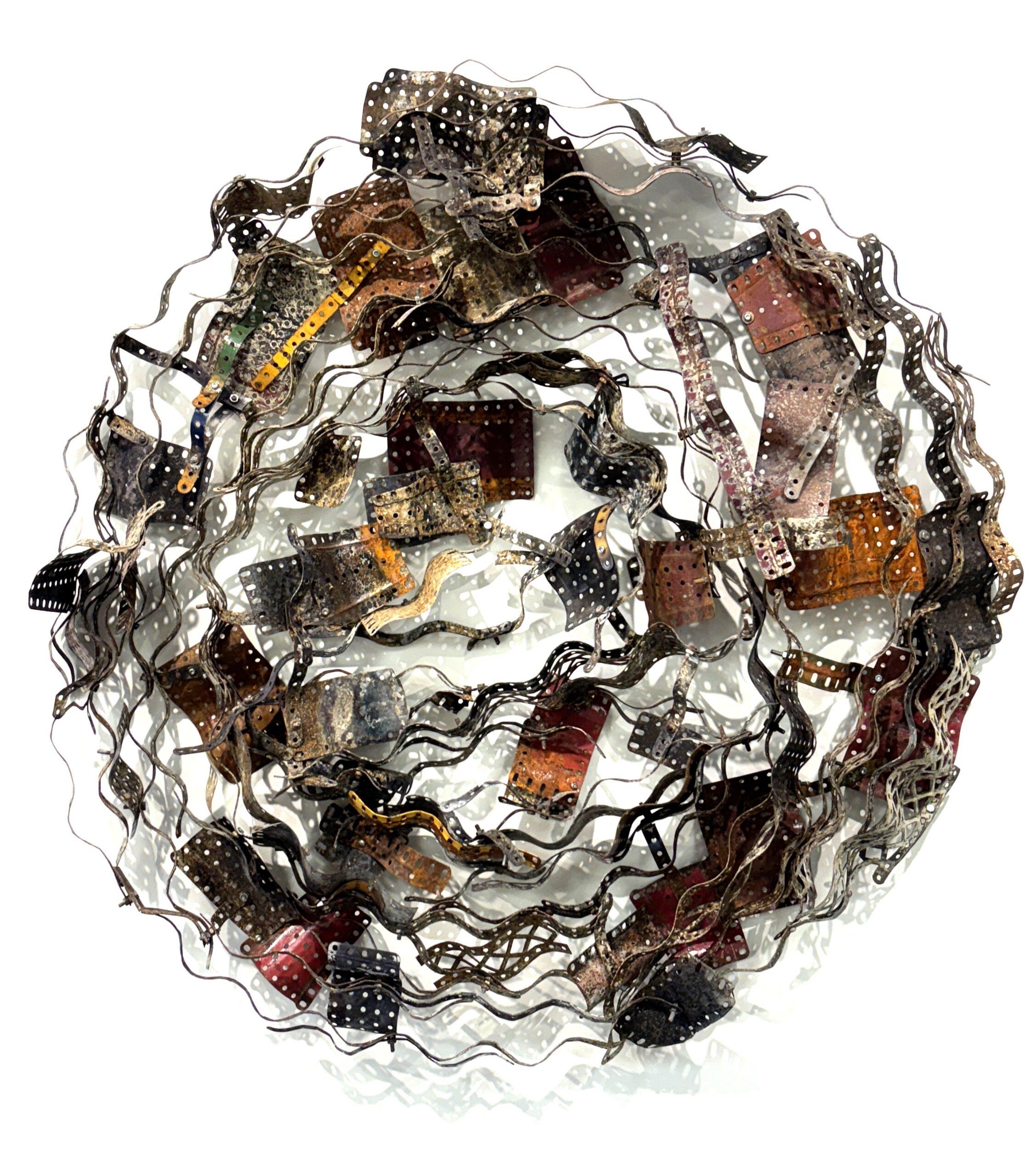
His recent abstract works defy the practical connotations of domestic objects and materials – such as mats, woven material and fabrics, a complete contradiction of practical and impractical when created out of corrugated steel and iron. His long-held interest in maps, as visual designs and as markers of our ‘place’, surfaces in a new way, with strips screenprinted, corrugated, and woven to play with ideas about our links to place. It could be read as how, no matter where in this country we come from, our lives are interwoven in unexpected ways.
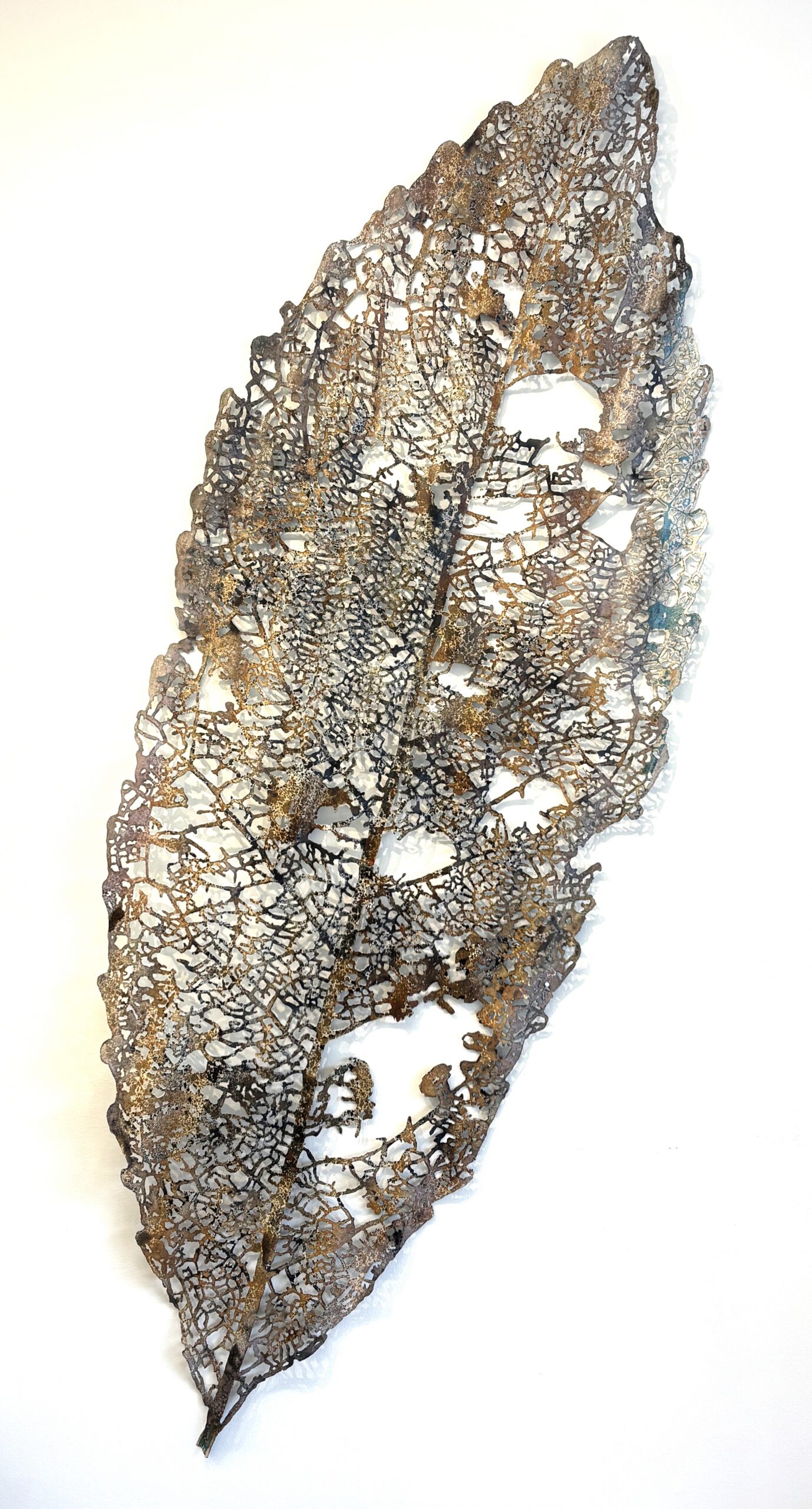
These are all are indicative of Thomson’s ability to shrug off expectation and classification, and explore new challenges and conundrums in metal. His trademark corrugations remain, but here the viewer is challenged with how a material deemed functional or heavy can become an object of beauty and elegance. They are intriguing both in their craftsmanship and keenly observed philosophy.
-
Graham Bennett
About the Artist
Graham Bennett is probably best known in New Zealand for two very high profile sculptures – Reasons for Voyaging, the soaring seven-pillar installation outside the Christchurch Art Gallery in Montreal St, and the Tribute to Firefighters he was asked to create in Christchurch from steel girders sent to him from the World Trade Center ruins in New York. However his practice is much wider, and in recent times focused particularly on issues of sustainability and our relationship with the planet.
He featured as the cover story of the 2014 Winter edition of World Sculpture News, in an article focused particularly on the 10-year Survey Exhibition of his work, at The Suter Public Art Gallery in Nelson, NZ. This followed on from a residency in Seoul, South Korea, in which he created a towering outdoor sculpture Tipping Point now on permanent display. He also works in miniature, such as the meticulously worked Wait Watcher series, and in jewellery based on his sculptures, effectively sculpture for the body.
Bennett’s sculpture is an evolution of ideas and philosophies based on concepts of sustainability, and of voyaging, past present and future, connection between islands in the Pacific, connections between the primordial land and man’s temporary imposition on it, with our structures imposed on or cutting into the land, and particularly of connections and differences between cultures across the world.
He considers questions of identity, and our sense of place. His work often features lines of latitude and longitude, the phases of the moon and passages of planets across the Earth, as followed by explorers through the Pacific, such as the Transit of Venus.
He uses impermanent man-made materials – like steel – against natural materials like rock and wood, to express those ideas. He was born in Nelson, the geographic centre of New Zealand, near the natural rock formation the Boulder Bank, and this has influenced his work. Faultlines and geothermal lines project out from New Zealand to places across the Pacific, with the concept that the waters that lap our shores, also break on their coast, and thus connect us.
Recent Works
Bennett returned to Japan in 2024 for a significant residency, and explored new ideas about the fragility of our world and our impact on the environment, in paintings, sculpture and photography. He exhibited some of these in Japan, then later at The Diversion, and the exhibition and its underpinning concepts were the subject of a substantial feature in Art New Zealand in 2025. On the Brink and other works were made using natural materials, mostly derived from bamboo, painted with kakishibu, a dye made for centuries in Japan by fermenting persimmons for two years. Many sculptures feature a fragmented globe of the Earth, with segments pinned together to appear whole, yet perilously close to coming apart.
The Disrupt series features axes made of imported pine, and native timbers, each with their own story. The axe carries histories of colonisation, destruction of native forests, and of people. And now, a sense of peril to the earth and humanity.
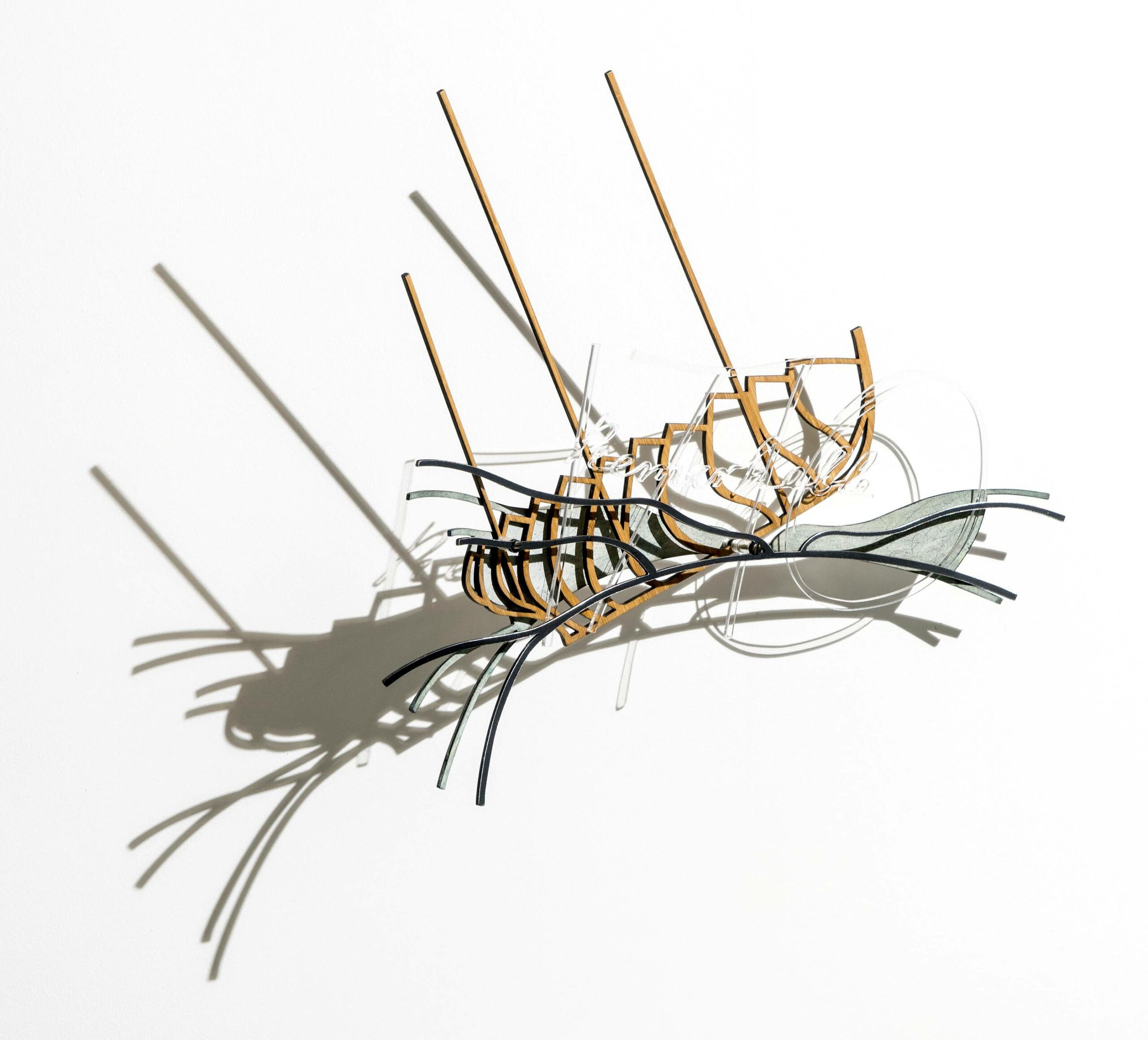
His Remarkable sculptures resulted from The Diversion Gallery’s Meretoto project around the early encounters between Maori and Europeans in Aotearoa New Zealand, specifically the connection between Maori and Captain Cook. Each has the bones of the ship Remarkable, the outline of the entrance to Cook Strait behind, and the word Remarkable in perspex overlaid. Bennett he described the concept in a poem:
‘... 3 masts, 3 histories, across 3 centuries in 3 layers; time, place, shapes, memories; a cast shadow…’
The major series WADE confronts us with the dire state of so many of our waterways, and the need for us to urgently address issues of pollution and the consequences of our poor land management, over irrigation and unsustainable practices. Bennett moved from using abstracted forms to digitally printed images of young women, referencing the central figures in Hieronymus Bosch’s Garden of Earthly Delights (circa 1500 AD), innocent women standing in a pond. He challenges us to not look away, but to engage and think about the significance of that painting, and questions of what inheritance we will pass to the next generation – and what needs to change.
A recurring motif is based on the ‘orange peel segment’ flattened map of the world. Each segment is also the shape of a canoe or vessel; when standing vertically his pieces sometimes further suggest a human element or vertebrae. Recent works bring together four of those segments to form a closed pod shape, reaching upwards and out.
Graham Bennett completes detailed studies on paper for each of his sculptures, but these are not so much plans for sculpture as paintings conveying the feeling as much as the dimension and scale of the intended works.
Lately his work focuses on questions of balance in our impact on the environment, and the idea we are moving dangerously close to the ‘tipping point’ of no return or remediation. A major commission in Seoul, South Korea, featured a human figure he calls the invisible man, arms outstretched, turning atop a five-metre pole structure. The figure casts a shadow below, suggestive of our impact on the environment. Watching the shadow move across the grid of paving stones, he developed ideas for a new series ‘Heavy Shadows’, laser cut in corten steel, the figure seemingly caught in a net of his own making or perhaps pulled in different directions. A small series of beautiful Echo wall works, focus as much or more on the figure’s shadow than the solid work itself.
After a major survey show of the last 10 years of Bennett’s work at the Suter Gallery, in Nelson, the artist released several of the works in that exhibition for sale, such as Hidden Depths, from his personal collection.
Hard to Swallow – a plea for the whales
In 2012, in conjunction with The National Whale Centre, The Diversion and Graham Bennett staged an exhibition entitled ‘Hard to Swallow’ with 267 small sculptures laser cut from tin plated steel, each one representing a whale killed in the Southern Ocean ‘harvest’ of 2011-2012. The intended kill of 990 was cut short by the Sea Shepherd protests and by storms. With heavy irony, Bennett used text and motifs from a real whale meat tin within the composition, including the base text saying ‘Be Careful not to cut your hand on the tin when opening’. The laser cut sculptures cast a shadow on the wall, our impact on the whales’ environment.
Each work is individually numbered and signed, and priced at just $267 + GST (the number of the whales killed); making them accessibly priced to encourage a kind of viral marketing of the idea, with each new owner telling the story to those who view their work.
More About the Artist
Born in Nelson, Graham Bennett graduated from the Canterbury School of Fine Arts in 1970. He has received numerous major NZ Arts awards including the Fellowship in Visual Arts from the NZ Arts Council in 1995 and the Asia 200 Foundation Grant the same year and in 1999. He was Principal Lecturer in the School of Art and Design at Christchurch Polytechnic for several years but has for some years been a full time artist with increasing demand for his work nationally and internationally.
His work is included in several major outdoor private and public sculpture parks, including Gibbs Farm, Brick Bay, Connell’s Bay, and Sculpture on the Gulf. He has participated in major sculpture events here and overseas. He has exhibited a dozen times in Japan, including two international exhibitions, and has a work in the New Zealand embassy in Tokyo. Some of the works we have available were exhibited in Hong Kong in 2009.
He has three times featured as the cover story in World Sculpture News, and his story is one of being a New Zealander and of identity in the context of a vast world, and finding a balance between our use of resources and sustainability of the environment.
In late 2020, a stunning book on his work was published by Ron Sang Publications – the latest of its prestigious series on leading New Zealand artists. This 300 page, beautifully produced volume is currently available in selected bookstores and galleries including The Diversion Gallery and gives a richness of context and thinking to consideration of Bennett’s work.
-
Michael Smither
About the Artist
Michael Smither is one of New Zealand’s most sought-after senior artists, for his iconic super-realist and highly coloured paintings and screenprints which capture a unique and often very personal view of his world.
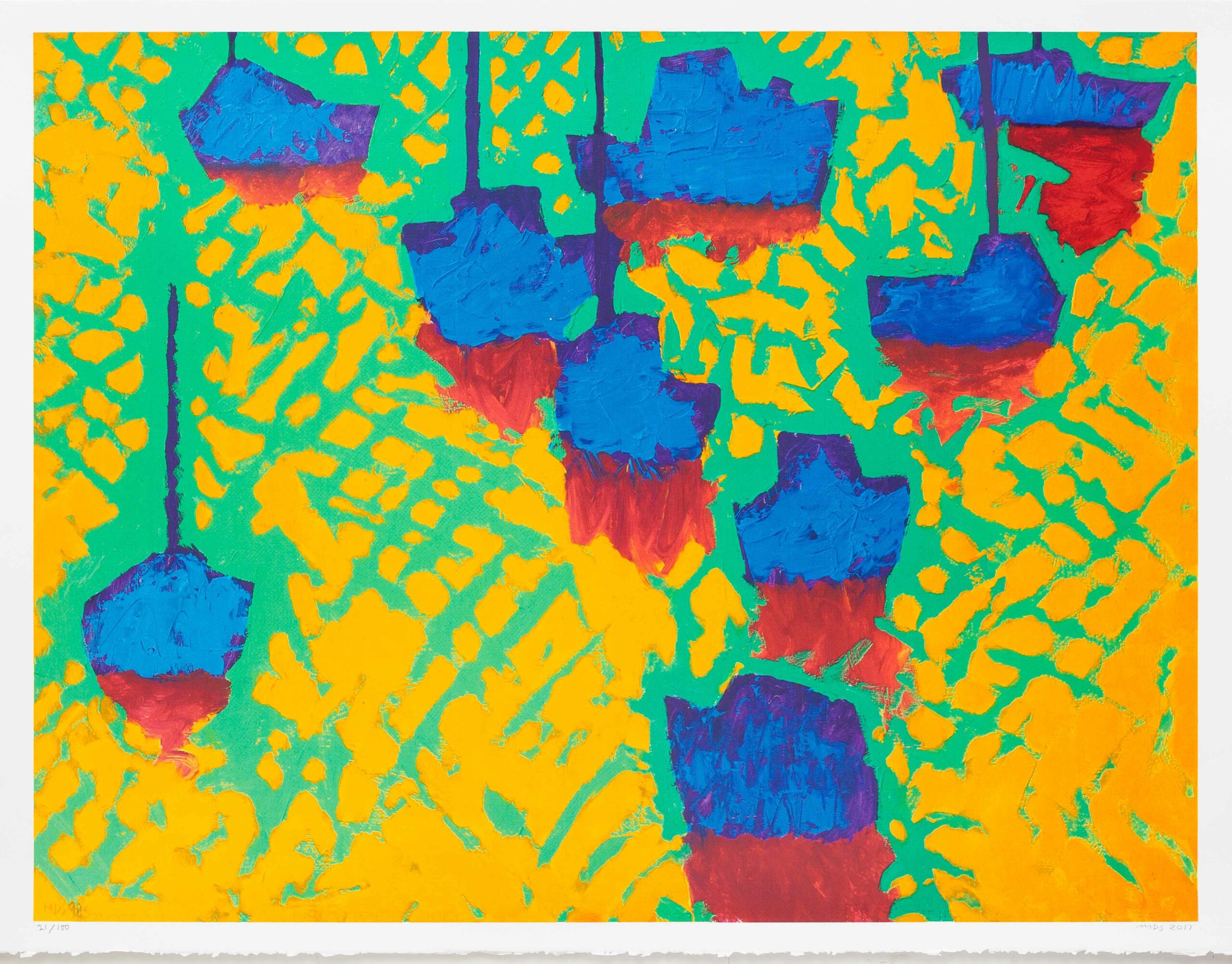
In recent years, he returned to his work of the late 1970s, mapping the linkage between the harmonies of colour and those of music – the spectrum and the musical scale. His Harmonograms and Shared Harmonics explore this association, a viewing experience engaging both the senses when viewed while listening to music he has composed. This approaches synaesthesia, the phenomenon of overlapping senses, where some people see a colour when they hear a sound, or vice versa. These series evolved from his Okahu Bay Boats series, inspired by seeing boats at anchor in Okahu Bay reflected and silhouetted in a flood of golden afternoon light across the harbour. Over time he focused just on the shapes of the prows and coloured reflections to create abstract screenprints and sculptures.
While his work is sought after for major collections, Michael Smither is also committed to remaining accessible to the wider public who love his work, and thus keeps his screenprints and drawings deliberately affordable. He has prints of his most popular paintings with screenprinted ‘enhancements’, these start at $500, images on request. For further information or images, please contact Gallery Director Barbara Speedy on 0274 408 121 or by email info@thediversion.co.nz.
Recent Works
‘The drawings remind us in ways that are both instant and future, mindless and brilliant. The line explains the leap at the truth, and employs many aspects of our existence.’
In 2024 Michael Smither released about 30 rare drawings from his studio collection, primarily of Central Otago with a few of the Marlborough Sounds, resulting from journeys south in 2005-2006. These give a rare insight into his artistic practice. Most of these drawings were (archivally) framed for the first time, for our exhibition Central in 2024. These include studies towards the dramatic Hawkdun paintings exhibited at The Diversion in 2012 – the final works in a career-long series, capturing the Otago landscape. In five paintings, he took a hyper-surrealist approach to the mountains especially the Hawkdun Range of Central Otago. The drawings show his interest in the ‘sensuous, almost human’ nature of the shadows of the snow clad mountains.
We have available a special selection of unframed screenprints from 1998-99: rare Artist’s Proofs or last of edition from the artist’s collection, plus a striking Dolphins & Lovers silhouette series in black and white. Other Taranaki inspired screenprints include Fantham’s Peak (of Mt Taranaki). The full range can be viewed by appointment (or email).
Background on the Artist
Michael Smither was born in New Plymouth in October 1939. He was educated at New Plymouth schools and left school in 1958, working for Ivon Watkins, a chemical factory which later became controversial and was the subject of some of his paintings. His main interests were art and underwater diving. During his father’s absence in the war years he was raised by his mother and two aunts who became Catholic nuns. He acknowledges the influence strong women have had throughout his life. He attended the Elam School of Fine Arts at Auckland University from 1959-60 but rebelled against the formal environment and left, instead teaching himself and exploring a range of subject matter. He began exhibiting in 1961, initially in New Plymouth and Auckland. In 1962 he began his first ‘rock paintings’, a series which spanned many years and explores ideas about the impact of human occupation on the coastal environment. These became iconic images associated with the artist, even though he has explored many other themes including family, religion/spirituality, clouds, and his pivotal association of colour and musical harmonies.
Smither won the HC Richards Memorial Prize in Australia in 1968, and in 1970 was the Frances Hodgkins Fellow at Otago University. In 2004 Michael Smither was awarded the ONZM (Companion to the New Zealand Order of Merit) for services to art.
In the mid-1960s with the birth of his children he began painting images of domestic life, including his children, his wife, and still life objects such as domestic utensils. The domestic paintings captured moments of discovery by his children, or tension between family members. As well as New Plymouth, the Otago region – his mother’s home province – provided much inspiration, expressed in simplified landforms with a human quality.
Michael Smither is acknowledged as one of nine pivotal painters who emerged in the 1960s to lead contemporary New Zealand art in new directions. Over six decades later, he stands at the crux of the contemporary movement. A talented musician/composer, in the 1970s and 80s Smither became fascinated by the link between music and art, on the basis that ‘if anything looked good, it could sound good’. He completed a number of works which could actually be played as a musical score, by translating colour into sound. He identified parallels between the harmonies of colour and those of music, and formalised this into his landmark Harmonic Chart in 1982. He continues to use this as a reference, in screenprints, and translation into sculpture using the stylised forms of boats to carry the colour harmonies.
After years of dedication to his home region of Taranaki, Michael Smither now lives and paints near a more remote coast, on the Coromandel Peninsula, north of Whitianga.
-
Bing Dawe
About the Artist
Bing Dawe (born North Otago, 1952) is acknowledged as one of New Zealand’s most prominent sculptors, his work strongly driven by a deep concern for the environment and human impact on it, especially the damage caused unthinkingly to creatures often overlooked, like eels, small fish or birds overlooked or wrongly believed to be common or safe from threat. He graduated from the University of Canterbury, School of Fine Arts (Ilam) in the mid 1970s, and has exhibited extensively throughout New Zealand and overseas, including a major survey exhibition at the Robert McDougall Art Gallery in Christchurch. He has won numerous awards including the prestigious Wallace Visa Gold Award in 1999.
For more details and other works, please contact Barbara Speedy, Gallery Director info@thediversion.co.nz or call on 0274 408 121.
Recent Works
Dawe is well known as a champion of eels, using his art to highlight the fact that these creatures are struggling for existence as waterways are dammed and diverted for agricultural irrigation and electricity generation, with no facility for the eels to return to their upriver growing and maturing grounds, no way to avoid the traps. Now, the peril facing the eels is more widely recognised, and Dawe must take some credit for raising that awareness in decades of work focused on the humble eel.
His Galaxiidae series features the tiny fish commonly known as whitebait. They got the name Galaxiidae because their speckled markings resemble the Galaxies. Dawe references this in the use of constellations within the hemispheres and circles of his sculptures.
He highlights kokopu including those harvested young as whitebait, vulnerable particularly to degrading water quality in our rivers and dramatically reduced flows caused by irrigation and electricity generation. Wickedly curved steel wires imply a threat, whether direct (hunting, traps) or indirectly (the wires of electricity generation for instance). He lays down a challenge regarding their presence and impending absence in the positive sculpture vs negative space in these beautiful elegant works.
Beautifully painted studies in acrylic & oil on paper add another layer of insight to Dawe’s exquisite sculptures, finely crafted commentaries on New Zealand’s rare, vulnerable and sometimes overlooked wildlife.
More About the Artist
Bing Dawe’s work is represented in many public and private collections, both in New Zealand and overseas, and he has completed public commissions for all the major cities in this country.
Dawe also influenced subsequent generations of sculptors while tutor and Programme Co-ordinator for the Diploma of Craft Design (now Bachelor of Design) at the Christchurch Polytechnic Institute of Technology. Throughout his career, he has explored political and environmental concerns both global and local, through finely worked sculptures and paintings which invite an intense connection on an aesthetic level.
-
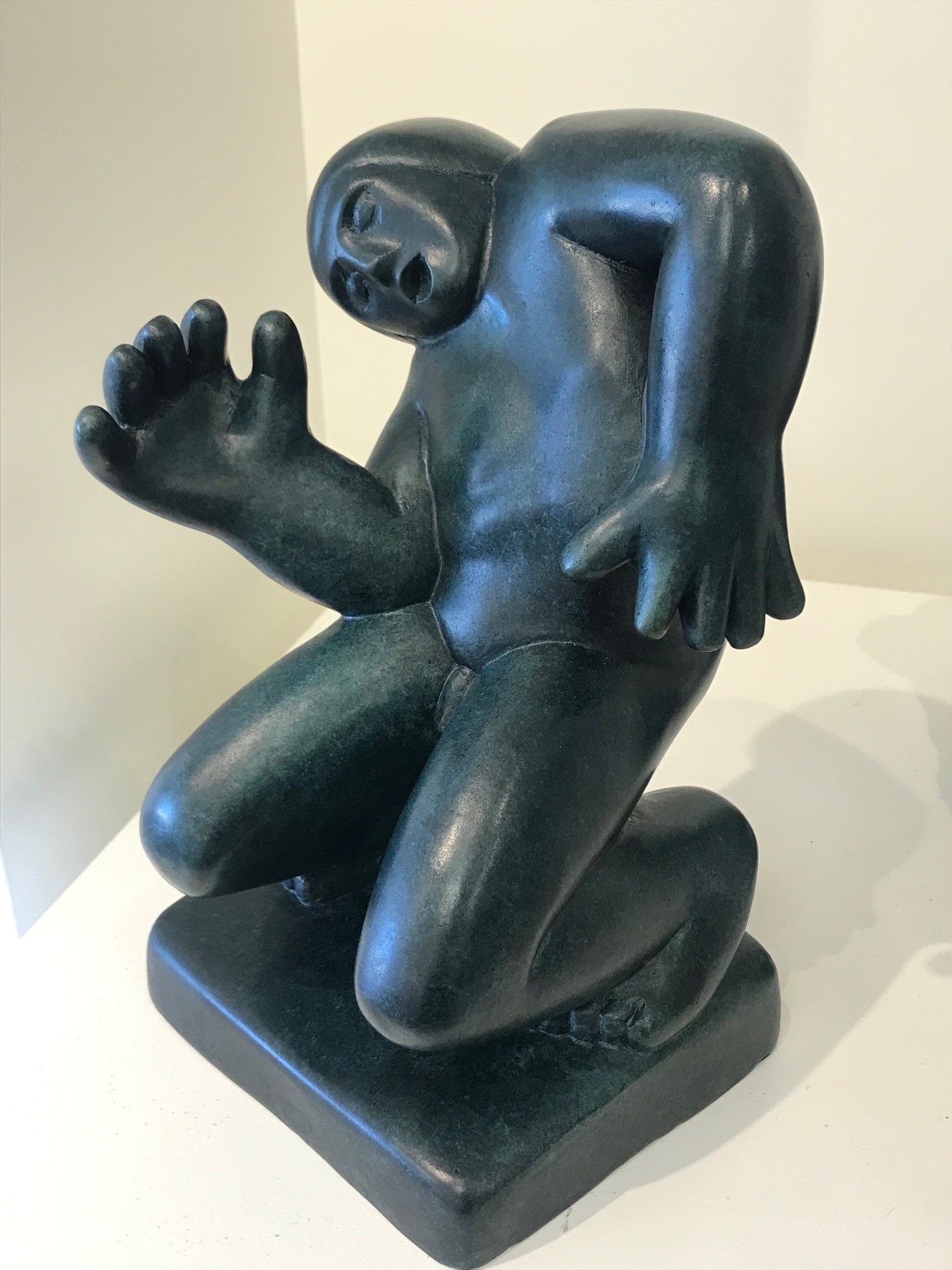
Llew Summers
About the Artist
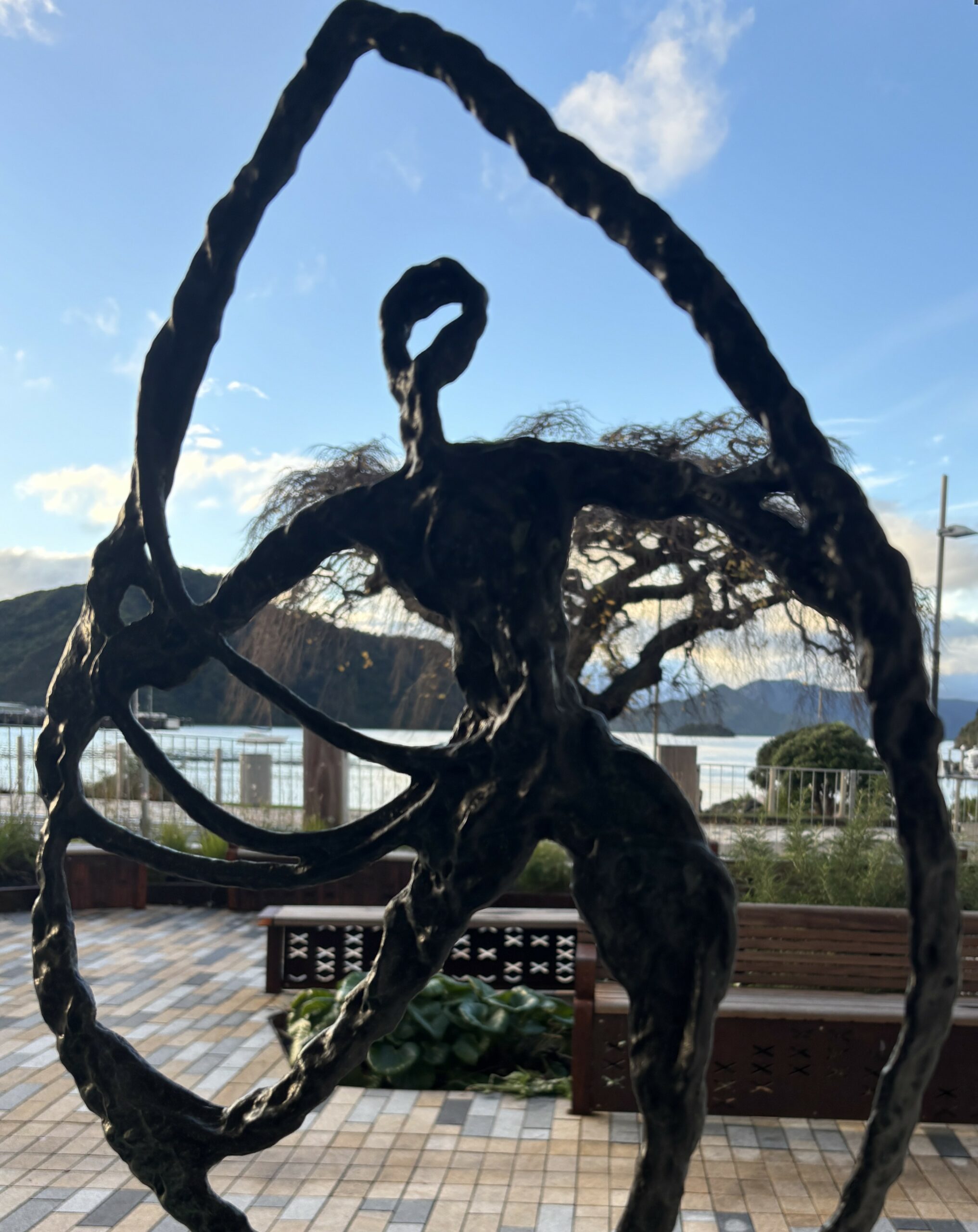
Llew Summers (1947-2019) is one of Christchurch’s best known artists, particularly for his monumental sculptures in bronze, concrete and stone which have been highly visible in many South Island centres over several decades.
These figures have a remarkable sense of lightness, movement and harmony, despite their size and even when created on a large scale – his major works are often over two metres high. His nude figures, dancing, flying, embracing, have become his signature, celebrating the human form and the beauty of the human body and spirit. After a trip to Italy in 1999, he also embarked on a series of iconic sculptures sometimes reminiscent of shrines, exploring spirituality and religion, and stages of the cross.
An intuitive sculptor, he explored many demanding media – sculpting in bronze, wood, marble, concrete, glass and ceramic.
‘What’s important to me is to get a balance between the physical and the spiritual in life. We’re given a soul and we’re given a body. Sculpture provides a nice balance because works can be made which are deep and meaningful, but they require your physical body to produce them. Rather than just being clever or smart the work must have soul.’
Often they captured the complex relationship and endless dance between men and women. Some recent sculptures focus thematically on angels, an extension of his sculptures exploring spirituality.
More About the Artist
Llewellyn Summers was born in Christchurch in 1947. Self-taught, he began exhibiting in 1971, and had over 50 solo exhibitions throughout New Zealand, as well as participating in numerous group shows. His work is held in corporate and public collections throughout the country, as well as by private collectors in New Zealand, Australia, Germany, USA, the UK, Switzerland, Greece, Malawi, Sweden and Finland.
He won several awards including the BNZ Art Award and the BP Art Award in the 1980s, and the Arts Excellence Award (Community Trust, Christchurch) in 1997. He had a keen interest in literature and collaborated with poet Bernadette Hall on The Stations of the Cross for the Cathedral of the Blessed Sacrament in Christchurch.
Llew Summers contributed beyond his art in many ways – such as offering residencies for emerging artists at his studio; donating works for special causes; and loaning his personal collection of artworks (by other leading and emerging artists) for exhibition.
-
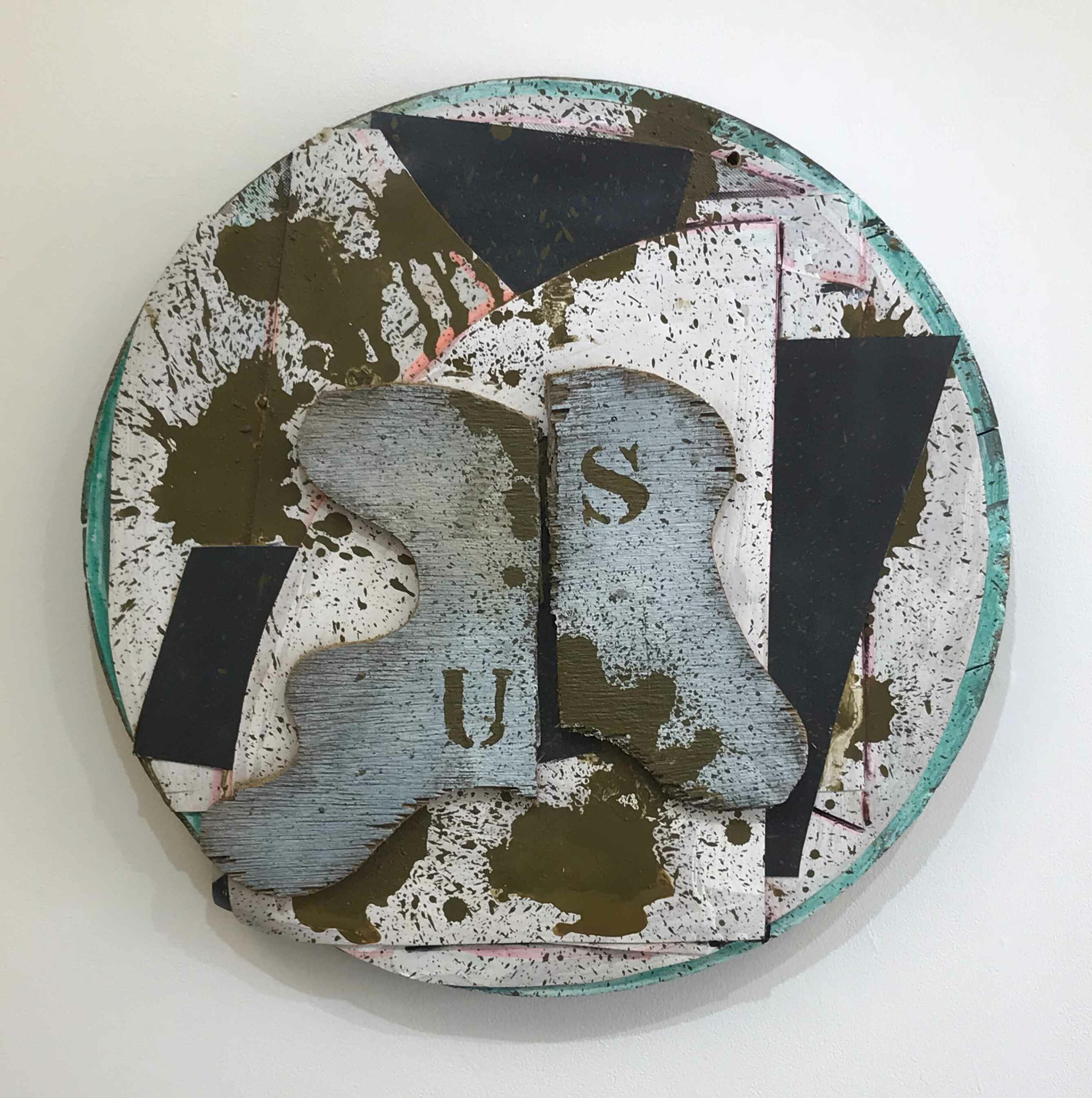
Don Driver
About the Artist
It’s like capturing a moving target, trying to define this provocative artist who crossed so many boundaries in art in his observation of our world, societies, cultures and modern art itself.
Don Driver, who died in 2011, was one of New Zealand’s most senior and respected artists, and his works are an important part of this country’s major public and private collections.
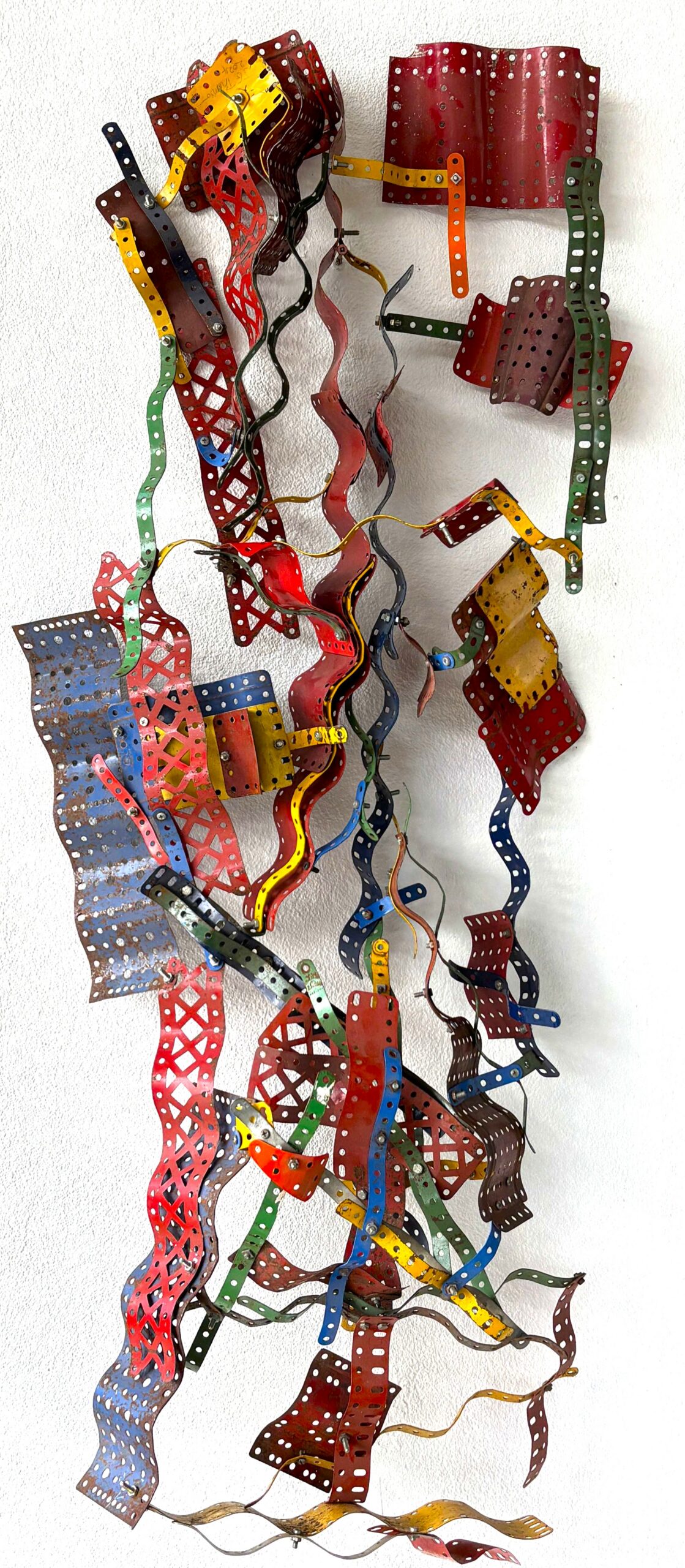
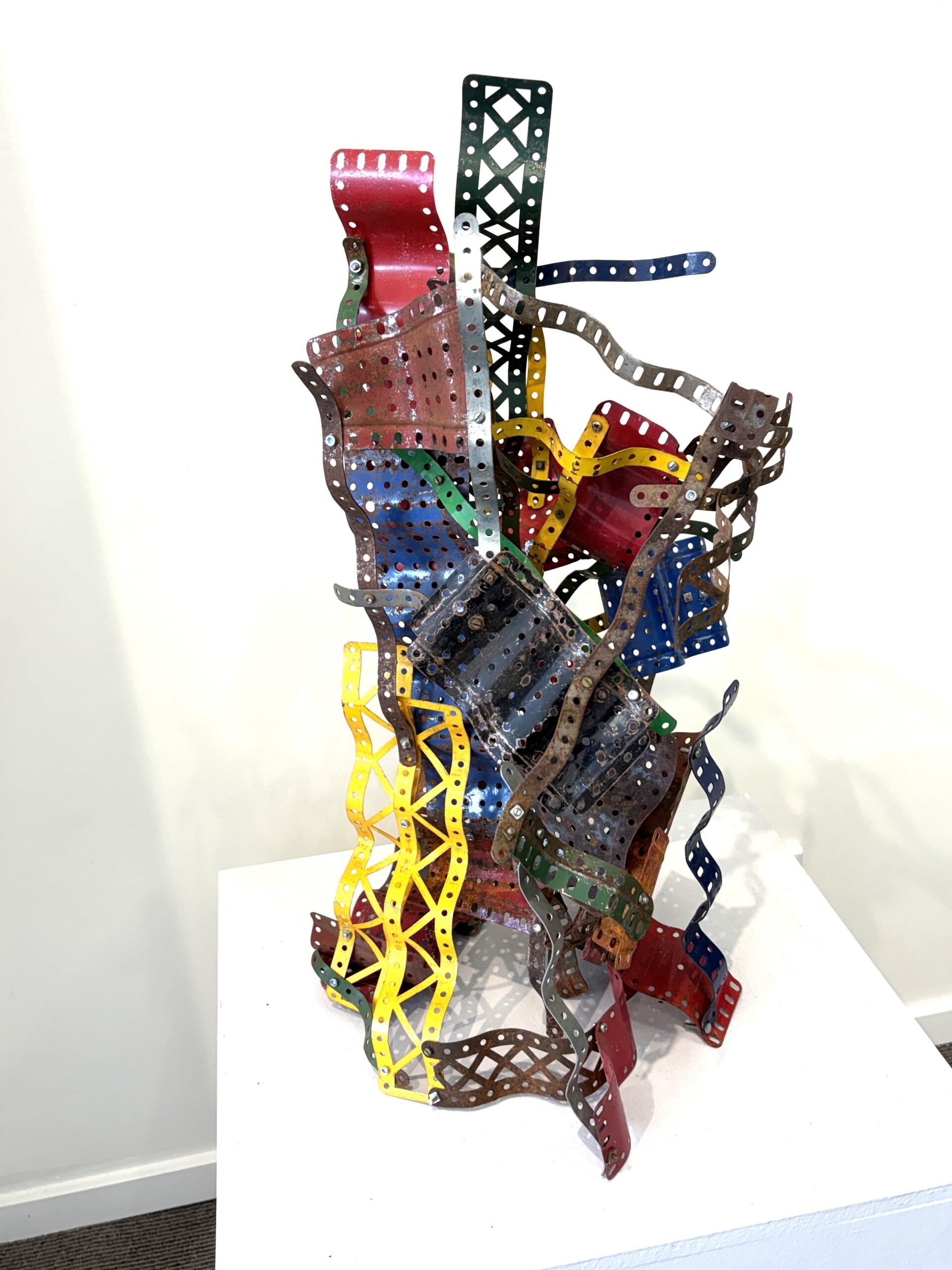
He often used ‘found’ materials – the trappings of suburban or agricultural life, or objects discarded by our material society – but the mundane became mysterious, unsettling, provocative or humorous when he brought these objects together with his own artistic magic. (He was once a keen amateur magician).
Frequently he incorporated implements with a sharp edge – literally – farm or garden implements which suggest a dangerous edge to an apparently civilised society relatively recently emerged from colonialism.Don Driver is widely acclaimed as New Zealand’s master of assemblage art. He notably asked: “why paint?” when there is a world full of existing materials and objects of intense colour or loaded with meanings, which he brought together to tell our stories, challenge us to think about New Zealand and the world, and simply create works of unexpected harmony or compositional balance.
However, he incorporated painting, and other media, into his work. Many were prompted by his passion for aircraft, alongside works focused on social and historical commentary, the youth culture and the quest for meaning in life.
Recent Works
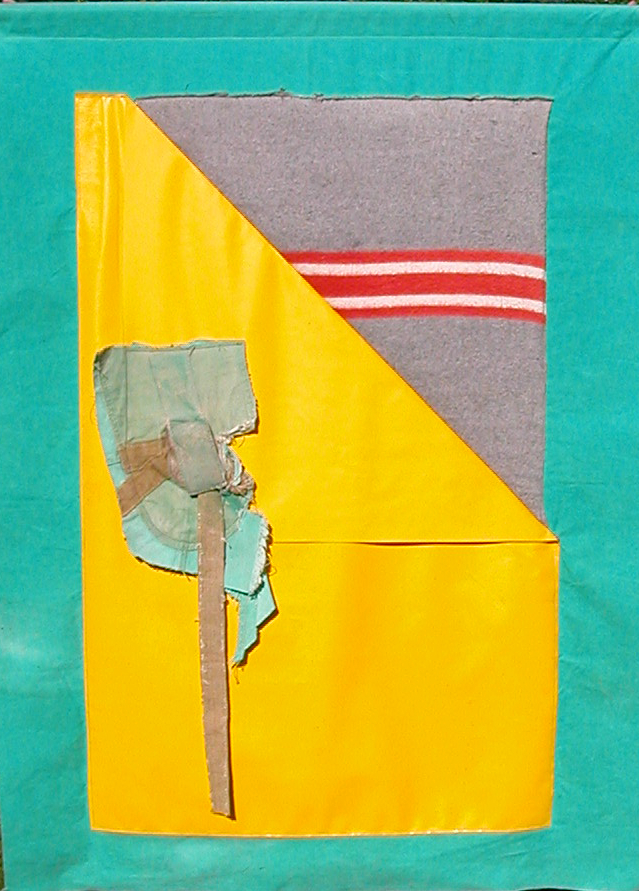
We retain a small number of works by Don Driver in the stockroom – including hangings and one of his sought-after tondoes. Please enquire for images and details.
More About the Artist
Don Driver was born in Hastings, New Zealand, in 1930. He moved with his family in 1943 to New Plymouth, where he lived and worked for most of his career. In the 1940s he became actively interested in magic, a fascination which flowed into his art works, and his desire to create many levels of meaning, mystery unfolding.
In the mid-1970s he had a stroke which paralysed his right side, forcing him to learn again to speak, walk and use his right hand. Undaunted, he continued to work, with assistance from his wife Joyce (a musician and teacher). His communication became channelled through his art. He was the subject of a major retrospective exhibition With Spirit, which toured New Zealand’s leading public galleries in 2000-2001.
Critic Allan Smith said in the book With Spirit “he makes the ordinary world look exotic”… From road signs, discarded brightly coloured clothing, drainage pipe, dolls, or tools, to paint pots, bath mats and old sacks – he used these in assemblages and wall hangings, presenting a view of society and abstraction at the same time. He was fascinated by texture, form and juxtaposition of colour.
There has rightly been a surge of enthusiasm for Driver’s work in the past decade – his ideas and energy remained as fresh and original as a young artist’s, throughout his career, but with all the knowledge of 50 years of art practice. His work would not be out of place in New York, London or Paris.