Classification: Exhibited Artist

  • Justin Galligan

    Justin Galligan

    About the Artist

    ‘I enjoy the challenge of taking an everyday industrial product to create a sculpture that has a breath of life and movement…’

    Chrsitchurch based sculptor Justin Galligan finds inspiration in the shapes and curves of avian flight, the feminine form, and images from an analogue drawing machine he built in 2021. He explores forms with balance without symmetry, and has embraced the Japanese concept of Wabi Sabi – essentially, finding beauty in imperfection.

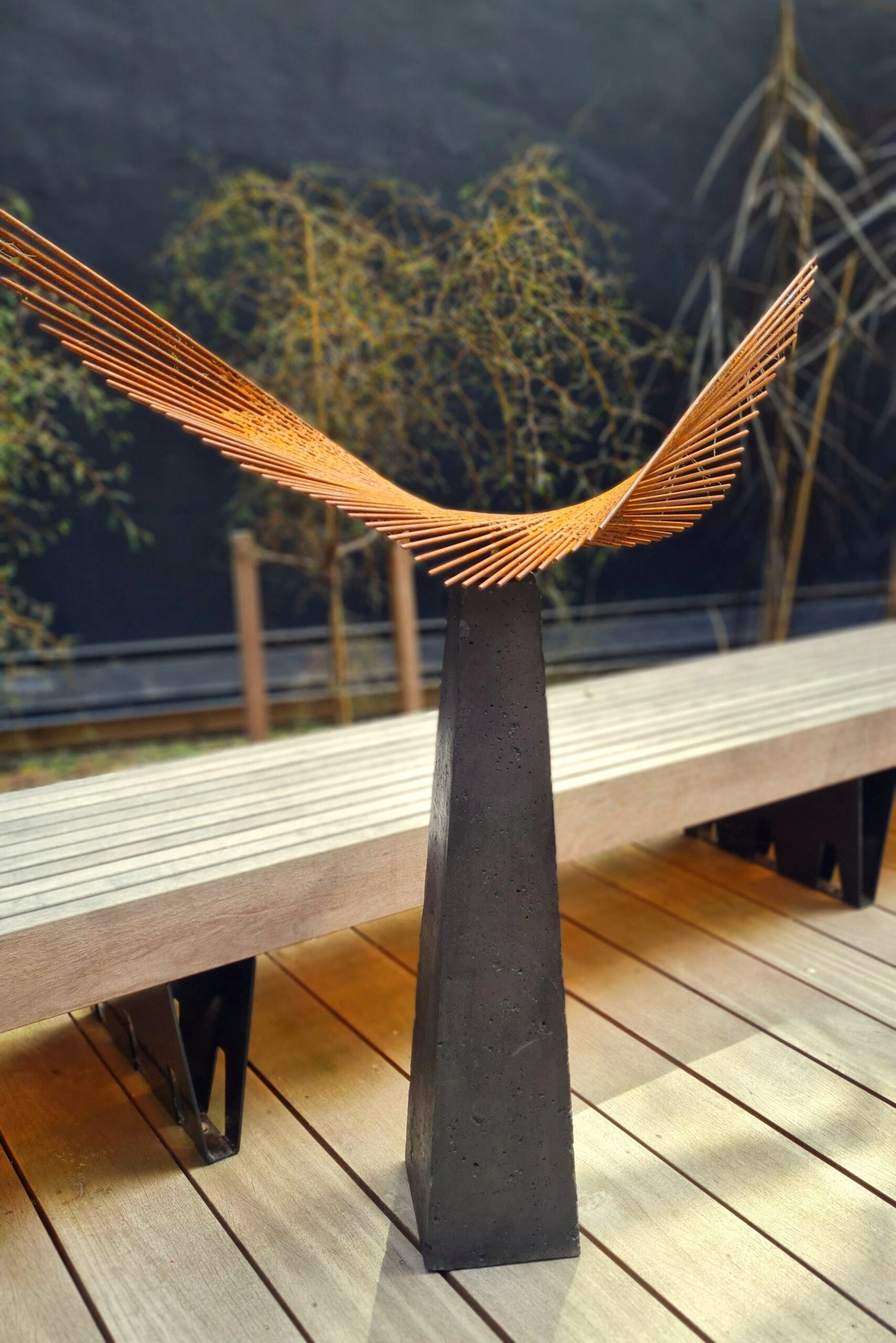
    His mesmerising wave and wing works are created from 60cm steel rods, hand welded into a form mounted on a dark concrete plinth, turning in the breeze.

    His recent works also include elongated structures using wire or steel rods, with a rising chair or ladder carrying their own philosophy – such as The Absentee, a surrealist homage to someone who has passed on, no longer here but their memory still present.

    More About the Artist

    When Galligan was young, his mechanic father would bring home old starter motors to extract the copper wire which would be used to tie up the grapevine and hold the chicken coop together. From early experimentation with the material, Galligan realised a wire is a line in space that could be used to sketch in three dimensions and delineate space.

    Over four decades later, he has extended this use of wire to embrace the classic kiwi No 8 wire, chicken mesh and steel rod.

  • Elizabeth Thomson

    Elizabeth Thomson

    About the Artist

    Elizabeth Thomson (born 1955, Auckland) graduated with an MFA from Elam School of Fine Arts, University of Auckland, in 1989. Since then her work has been exhibited widely throughout New Zealand and abroad. A major survey exhibition, ‘My hi-fi my sci-fi’ opened at City Gallery Wellington in 2006 then toured nationally. At Aratoi, Wairarapa, ‘Cellular Memory’: a survey exhibition 1989–2017 opened, and is at present touring nationally. Alongside the work of Len Lye, her art featured in the major two-person exhibition, ‘Waking up slowly’, at the Len Lye Centre, New Plymouth, in 2018. Based in Wellington since 1991, she works in a converted factory in the suburb of Newtown.

  • Neil Pardington

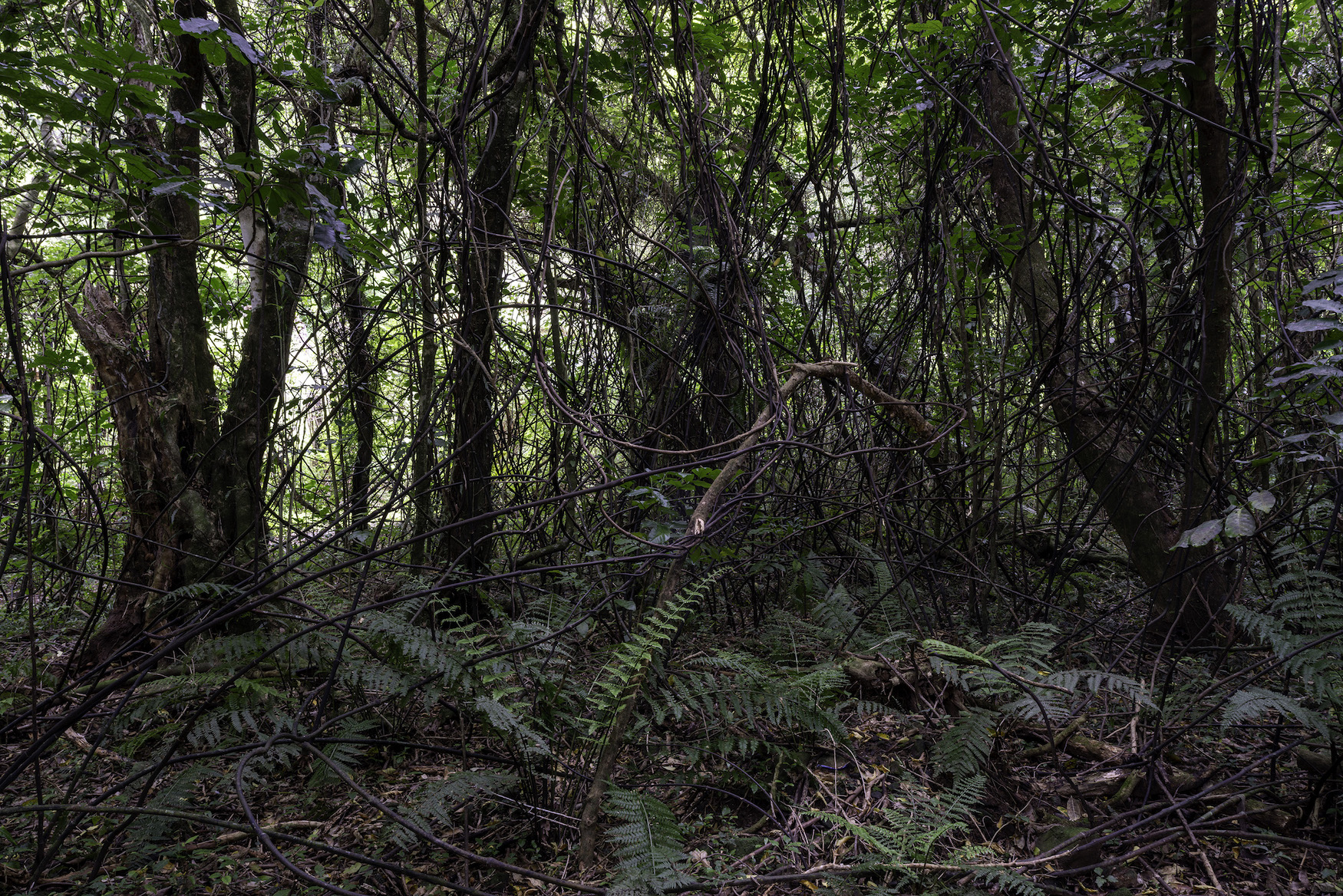
    Neil Pardington

    About the Artist

    Neil Pardington (Kāi Tahu, Kāti Mamoe, Ngāti Kahungunu, Pākehā) is a photographer and designer based in Wellington. He has exhibited widely including the major Christchurch Art Gallery exhibition The Vault: Neil Pardington (2009) which toured to City Gallery (2011) and Otago Museum (2010) and solo exhibitions such as Solo 2016: Six Wellington Artists at The Dowse Art Museum. Others include the major exhibition Civilisation: The Way We Live Now, National Museum of Modern and Contemporary Art, Seoul (2018); Ullens Center for Contemporary Art, Beijing (2019); National Gallery of Victoria, Melbourne (2019) and Auckland Art Gallery (2020).

  • Denise Copland

    Denise Copland

    About the Artist

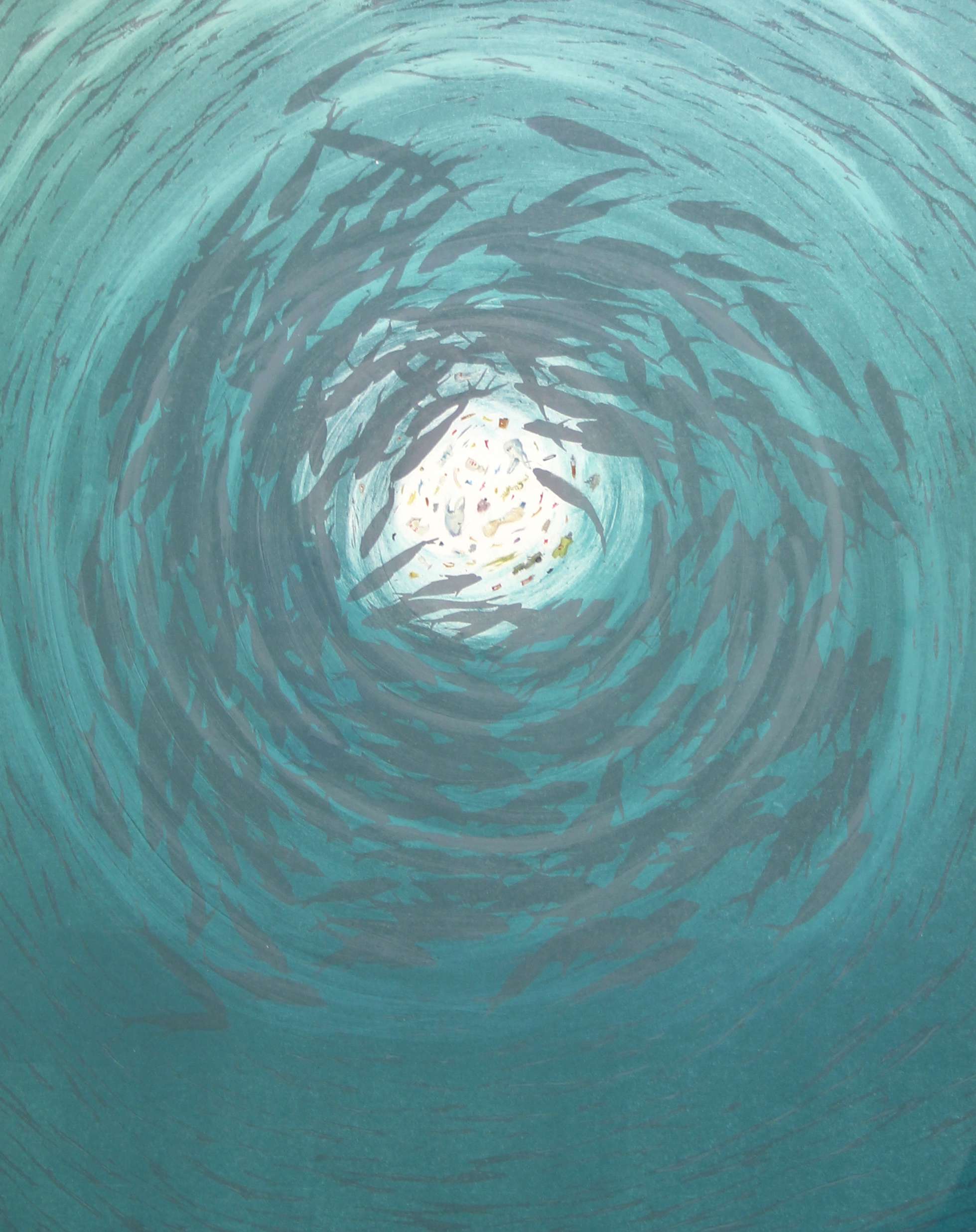
    I have long had an interest in the actions and thought processes that occur when humankind and/or other life forms and ecosystems are teetering on the threshold between life and death be that as a consequence of Nature’s fury or by misfortune, or through wide spread industrialization. How living things respond to such forces and turbulence is largely governed by the choice to survive or not. In the case of humankind survival it is often at the cost of others.

    My point of view is not a Utopian or dystopic one but rather one that is based on allegory and adaptability to a changing planet. These concerns and memories of such things combined with historical and contemporary notions of survival have underscored my work for several years.

    More About the Artist

    Denise (Dee) Copland graduated Diploma of Fine Arts with Honours in Printmaking, School of Fine Arts, University of Canterbury, Christchurch, 1977 and Certificate of Graphic Design, Christchurch Polytechnic Institute of Technology, 1971.

    She has been awarded several national awards to include a prestigious Antarctic Arts Fellowship in 2001-2002 and has taken up several Artists-in-Residences since 1985. She lectured at the School of Fine Arts (1982-4), University of Canterbury, was a Senior Lecturer at the School of Art & Design, Christchurch Polytechnic Institute of Technology until the end of 2006 and has lectured at several other Polytechnics and Summer schools throughout New Zealand. She is now a full time artist living in Portobello, Dunedin.

    Denise has exhibited extensively in over 25 solo and 170 group exhibitions since 1977. She has, by invitation, exhibited work in the Eight International Artists, Orleans, France (2007); 7th Triennale Mondial de L’estampe, Auvergne, France (2006) and numerous other International Print Biennales in Europe and Asia. Her work has also been shown in group exhibitions in NZ, Japan including Shared Lines; Sendai x Christchurch Art Exchange, Sendai (2012); Asia Print Adventure, Hokkaido, Museum of Modern Art, Sapporo ( 2003); USA; France; Australia including Melt, Sydney University Art Gallery, Sydney (2009) and Project space, RMIT University of Melbourne, Melbourne (2008).

    Copland collaborated with, and printed for a number of NZ artists to produce, in 1989, a limited edition boxed collection of prints titled 6 Artists – 6 Prints. In 1985 she created The Intaglio Print – Chemically assisted processes, a limited edition hand printed educational book.

    Her work is held public and private collections in NZ and internationally.

  • John Pule

    John Pule

    About the Artist

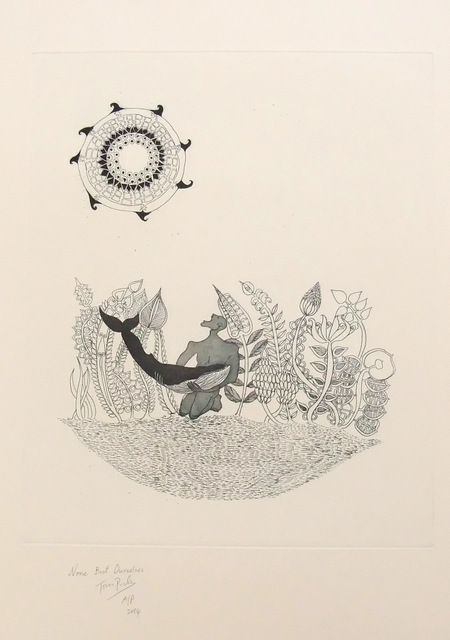
    Born in Niue, and recognised as a leading Pacific NZ artist, John Pule has worked in colloboration with Gregory O’Brien frequently in recent years, particularly in etching and aquatint, resulting from their travels to the Kermadecs and Raoul Island.

    However, Pule has also carved his own individual reputation for paintings and lithographs which are exhibited nationally and internationally.

    More information about this artist is available on request.

  • Emma Bass

    Emma Bass

    About the Artist

    Emma Bass studied photography in Auckland and pursued it as a full time career about 30 years ago, building a considerable reputation as a go-to practitioner for the quality of her portraiture, interiors and other commercial work.

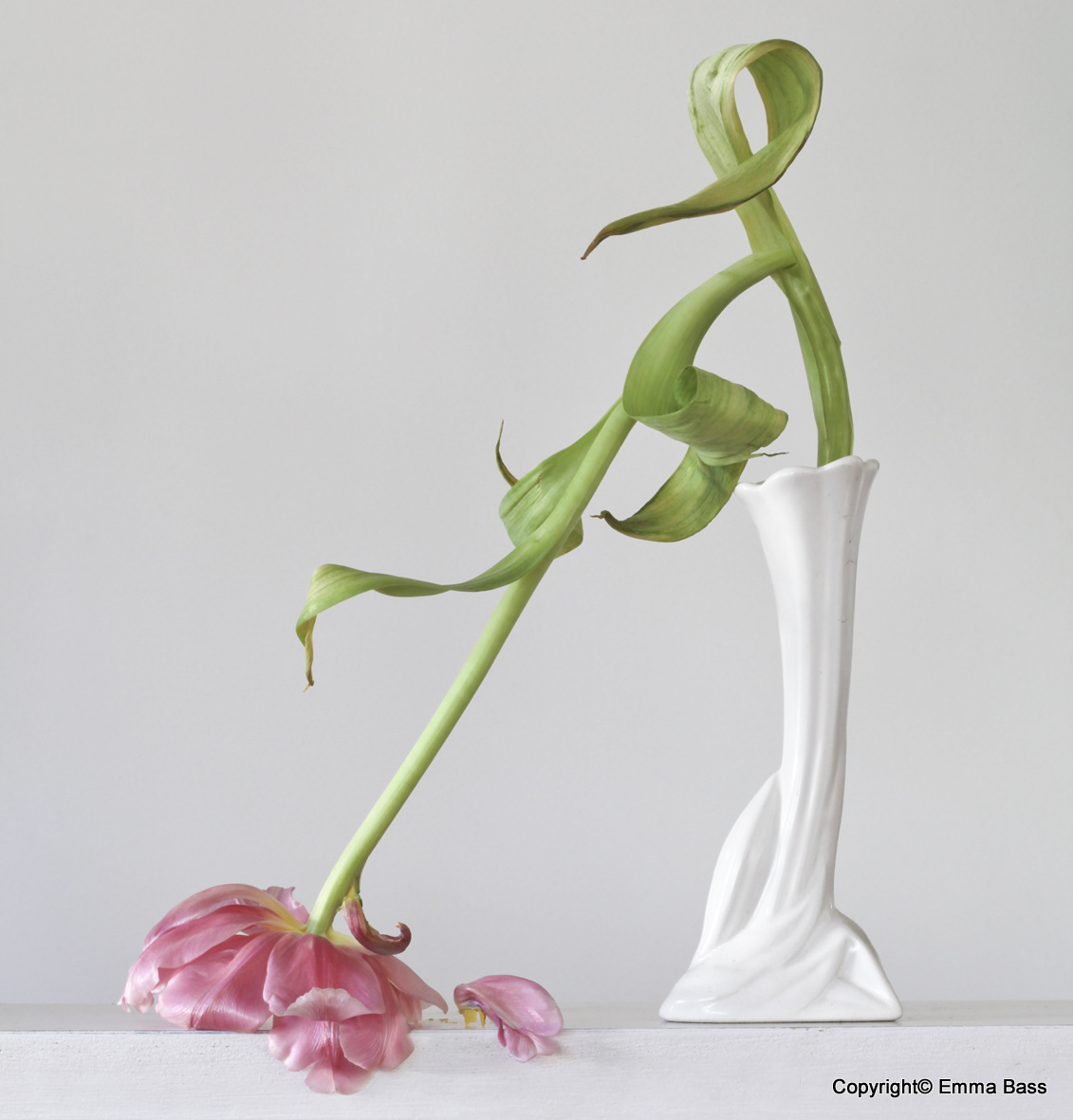
    She began exhibiting fine art photography with a series exploring the reality of pregnancy and motherhood. The Imperfect series later focused on unexpected images of flora, beautifully arranged in vintage vases, but finding beauty in the imperfect, aging or wilting. More recent works layer photography with painted elements, or introduced bugs and insects.

    Recent Works

    Bass draws us in with palpable textures, sublime colours, flower arrangements perfectly lit. Then you realise things are not as they seem, that she has made something exquisite of flora beginning to fade, fall, wilt – the reality of ageing. There’s an undercurrent of humour: a tulip gracefully tipping to kiss the table; comical red hot pokers on snaking stems searching to escape the formal vase; life’s rejects—thistles, weeds—elevated to celebrity status in formal poses, translucent beauties. Insects lurk in dark spaces, or stalk the petals of a peony.

    Her limited edition works appear studio-lit, yet most often are captured on a ledge at her Auckland home. She references centuries of European paintings of fruit and flowers as a metaphor for life, but her work owes more to the Japanese philosophy of Wabi-sabi, an acceptance of the integrity of things as they are. She matches the subject flora with one of her large collection of vintage vases, some Crown Lynn, others acquired from around the world.

  • Don Peebles

    Don Peebles

    About the Artist

    One of the major figures in New Zealand modernist art, Don Peebles was a pioneer of abstract art in this country and throughout a career that spanned over 60 years to his death in 2010, he remained a significant influence on his own and subsequent generations of New Zealand artists.

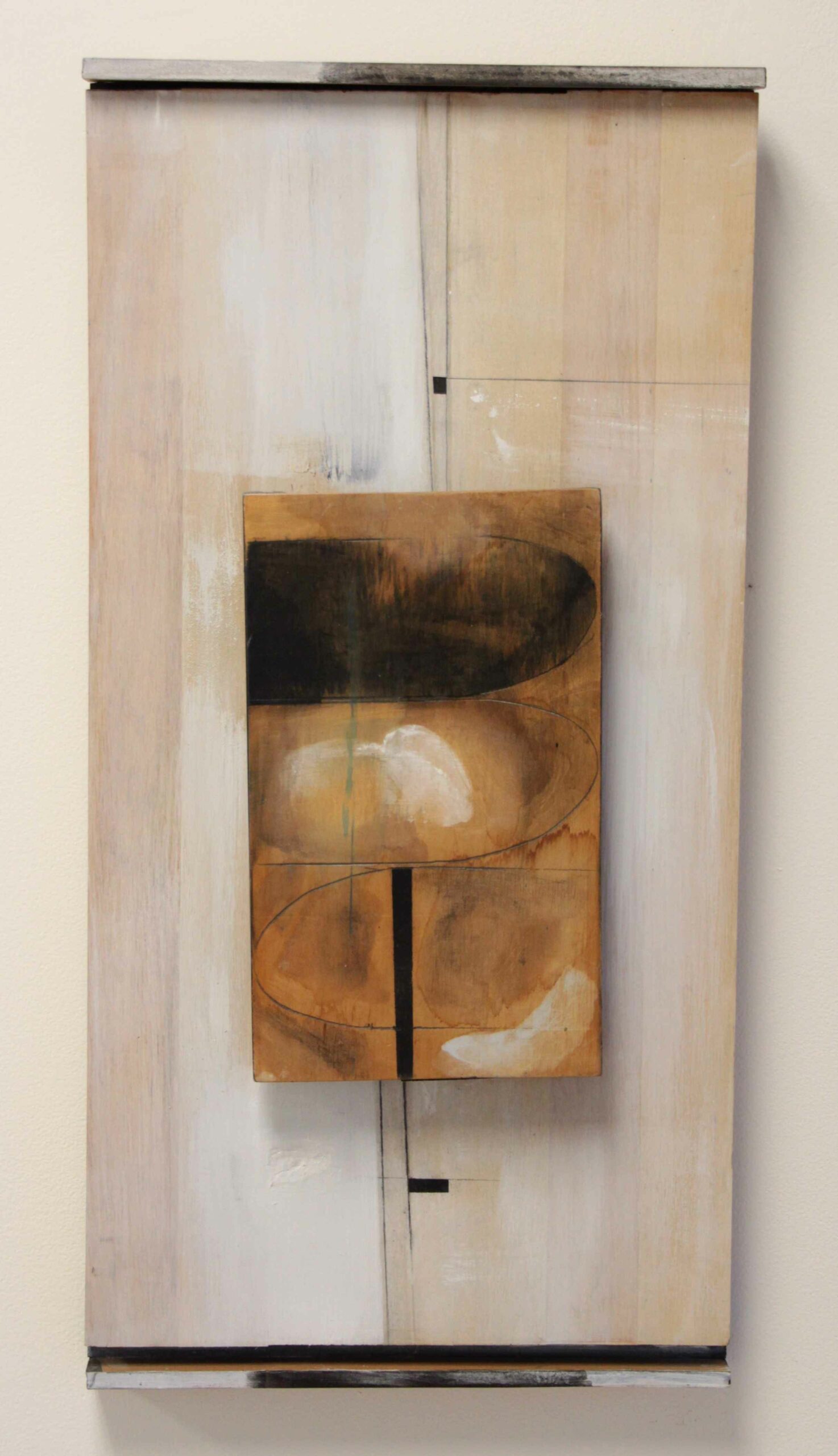
    He constantly reinvented himself, bringing a freshness of ideas and form to each artwork. His work was often pared back to a deceptive simplicity, as he juxtaposed texture, harmonised colour and composition to the ultimate point of balance. Nothing in his relief constructions was random. While his work tended towards minimalism, it was only to the point where a sublime tension existed between the elements in the work – a true ‘harmony of opposites’.

    His ideas often started somewhere in the landscape; it might be the colour of clay, or it might be a man-made structure creating an interesting effect – suggesting outlines which translated to an energy within a painting. But his paintings were not intended as interpretations of the landscape; these were just starting points, sparks of inspiration. His paintings explored the tension of balance, opposites and simply painting itself.

    They are not easy works to describe, because they are not figurative or representational. The viewer has to spend a little time and find their own response – as the artist himself said, the question is not ‘what does it mean?’ but like listening to fine music, ‘how does it make you feel?’

    A few works have been made available by the Peebles family for sale. Please contact Barbara Speedy directly on bspeedy@thediversion.co.nz for more information.

    Peebles’ work is a must in any serious collection of abstract New Zealand art. His work is held in major public and private collections around New Zealand and is an essential ingredient in key surveys of contemporary, modernist or abstract NZ art – yet he remained among the more affordable of NZ’s senior artists.

    More About the Artist

    Born in Taneatua, Bay of Plenty, in 1922, Don Peebles studied fine art in Florence, Italy at the end of WWII; Wellington and Sydney; and was strongly influenced by the constructivism of Victor Pasmore while working in London in the early 1960s.

    Don Peebles greatly influenced generations of NZ artists as a highly respected senior lecturer and Reader in Painting at the Canterbury University School of Fine Arts, while continuing his own art practice and quest for the ultimate point of balance in abstraction. He retired from teaching in 1986 to paint full-time, and continued to exhibit regularly throughout New Zealand.

    Don Peebles received several prestigious awards and fellowships, and in 1999 was appointed an Officer of the New Zealand Order of Merit for services to the visual arts. The University of Canterbury conferred an Honorary Doctorate on this distinguished artist in 2003.

  • Sir Grahame Sydney

    Sir Grahame Sydney

    About the Artist

    Over decades of exhibiting, Sir Grahame Sydney has become celebrated as the definitive painter of Central Otago: its vast hinterland spaces, endless skies and folded mountains, dwarfing human occupation and existence. There is a surreal quality, an ineffable tension, to these dramatic paintings which have made his body of work iconic. Now, he’s moved on. Not from Central Otago, where he still lives and works, but in subject and artistic quest. His paintings are only rarely exhibited for sale, with a waiting list for his work. The lithographs he produced periodically are equally sought after, but remain affordable and very collectible.

    His work is held in national collections including Te Papa Tongarewa (the Museum of New Zealand) and in international private collections.

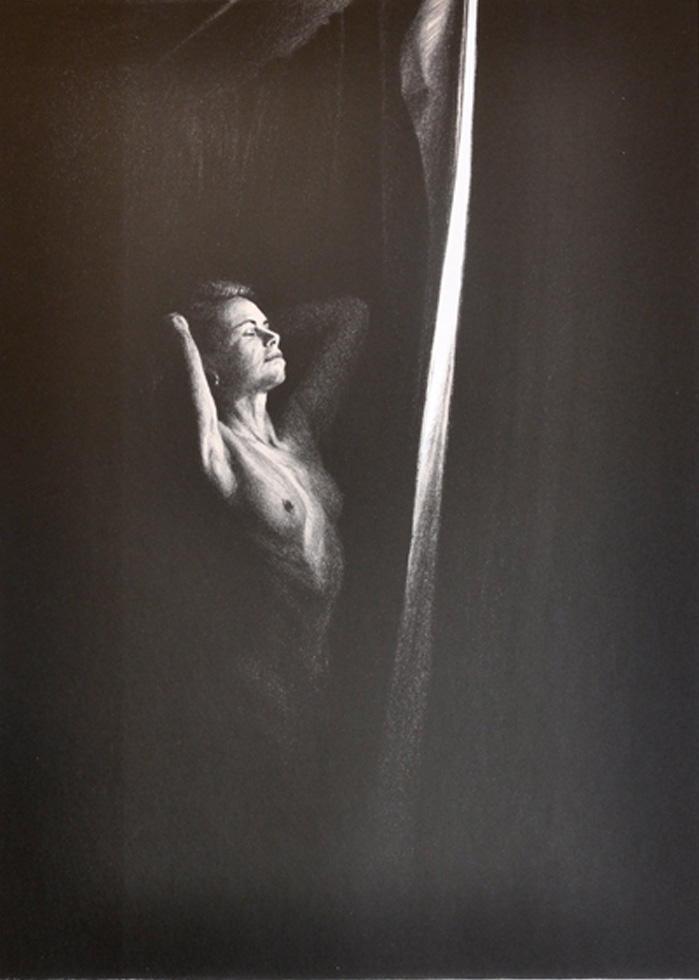
    Sir Grahame Sydney was born in Dunedin in the South Island of New Zealand in 1948. He graduated Bachelor of Arts in 1969 and began his full time art career in 1974 after a period of teaching and overseas travel. He was Frances Hodgkins Fellow at the University of Otago in 1978, and exhibited widely throughout New Zealand, also in Sydney and London, since 1969. A major retrospective of his work, On The Road, toured New Zealand public art galleries from 2000-2002. Until Antarctica, his focus was almost exclusively on Central Otago and southern New Zealand and his intimate knowledge underscores the power of his paintings.  He remains best known for his finely realist and iconic paintings, and as art critic Keith Stewart says: “you don’t just see the land here, you feel it”.  Sir Grahame Sydney is also well known for his photographs, and strikingly beautiful printmaking, particularly figure studies, and has worked in egg tempera, watercolours, oils, lithography and etchings. Major publications on his work, including The Art of Grahame Sydney and Timeless Land, have won prominent book awards.

  • Richard Adams

    Richard Adams

    About the Artist

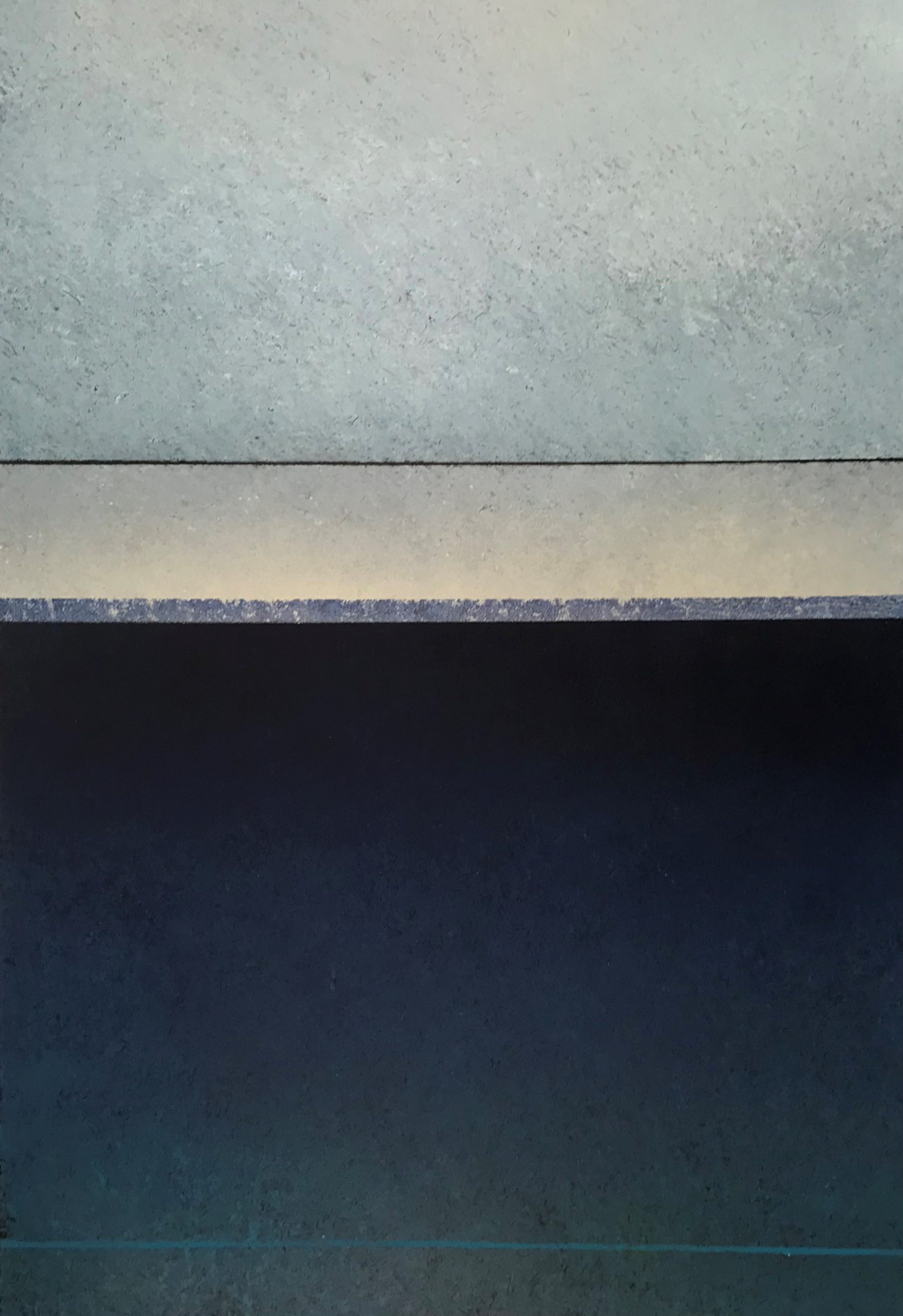
    Auckland-based Richard Adams began exhibiting in 1982, abstract paintings in oil on paper or on canvas, finely balanced, often with the surface pared back, scraped away to reveal hidden layers.

    Adams’ new works have a richness informed not only by his music – he is one of New Zealand’s best known jazz musicians with the Nairobi Trio – but also travels such as in Dubai, where he was inspired by the textures and aged surfaces, and fine colours from the subtle to the intense. In particular he was fascinated by the weathered paintwork on the dhows (boats) and how their history was exposed by a scratch or rubbed surface, revealing the colours of the boat’s earlier life.
    He sees himself as the guide rather than the master of the brush, and allows the painting to evolve as he works.

    Richard Adams is well-known as the jazz violinist and frontman for the Nairobi Trio, NZ’s most popular acoustic jazz group, and naturally there’s a very musical rhythm in his work. The music and the painting inspire each other, he says, rather than existing in isolation. Although he has been painting for 20 years, it is in the last decade he has begun to make his mark as a sought-after abstract painter with regular exhibitions in galleries both in New Zealand and overseas.

    Recent Works

    Adams’ recent works seem to travel towards the light, and consciously explore ideas of early voyagers guided only by the sun and stars, travelling barely charted waters. Often there’s a deep ‘bass’ note in his paintings to balance the lighter elements, and lately he has drawn inspiration more from the intense colours of the New Zealand landscape such as in his Lake Hawea works.

    His canvasses tend to convey a musical parallel, while his oils on heavy paper have a subtlety of pared-back expression.

    More About the Artist

    Richard Adams was born in London in 1957, and worked in film in the 1970s and 1980s in New Zealand. After publishing a book of poems and etchings in 1979, he began exhibiting his paintings in 1982 in Wellington. He has since exhibited in New York, Tokyo, Sydney, London, Dubai as well as around New Zealand in dealer galleries. He co-founded the jazz ensemble The Nairobi Trio – one of New Zealand’s most popular jazz groups which continues to tour this country and overseas on a hectic schedule. However, since the late 1980s he has pursued his painting with increasing dedication and ihas established a growing exhibition profile and following for his work among collectors, viewers and significant art publications.

  • Don Driver

    Don Driver

    About the Artist

    It’s like capturing a moving target, trying to define this provocative artist who crossed so many boundaries in art in his observation of our world, societies, cultures and modern art itself.

    Don Driver, who died in 2011, was one of New Zealand’s most senior and respected artists, and his works are an important part of this country’s major public and private collections.
    He often used ‘found’ materials – the trappings of suburban or agricultural life, or objects discarded by our material society – but the mundane became mysterious, unsettling, provocative or humorous when he brought these objects together with his own artistic magic. (He was once a keen amateur magician).
    Frequently he incorporated implements with a sharp edge – literally – farm or garden implements which suggest a dangerous edge to an apparently civilised society relatively recently emerged from colonialism.

    Don Driver is widely acclaimed as New Zealand’s master of assemblage art. He notably asked: “why paint?” when there is a world full of existing materials and objects of intense colour or loaded with meanings, which he brought together to tell our stories, challenge us to think about New Zealand and the world, and simply create works of unexpected harmony or compositional balance.

    However, he incorporated painting, and other media, into his work. Many were prompted by his passion for aircraft, alongside works focused on social and historical commentary, the youth culture and the quest for meaning in life.

    Recent Works

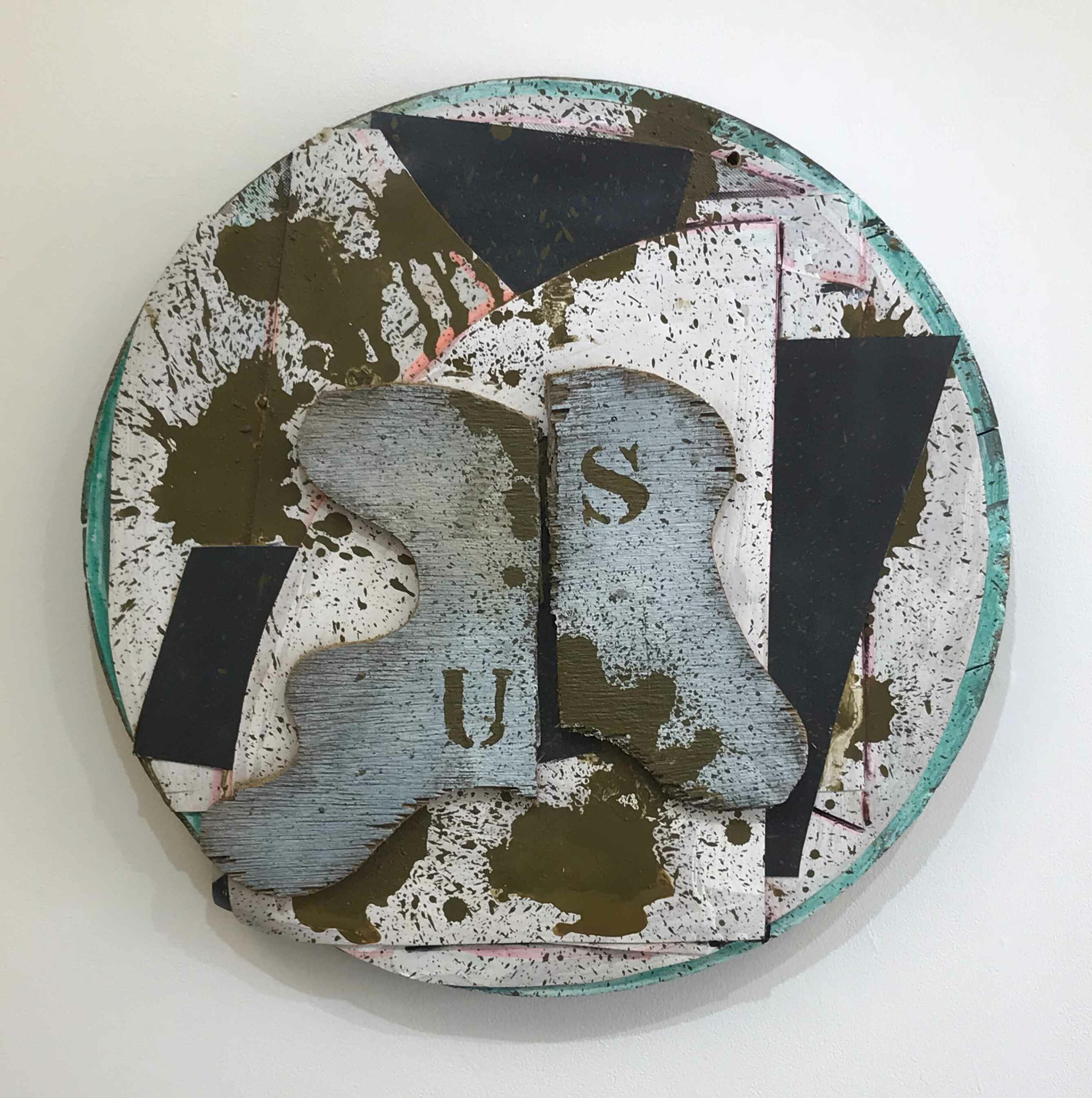
    We retain a small number of works by Don Driver in the stockroom – including hangings and one of his sought-after tondoes. Please enquire for images and details.

    More About the Artist

    Don Driver was born in Hastings, New Zealand, in 1930. He moved with his family in 1943 to New Plymouth, where he lived and worked for most of his career. In the 1940s he became actively interested in magic, a fascination which flowed into his art works, and his desire to create many levels of meaning, mystery unfolding.

    In the mid-1970s he had a stroke which paralysed his right side, forcing him to learn again to speak, walk and use his right hand. Undaunted, he continued to work, with assistance from his wife Joyce (a musician and teacher). His communication became channelled through his art. He was the subject of a major retrospective exhibition With Spirit, which toured New Zealand’s leading public galleries in 2000-2001.

    Critic Allan Smith said in the book With Spirit “he makes the ordinary world look exotic”… From road signs, discarded brightly coloured clothing, drainage pipe, dolls, or tools, to paint pots, bath mats and old sacks – he used these in assemblages and wall hangings, presenting a view of society and abstraction at the same time. He was fascinated by texture, form and juxtaposition of colour.

    There has rightly been a surge of enthusiasm for Driver’s work in the past decade – his ideas and energy remained as fresh and original as a young artist’s, throughout his career, but with all the knowledge of 50 years of art practice. His work would not be out of place in New York, London or Paris.

  • Dick Frizzell

    Dick Frizzell

    About the Artist

    Dick Frizzell, born 1943 in Auckland, educated at Ilam (the University of Canterbury School of Fine Art) tends to defy curatorial definition, and has developed a presence as something of an icon in New Zealand’s visual culture. Hugely talented in many media, he resists being categorised in any one art style or genre. Before moving into visual arts Frizzell worked as an animator, commercial artist and illustrator and has no qualms about blurring the categories between his commercial work and art.
    His work has always been characterised by a highly skilled handling of paint and an endlessly inventive range of subject matter and styles: faux-naive New Zealand landscapes, figurative still-life, comic book characters and witty parodies of modernist abstraction. Frizzell often makes a deliberate effort to mix up the categories of high and low art – poking fun at the intellectualisation of ‘high art’.

    The tiki motif has appeared often in his work, best known now in his Mickey to Tiki series morphing an image of Mickey Mouse into the Maori hei-tiki icon, as well as his ongoing pop art series around the ubiquitous grocer’s face on signage of Four Square supermarkets throughout small-town New Zealand, although he has explored it in a more expressive fashion.

    Recent Works

    Dick Frizzell was the first of several prominent NZ artists who agreed to donate their talent to create a series of limited edition prints to help raise funds for the National Whale Centre to be built in Picton, Marlborough.

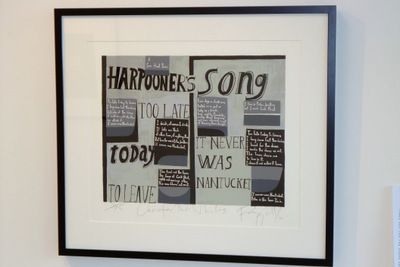
    One for the Whales continues Frizzell’s artistic collaboration with legendary NZ poet Sam Hunt, this time based on Hunt’s poem about the days of whalers in Picton, comparing this with the North American whaling town of Nantucket. A number of these screenprints will be held back for a portfolio to be released with one of each of the participating artists’ works. However collectors have the opportunity to acquire each work individually at a special price on first release.

    All proceeds of these artworks go to the National Whale Centre project, details of which can be viewed on www.aworldwithwhales.com. See also details of Graham Bennett’s wall sculptures.