About the Artist
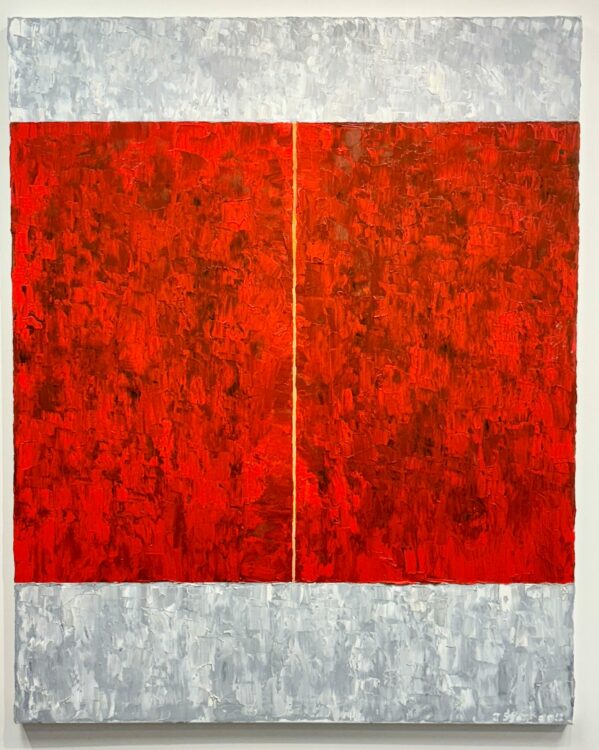
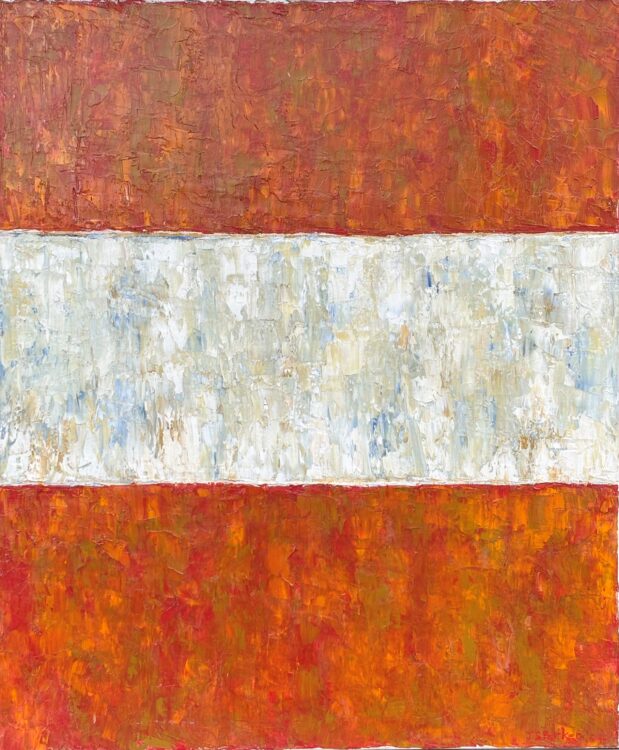
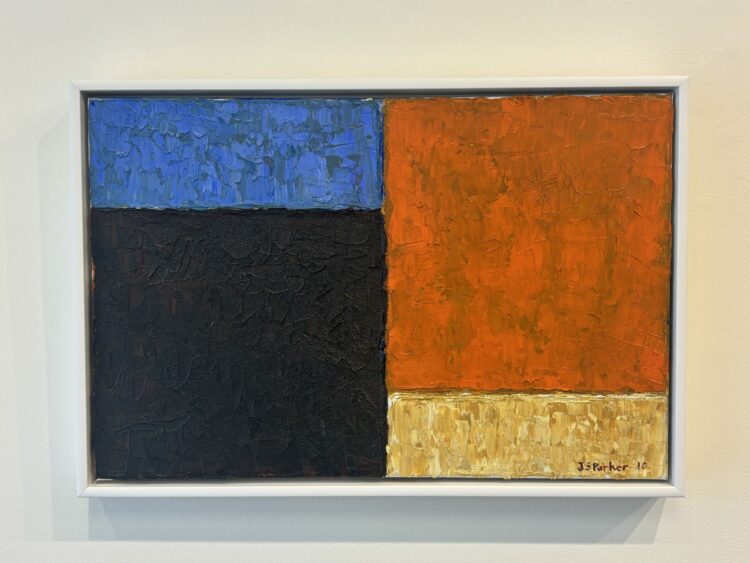
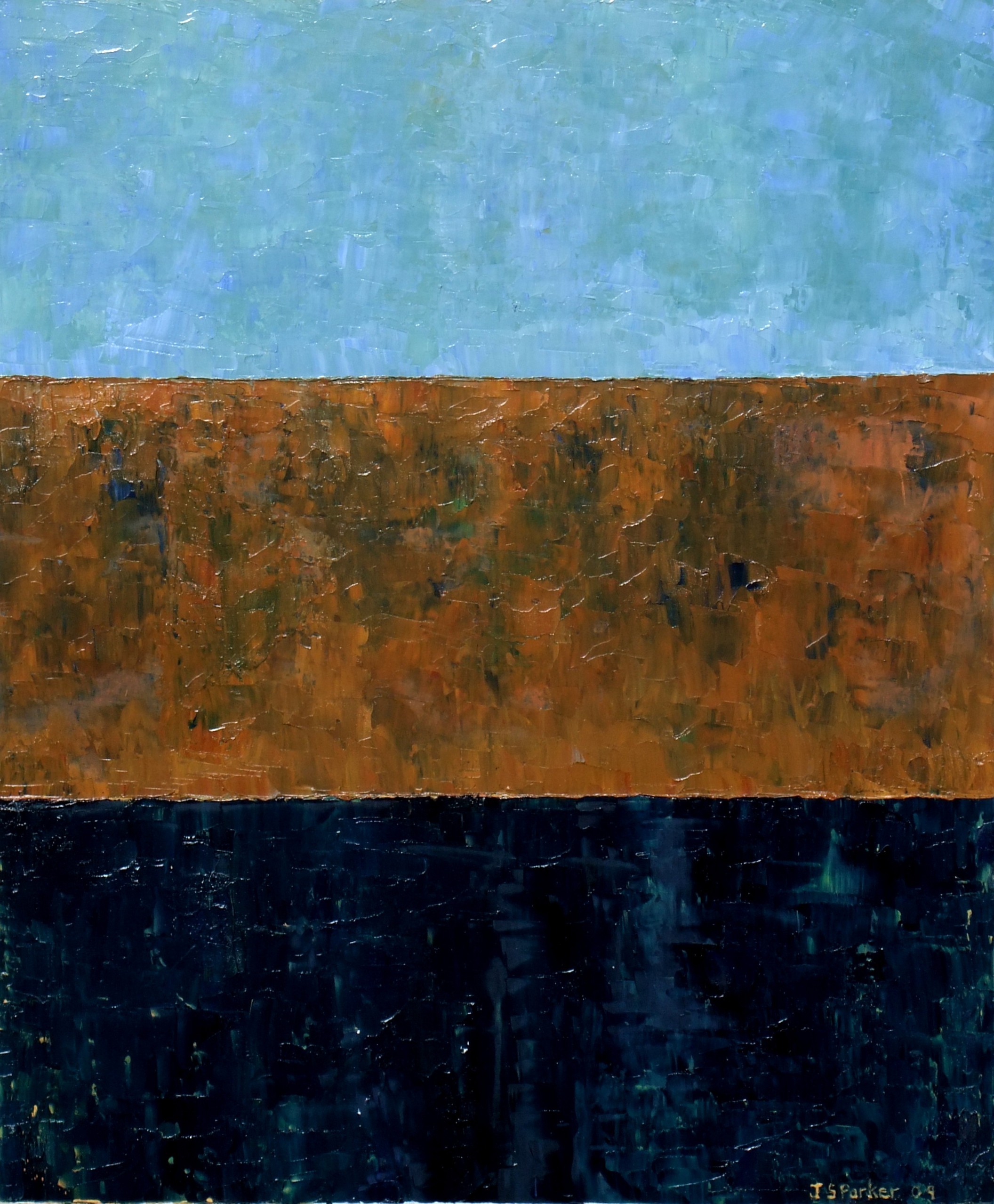
The rivers and reflections, dramatic skies and dust-blown hills of Marlborough and Canterbury found their way into many of the abstract paintings of leading NZ artist JS (John Shotton) Parker (1944-2017). Highly regarded by collectors nationally and internationally, JS Parker is best known for his large impasto paintings within a grid format, full of texture, rhythm and balance within his imposed framework, exploring juxtapositions of colour.
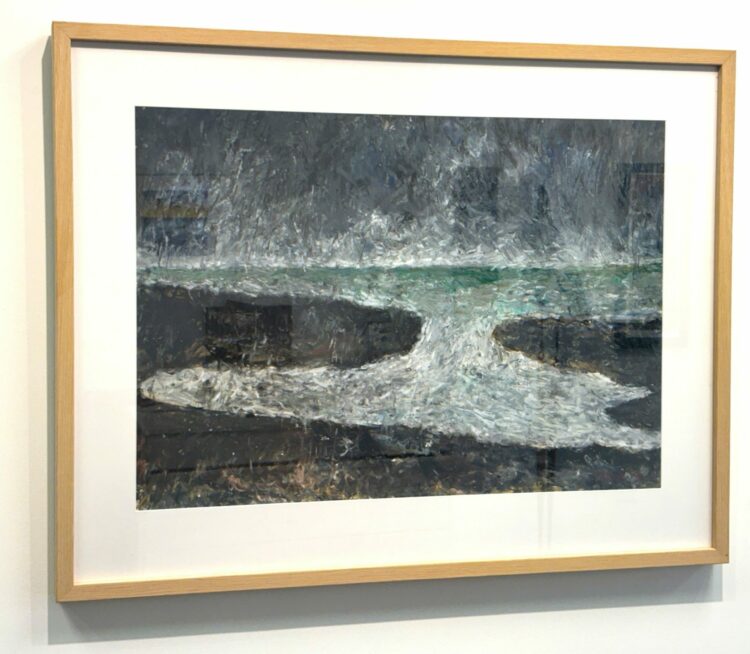
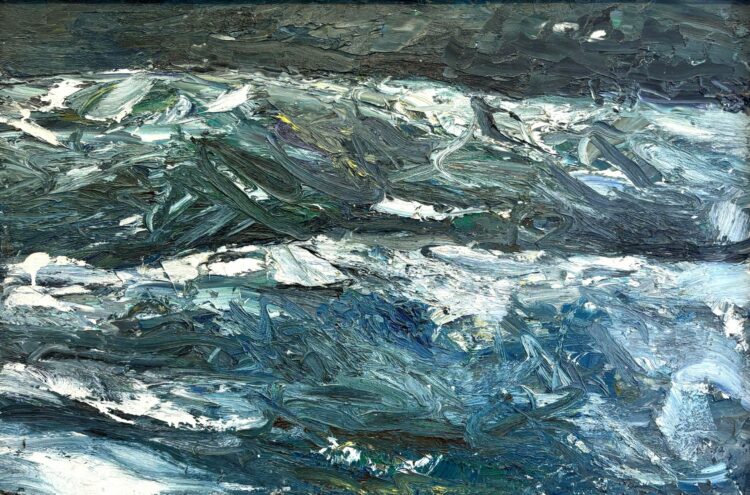
He worked in thick layers of oil applied with a palette knife, sweeps of paint which he would pare back to reveal hints of what lies beneath. A keen angler and walker, Parker derived much inspiration from the Wairau River and the Wairau Diversion (The Diversion Gallery is named after one of his paintings), particularly the colours of sky and land reflected in the ‘shifting mirror’ of the flowing water. He didn’t consciously set out to paint Marlborough, but his work captured a spiritual feeling about certain places, like the river or the sea at Rarangi (Cloudy Bay). ‘Or you look up to see what the weather is doing against the hills. Water and sky are the most ephemeral kind of elements.’
Based in Marlborough for much of his life, he exhibited nationally and his work is held in national public and private collections. Some of his final major works, full of energy and confidence, formed the anchor to the exhibition Colour & Surface in December 2017-January 2018, along with small studies he intended to translate to a larger scale.
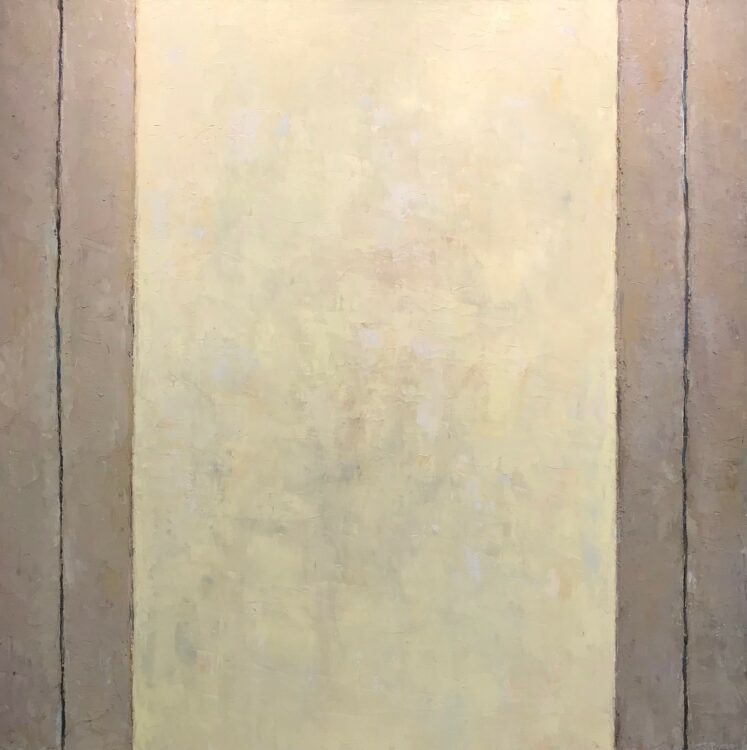
For more details and price of the works here, please click on the image.
Recent Works
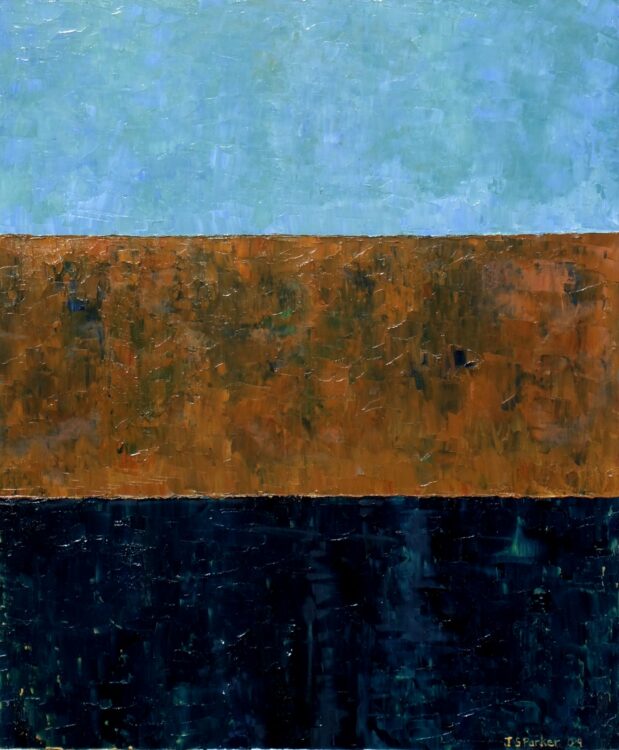
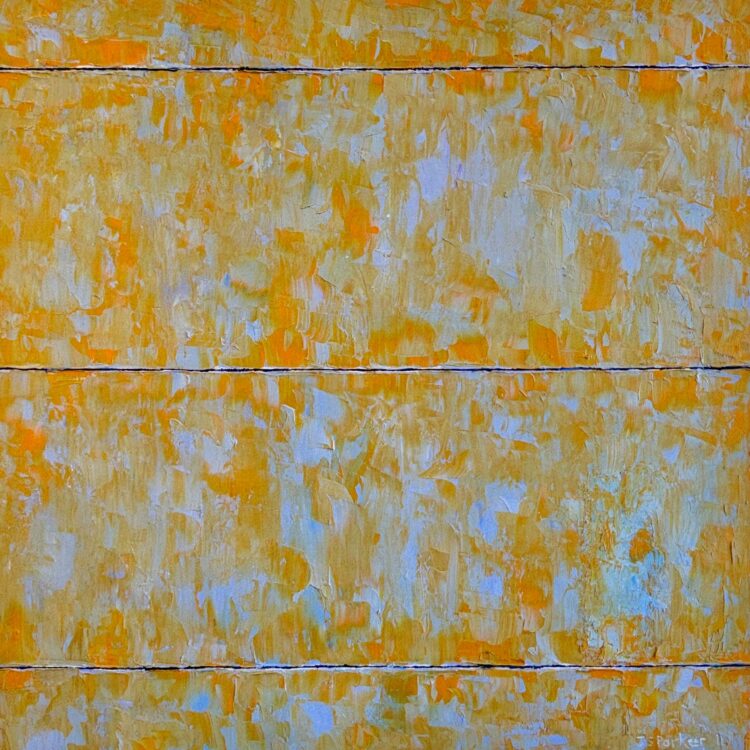
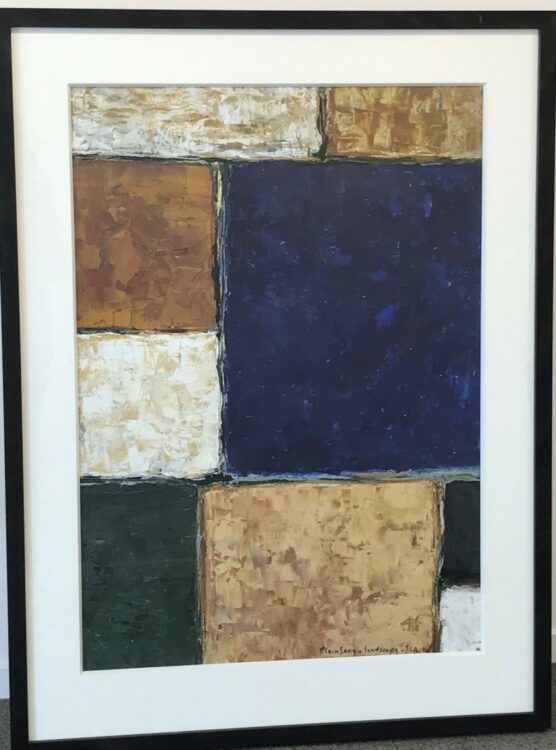
Some of the paintings released from the family collection relate strongly to the colours of Marlborough. Lines of Light and Space – Escholztias relates to the Californian poppies lining the summer riverbeds in Marlborough; Three Part Harmony – Landscape captures the subtle colours of one of his favoured areas of Marlborough, the warm earth tones of the riverbank near Rarangi where he frequently walked and fished. The same elements inform the dramatic large oil on paper Plain Song – Landscape.
Inevitably, though, the colours of the landscape, of water, sky, earth (and especially Marlborough), seep into Parker’s Plain Songs, a lifelong evocation of light in late afternoon, evening, on the sweeping plains and the golden dry hills beyond.
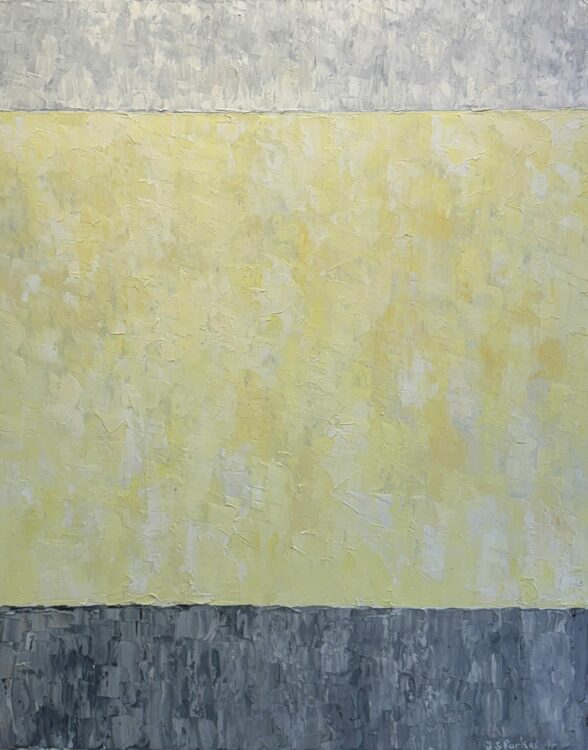
The major work Plain Song – Into the Ether (recently released from the family collection) is a sublime example of his works capturing the ineffable in paint. He sought to express a pure spiritual light, a lightness of being, in paint – almost a contradiction – especially finding that quality in lemon light against blue or silver, soft hues in the light of the skies, or of the soul.
A book about JS Parker is available from the gallery: JS Parker: Plain Song by Dr Damian Skinner – an excellent monograph, $35.
More About the Artist
Born in 1944, JS (John Shotton) Parker was described in the Allgemeines Kunsterlexicon international art dictionary as ‘one of the most substantial New Zealand painters of his generation. He stood out as one whose art centres on the pursuit of an approach where vigour has greater value than refinement’. Parker studied art at Ilam School of Fine Arts at Canterbury University and in 1975 was awarded the prestigious Frances Hodgkins Fellowship at Otago University (which is where his long friendship began with fellow painter Ralph Hotere). He ultimately settled in Marlborough and focused on the light and colours of the landscape, where he believed New Zealand’s greatest character lies. His contribution and steadfast vision was recognized in 2003 when he was awarded the Order of New Zealand Merit for 40 years of services to painting. He constantly refined his art towards a horizon of infinite possibility, and experimented with both form and colour – ‘you are not so much creating as discovering.’
The works of this leading New Zealand painter continued to explore the nuances of light and juxtapositions of colour, often inspired by the South Island land, waters and light, sometimes by a feeling of time and place. There is also an enthusiastic following for his unique ‘black and white’ paintings, some using tar alongside white oil paint in a juxtaposition of the staunch and the vulnerable, sometimes jolted with a spike of colour.
His Plain Songs refer not only to the South Island plains but also the formal structure of Gregorian chants within which there are variations on a theme. A music lover of wide taste, he was particularly inspired by blues, jazz and classical music; his work often shows a musical rhythm and balance, or a fine line like a high continuous note. His small Plain Song paintings have the freshness of discovery as Parker explored structures and linkages within a tight framework. He is best known however for his large scale paintings of about 1.2 to 2.5 metres.